










US Launches Strikes Against Islamic State in Nigeria
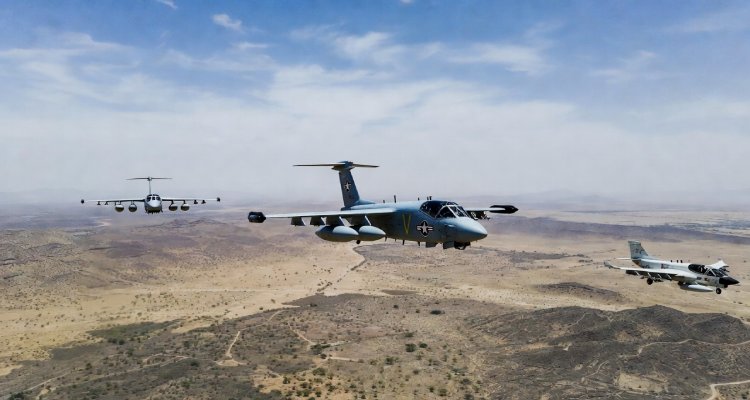
US launches air strikes against ISIS militants in Nigeria’s Sokoto state, highlighting deepening US-Nigeria security cooperation against terrorism.
Introduction: A Coordinated Strike Against a Persistent Threat
In a significant escalation of international counterterrorism efforts in West Africa, the United States launched targeted air strikes against Islamic State (ISIS) militants operating in Nigeria’s Sokoto state on December 25. The operation, conducted at the request of Nigerian authorities, underscores the deepening security cooperation between Washington and Abuja as both nations confront the evolving threat of violent extremism in the region.
The strikes, confirmed by the US military’s Africa Command (AFRICOM), resulted in the deaths of multiple ISIS operatives and were carried out within the framework of existing bilateral agreements and international law. The development highlights not only the persistence of militant networks in northern Nigeria but also the increasingly transnational nature of counterterrorism responses.
Context & Background: Terrorism and Security Challenges in Nigeria
Nigeria has long grappled with armed extremist groups, particularly in its northern regions, where porous borders, difficult terrain, and socio-economic vulnerabilities have enabled militant organizations to take root. While Boko Haram has dominated international attention for over a decade, ISIS-linked factions have emerged as a growing concern, adapting tactics and exploiting local grievances.
Sokoto state, located in northwestern Nigeria, has increasingly featured in security assessments due to the movement of armed groups across state and international boundaries. These groups target civilians, security forces, and local infrastructure, creating instability that affects both Muslim and Christian communities.
Nigeria, Africa’s most populous nation with around 230 million people, is roughly evenly divided between Muslims—primarily in the north—and Christians, who largely reside in the south. The government has repeatedly emphasized that militant violence does not target one religious group exclusively, but rather threatens national cohesion and public safety across religious lines.
Against this backdrop, Nigeria has sought sustained international partnerships to strengthen intelligence gathering, surveillance, and precision strike capabilities.
Main Developments: What Happened and Why It Matters
According to AFRICOM, the December 25 air strikes were carried out after Nigerian authorities requested US support to neutralize ISIS operatives posing an immediate security threat. Multiple militants were reportedly killed in the operation, which US officials said aligned with established international practice and bilateral understandings between the two countries.
Nigeria’s foreign ministry confirmed that the strikes were part of ongoing structured security cooperation with the United States. This cooperation includes intelligence sharing, strategic coordination, and other forms of support designed to target terrorist networks while respecting Nigeria’s sovereignty.
The strikes matter for several reasons. First, they demonstrate the continued operational presence of ISIS-affiliated groups in Nigeria, even as global attention often shifts to other conflict zones. Second, they signal Washington’s willingness to remain actively engaged in African security matters, particularly when requested by partner governments. Finally, they reinforce Nigeria’s strategy of combining domestic military operations with international collaboration to counter complex and mobile extremist threats.
Expert Insight and Public Reaction: Security Cooperation Under Scrutiny
Security analysts view the strikes as a reflection of pragmatic counterterrorism cooperation rather than unilateral military action. Experts note that intelligence-led operations, requested and coordinated with host nations, reduce the risk of civilian harm while enhancing operational effectiveness.
Public reaction within Nigeria has been mixed but largely pragmatic. Many citizens in violence-affected regions view international support as a necessary tool in confronting well-armed militant groups. Others stress the importance of transparency, accountability, and long-term solutions that go beyond military force.
Nigeria’s government has also pushed back against narratives suggesting religious persecution as the primary driver of violence. Officials have stated that claims portraying Christians as uniquely targeted oversimplify a complex security situation and overlook state efforts to protect religious freedom and vulnerable communities across the country.
Impact & Implications: What Comes Next for Nigeria and the US
The immediate impact of the strikes is the disruption of ISIS operations in Sokoto state, potentially degrading the group’s leadership and planning capabilities. However, experts caution that air strikes alone cannot eliminate terrorism.
For Nigeria, the incident reinforces the importance of sustained international partnerships, particularly in intelligence, logistics, and capacity building. It also raises expectations for continued reforms within the security sector, community engagement, and economic development in at-risk regions.
For the United States, the strikes reaffirm AFRICOM’s role in supporting partner-led counterterrorism efforts while operating within legal and diplomatic frameworks. The operation may also influence future security cooperation models across West Africa, where militant groups increasingly operate across borders.
Regionally, the action sends a message to extremist groups that international coordination remains strong and responsive, even during periods of global geopolitical distraction.
Conclusion: A Calculated Step in a Long-Term Fight
The US air strikes against Islamic State militants in Nigeria mark a calculated and coordinated response to a persistent security challenge. Conducted at Nigeria’s request and grounded in bilateral cooperation, the operation reflects a shared commitment to countering terrorism while respecting national sovereignty and international law.
Yet the broader fight against violent extremism in Nigeria remains far from over. Military action, while necessary, must be complemented by governance reforms, economic opportunity, and community resilience. As Nigeria and its partners look ahead, the focus will likely remain on a balanced strategy—one that combines precision security measures with long-term efforts to address the root causes of instability.
The information presented in this article is based on publicly available sources, reports, and factual material available at the time of publication. While efforts are made to ensure accuracy, details may change as new information emerges. The content is provided for general informational purposes only, and readers are advised to verify facts independently where necessary.