










UPSC Allows ‘Centre of Choice’ for Candidates With Benchmark Disabilities: A Landmark Step for Inclusive Examinations
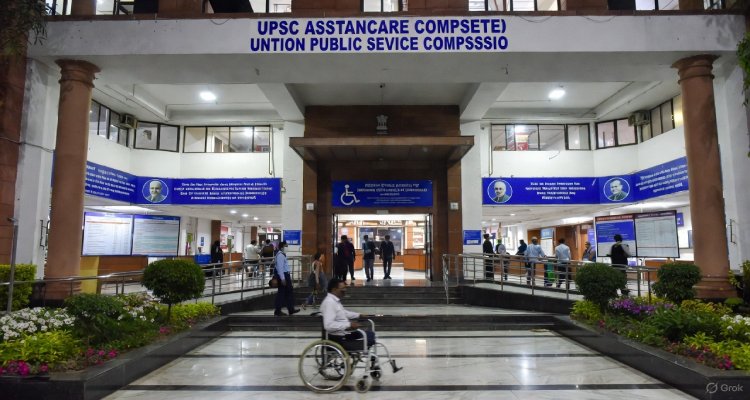
UPSC will now guarantee ‘centre of choice’ to all candidates with benchmark disabilities, ensuring convenience, accessibility, and expanded exam centre capacity.
Introduction: A Small Change With a Big Impact
For thousands of civil services aspirants with disabilities across India, travelling long distances to exam centres has long been a barrier bigger than the exam itself. This week, that reality finally shifted. In a milestone move, the Union Public Service Commission (UPSC) announced that all candidates with benchmark disabilities (PwBD) will now receive the centre of their choice for every examination it conducts—no exceptions.
This decision marks one of the most significant accessibility reforms in India’s competitive exam ecosystem, reshaping how inclusion is operationalised in the country’s most prestigious recruitment processes.
Context & Background: A System That Needed Reform
UPSC exams, including the Civil Services Examination, Engineering Services Examination, and several central government recruitment tests, attract lakhs of candidates annually. Over the past five years, the Commission noticed a recurring pattern: certain centres—Delhi, Cuttack, Patna, Lucknow, and others—consistently reached full capacity early in the registration cycle.
This disproportionately affected PwBD candidates.
Many reported being forced to take exams in unfamiliar or inaccessible cities because their preferred centres were already full by the time they applied. Such logistical hurdles added layers of stress, cost, and physical difficulty—especially for candidates requiring mobility support, assistive devices, scribes, or medical accommodations.
Recognising the structural gap, UPSC conducted a multi-year analysis of centre-capacity data and concluded that a new approach was necessary to ensure fairness and accessibility.
Main Developments: What the UPSC Has Changed
The UPSC has now formally announced a new framework that guarantees examination centres for PwBD candidates. Key provisions include:
1. Guaranteed Centre of Choice for PwBD Applicants
Every candidate with benchmark disabilities will be allotted the examination centre they indicate as their first preference. This is binding—regardless of the centre’s capacity status.
2. Centre Capacity Prioritisation
The Commission will follow a two-step process:
- Step 1: The existing capacity of each centre will be filled by both PwBD and non-PwBD candidates.
- Step 2: Once capacity is reached, the centre will be closed for further selection by non-PwBD applicants.
- Exception: PwBD candidates can continue selecting that centre even after the capacity cap is crossed.
3. Special Capacity Expansion for PwBD Examinees
UPSC will make additional arrangements—such as expanding existing venues or adding auxiliary rooms—so that no PwBD candidate is denied their chosen centre.
4. Applicability Across All UPSC Exams
The policy applies to all examinations under UPSC’s umbrella, including the Civil Services Examination, where demand for metro centres is exceptionally high.
This proactive, system-level restructuring aims to remove long-standing accessibility hurdles and ensure PwBD candidates can focus on the exam—not the logistics.
Expert Insight & Public Reaction
The reform has been largely welcomed by disability-rights advocates, exam mentors, and administrative experts.
Dr. Neha Bhatia, a public policy researcher who studies exam accessibility, notes:
“This is more than a logistical tweak—it’s a recognition of the systemic challenges faced by disabled aspirants. Travel time, unpredictable accessibility, and last-minute changes often put PwBD candidates at a disadvantage. UPSC’s decision sets a new benchmark for inclusion.”
UPSC coaching centres echo similar sentiments.
According to several mentors, the new policy will reduce exam-day anxiety and help candidates conserve energy and resources.
Social media reactions also show a wave of appreciation, with many former aspirants calling the step “long overdue,” “progressive,” and “much needed for real inclusion.”
Impact & Implications: What This Means Going Forward
1. Greater Accessibility and Reduced Hardship
PwBD candidates will no longer need to travel to far-off cities, reducing physical strain, financial burden, and emotional stress.
2. Higher Participation and Reduced Dropout
Exam counsellors believe that more PwBD candidates may now feel encouraged to apply for UPSC exams without worrying about accessibility barriers.
3. Administrative Pressure on UPSC
While the policy is progressive, it also requires logistical agility.
UPSC will need to:
- rapidly scale venue capacity
- ensure facilities remain accessible
- coordinate with local authorities
- maintain uniform examination standards
4. A New Standard for Government Recruitment
This move may prompt other recruitment bodies—SSC, state PSCs, and NTA—to adopt similar inclusive practices.
5. Strengthened Commitment to the Rights of Persons With Disabilities Act
The policy aligns with the broader mandate of the RPwD Act, which emphasises reasonable accommodations and equal opportunity in public processes.
Conclusion: A Step Toward a More Inclusive UPSC
The UPSC’s decision to guarantee centre-of-choice for candidates with benchmark disabilities is more than a policy revision—it is a reaffirmation of equity. By prioritising accessibility at the structural level, the Commission has taken a meaningful stride toward ensuring that every aspirant, regardless of ability, gets a fair, dignified, and stress-free opportunity to chase their dreams.
As India continues modernising its exam systems, this initiative stands as a benchmark: an example of how thoughtful governance can break barriers and broaden participation in nation-building roles.
Disclaimer :This article is based solely on the provided headline and details. It is an original journalistic interpretation created for informational and educational purposes.