







UNESCO’s 20th Intangible Cultural Heritage Session Begins in New Delhi
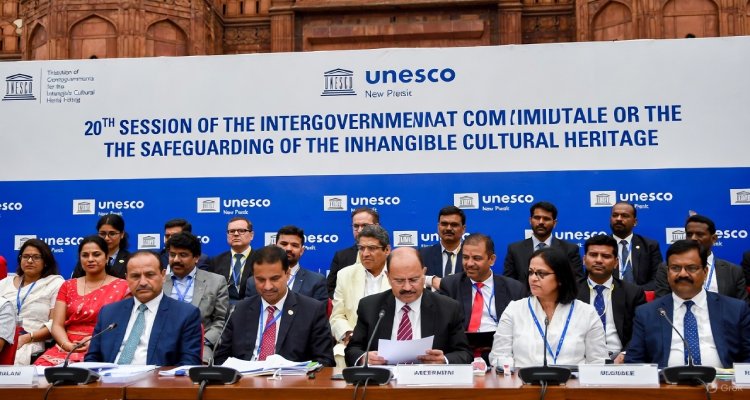
India hosts UNESCO’s 20th Intangible Cultural Heritage Committee session for the first time at New Delhi’s Red Fort, marking a milestone in global cultural preservation efforts.
Introduction: A Global Cultural Milestone at the Red Fort
The sandstone walls of Delhi’s historic Red Fort opened to a different kind of gathering this December—not a political summit or a national celebration, but a global conversation on heritage that lives, breathes, and evolves. UNESCO’s 20th Session of the Intergovernmental Committee for the Safeguarding of Intangible Cultural Heritage (ICH) began on December 8, bringing together diplomats, cultural scholars, and tradition-bearers from across the world. For India, this moment carries special significance: it is the first time the country is hosting the ICH Committee session, coinciding with the 20th anniversary of its ratification of the 2003 Convention.
Context & Background: Beyond Monuments, Toward Living Traditions
Cultural heritage has long been associated with monuments, manuscripts, and material relics. But as UNESCO’s evolving frameworks emphasize, heritage stretches far beyond st
Determine how your post should look in the search results.
Url preview:

wiobs.com
SEO title preview:
Meta description preview:

Dec 9, 2025 - As the 20th ICH session unfolds at the Red Fort, India stands at the intersection of tradition and global diplomacy. The gathering underscores
one. It includes the rhythms of performing arts, the rituals rooted in communities, the oral tales carried across generations, and the craft techniques that define identity.
The 2003 Convention for the Safeguarding of Intangible Cultural Heritage—one of UNESCO’s defining treaties—reshaped global understanding of cultural preservation. Enforced since April 20, 2006, the Convention recognizes five major domains of intangible heritage:
- Oral traditions and expressions, including languages.
- Performing arts.
- Social practices, rituals, and festive events.
- Knowledge of nature and the universe.
- Traditional craftsmanship.
India, a State Party since 2005, has emerged as one of the world’s strongest contributors to the Convention’s goals. With 15 elements already inscribed on UNESCO’s Representative List—ranging from yoga to Kumbh Mela—the country has steadily highlighted the value of living traditions. Institutions such as the Ministry of Culture and the Sangeet Natak Akademi have played central roles in documenting, safeguarding, and transmitting these art forms across generations.
Main Developments: A High-Level Gathering with Global Stakes
The six-day session, chaired by Vishal V. Sharma, India’s permanent delegate to UNESCO, will continue through December 13. Delegations from UNESCO member countries are expected to evaluate new nominations for inscription on the heritage lists, review global safeguarding efforts, and plan future strategies for community-driven cultural preservation.
Key developments include:
- Deliberations on new global nominations for the Representative List and the List of Intangible Cultural Heritage in Need of Urgent Safeguarding.
- Review of State Parties’ safeguarding reports, focusing on community involvement and sustainability.
- Strengthening of international cooperation through cultural exchange programs and capacity-building initiatives.
- Allocation of funds from the Intangible Cultural Heritage Fund to projects dedicated to preservation and training.
As the sovereign body of the Convention, the General Assembly elects members of the ICH Committee. With 24 members serving four-year terms—half renewed every two years—UNESCO ensures equitable regional distribution so that diverse cultural perspectives shape the agenda.
This year’s session also carries symbolic weight, marking two decades since the Convention’s birth and two decades of India’s active involvement.
Expert Insight & Public Reaction
Cultural experts have welcomed India’s leadership role in hosting the session.
Dr. Radhika Seshadri, a heritage studies scholar, notes:
“Intangible cultural heritage is fundamentally about people—communities that breathe life into traditions every day. India hosting this session reinforces the need to protect cultural diversity at a time when globalization often overshadows local identities.”
Meanwhile, traditional artists and grassroots practitioners see the event as an opportunity for representation. Many believe global recognition influences livelihood security, tourism, and community pride.
Diplomats participating in the session highlight the rising relevance of intangible heritage in global policymaking. As climate change, migration, and modernization reshape societies, safeguarding living traditions becomes not just cultural work but social resilience.
Impact & Implications: What Comes Next for India and the World
The outcomes of this session will influence cultural policies worldwide. India’s hosting sends a message of leadership in stewarding community knowledge and heritage practices.
Key implications include:
- Stronger global collaboration in protecting vulnerable traditions, especially those threatened by displacement or modernization.
- Greater support for artisans and cultural bearers, as UNESCO listings often boost economic opportunities.
- Enhanced visibility for India’s living cultural tapestry, potentially encouraging new nominations in coming years.
- Expansion of educational and training programs, ensuring younger generations continue to learn, practice, and innovate within cultural traditions.
For UNESCO, the session reinforces its broader mandate: encouraging nations to treat cultural heritage as a living ecosystem—not merely historical memory but a foundation for future identity and coexistence.
Conclusion: A Celebration of Living Culture
As the 20th ICH session unfolds at the Red Fort, India stands at the intersection of tradition and global diplomacy. The gathering underscores a simple truth: cultural heritage is not frozen in history—it evolves, adapts, and strengthens communities. UNESCO’s ongoing effort to safeguard intangible traditions reminds the world that heritage is not only what we preserve in museums, but what we practice, speak, sing, weave, and celebrate.
In hosting this landmark session, India reinforces its role as a guardian of diversity and a bridge between the wisdom of the past and the aspirations of the future.
Disclaimer :This article is an original, independent journalistic piece created for informational and educational purposes. It is not affiliated with UNESCO or any government body.