









UN Environment Assembly 2024: How UNEA-7 Is Shaping the Global Push for a Resilient Planet
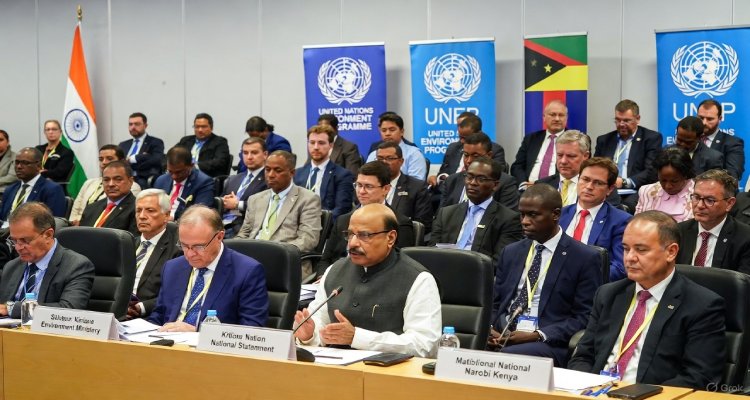
UNEA-7 convenes global leaders in Nairobi to advance sustainable, people-centred solutions for a resilient planet, shaping the future of global environmental governance.
Introduction: A Global Environmental Parliament Meets at a Critical Moment
As climate shocks intensify, biodiversity loss accelerates, and pollution threatens human health across continents, the world’s highest environmental decision-making body has reconvened at a pivotal moment. On December 8, global leaders, policymakers, scientists, and civil society representatives gathered in Nairobi, Kenya, for the seventh session of the United Nations Environment Assembly (UNEA-7)—a forum often described as the environmental equivalent of a global parliament.
With the theme “Advancing Sustainable Solutions for a Resilient Planet,” UNEA-7 arrives at a time when the gap between environmental ambition and on-ground action remains stark, and the need for collective solutions has never been more urgent.
Context & Background: What Is the UN Environment Assembly?
The UN Environment Assembly is the world’s highest decision-making body on environmental matters, bringing together all 193 UN Member States under a single platform. Meeting biennially, UNEA sets global environmental priorities and guides the work of the United Nations Environment Programme (UNEP) through resolutions and policy directions agreed upon by Member States.
While UNEA resolutions are not legally binding, their influence is substantial. In the past, decisions taken at the Assembly have laid the groundwork for landmark international agreements, helping nations align on shared environmental goals and common frameworks for action.
The Assembly’s roots trace back to 1972, when the UN General Assembly established UNEP and its Governing Council following growing global concern over environmental degradation. A major governance shift occurred in 2012 at the UN Conference on Sustainable Development, when world leaders adopted “The Future We Want” outcome document. This paved the way for universal membership, transforming UNEA into a truly global environmental forum with equal representation for all nations.
Main Developments: UNEA-7 and the Push for Sustainable Solutions
A Multilateral Platform for a Resilient Planet
UNEA-7 brings together an unusually broad coalition—environment ministers, inter-governmental organizations, multilateral environmental agreement bodies, UN agencies, civil society groups, youth representatives, and the private sector. The focus is clear: advancing solutions that strengthen planetary resilience while balancing development needs.
Discussions span a wide range of challenges, from climate action and energy transitions to sustainable consumption, land restoration, and inclusive environmental governance. At the heart of UNEA-7 is the recognition that environmental solutions must be global in coordination but local in impact, reflecting the diverse realities of developed and developing nations alike.
India’s National Statement at UNEA-7
India’s participation drew particular attention during the High-Level Segment, where Union Minister of State for Environment, Forest and Climate Change Kirti Vardhan Singh delivered the country’s national statement.
Singh emphasized that India approaches UNEA-7 with a firm belief that environmental action must remain people-centred, equitable, and grounded in the principle of Common But Differentiated Responsibilities and Respective Capabilities (CBDR-RC)—a long-standing cornerstone of international climate negotiations.
Highlighting India’s domestic progress, Singh pointed to the country’s rapidly evolving energy transition, which now spans solar, wind, hydropower, biofuels, green hydrogen, offshore renewables, and energy storage technologies. According to the minister, these efforts are not only reshaping India’s energy landscape but also demonstrating how large developing economies can pursue climate action alongside growth.
Expert Insight & Public Narrative: India’s Model of Participatory Climate Action
Beyond policy commitments, India’s statement underscored the role of public participation in environmental transformation. Flagship initiatives such as PM Surya Ghar and PM-KUSUM were highlighted as examples of programs that empower households and farmers with access to affordable, reliable clean energy, turning citizens into active stakeholders in climate solutions.
Singh also drew attention to Mission LiFE (Lifestyle for Environment)—India’s global advocacy for mindful consumption and sustainable living. Rather than framing sustainability as a top-down mandate, Mission LiFE positions everyday choices as powerful tools for climate resilience.
Perhaps the most emotionally resonant initiative mentioned was “Ek Ped Maa Ke Naam”, a nationwide tree-planting campaign that links environmental stewardship with cultural values. By drawing a parallel between caring for one’s mother and nurturing the Earth, the campaign has evolved into a mass movement. To date, over 2.6 billion saplings have been planted under the initiative, contributing to land restoration and ecological resilience.
Impact & Implications: Why UNEA-7 Matters Beyond Nairobi
Although UNEA resolutions do not carry legal force, their real-world impact lies in agenda-setting and norm-building. The decisions and priorities agreed upon at UNEA-7 will shape UNEP’s work programme and influence national policies, international cooperation, and funding priorities in the years ahead.
For developing countries, UNEA-7 provides a crucial platform to reinforce the importance of equity, climate finance, technology transfer, and capacity-building. For developed nations, it serves as a reminder that global environmental stability depends on inclusive solutions that recognize historical responsibilities and present-day realities.
India’s interventions at UNEA-7 reflect a broader narrative emerging within multilateral forums: that sustainability cannot succeed without public buy-in, cultural alignment, and development-sensitive strategies. As environmental pressures intensify, such people-centric approaches may prove essential for translating global commitments into lasting change.
Conclusion: From Resolutions to Real-World Resilience
The seventh session of the UN Environment Assembly underscores both the scale of today’s environmental challenges and the power of collective action. UNEA-7 is not merely a diplomatic gathering; it is a space where ideas, priorities, and partnerships converge to shape the future of planetary governance.
As discussions in Nairobi continue, the true measure of success will lie beyond conference halls— in how governments, institutions, and citizens translate shared resolutions into tangible action. With its emphasis on sustainability, equity, and resilience, UNEA-7 signals a growing recognition that protecting the planet is inseparable from protecting people—and that the path forward must be walked together.
Disclaimer :This article is an original, journalistic interpretation based solely on the provided information. It does not reproduce or paraphrase any existing publication and is intended for informational purposes only.