









Trump Slams Grammys After Trevor Noah’s Epstein Joke
A single joke at music’s biggest night has reignited political tensions far beyond the Grammy stage.
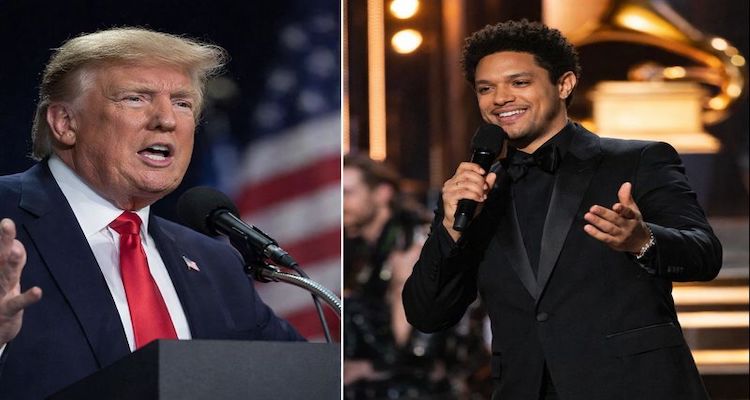
Former President Donald Trump has lashed out at Grammys host Trevor Noah, accusing him of spreading false claims during the broadcast and threatening legal action in response.
The clash underscores how pop culture, politics, and America’s unresolved debates around media credibility continue to collide in highly public ways.
A Joke That Sparked a Political Firestorm
The 68th Grammy Awards delivered the usual mix of chart-topping performances, emotional speeches, and headline-making wins. But one of the night’s most talked-about moments had little to do with music.
During the live broadcast, host Trevor Noah made a pointed joke referencing former President Donald Trump, the late financier Jeffrey Epstein, and former President Bill Clinton. The remark, delivered as Noah wrapped up his final year hosting the ceremony, drew immediate attention online.
The quip came moments after Billie Eilish won Song of the Year. As the crowd applauded, Noah joked that the award was something “every artist wants almost as much as Trump wants Greenland,” before adding a reference to Epstein and Clinton in the same breath.
The audience laughed. Social media quickly amplified the moment. Trump, however, did not.
Trump Responds on Truth Social
Within hours, Trump took to his social media platform, Truth Social, to issue a blistering response. In a series of posts, he criticized the Grammys, the network that aired them, and Noah personally.
Trump described the awards show as “virtually unwatchable” and claimed CBS was fortunate to no longer carry the broadcast. He then accused Noah of making “false and defamatory” statements about his alleged association with Epstein.
Trump flatly denied ever visiting Epstein’s private island or being accused of doing so in the past. He emphasized that while he could not speak for Bill Clinton, he maintained that the joke crossed a legal line.
The former president also suggested he was considering legal action, saying his lawyers would be involved and warning Noah to “get his facts straight.”
The Epstein Question and Public Sensitivity
Jeffrey Epstein’s crimes and connections remain one of the most sensitive subjects in American public life. Any reference to his name, particularly involving political figures, often triggers intense scrutiny.
Public records and reporting over the years have documented Epstein’s associations with a wide range of powerful individuals across politics, finance, and entertainment. However, allegations and confirmed actions vary significantly among those linked to him.
Trump’s response focused specifically on rejecting any implication that he had visited Epstein’s island. He framed Noah’s joke as not just offensive but legally actionable, reflecting how carefully public figures guard against reputational harm tied to Epstein’s legacy.
CBS, Comedy, and Media Criticism
Trump’s post also took aim at CBS, accusing the network of suppressing criticism of him in other contexts while allowing Noah’s joke to air during the Grammys.
The former president has frequently criticized major television networks, accusing them of bias and selective coverage. His remarks following the Grammys fit into a broader pattern of media skepticism that has defined much of his political career.
CBS has not publicly responded to Trump’s comments regarding the broadcast or his accusations of silencing critics.
Trevor Noah’s Final Grammys Run
For Trevor Noah, the moment marked part of his final appearance as Grammys host. Noah has built a reputation for blending political satire with mainstream entertainment, first on “The Daily Show” and later as an awards show emcee.
His Grammy hosting tenure has often included light political commentary, reflecting the broader trend of award ceremonies leaning into topical humor. While many viewers praised his sharp delivery, others argued that political jokes risk overshadowing the celebration of music.
Noah has not publicly responded to Trump’s criticism or legal threats.
Public Reaction Splits Along Familiar Lines
Online reaction to the exchange followed predictable divides. Trump supporters echoed his claims, accusing the Grammys of promoting misinformation and partisan humor.
Others defended Noah, arguing that comedy has long played a role in critiquing powerful figures and that political jokes are commonplace at major cultural events.
Media analysts noted that the controversy itself helped extend the Grammys’ reach, keeping the ceremony in headlines long after the final award was handed out.
Legal Experts Urge Caution
Legal experts observing the situation have pointed out that defamation cases involving public figures face a high bar under U.S. law. To succeed, plaintiffs must typically prove that false statements were made with actual malice.
Satirical commentary, particularly in a comedic setting, is often afforded broad protections. However, experts caution that each case depends heavily on context, wording, and intent.
As of now, there is no indication that formal legal action has been filed.
Broader Implications for Pop Culture and Politics
The Grammys dispute highlights a growing reality: major entertainment platforms are no longer insulated from political fallout. A single line delivered in jest can trigger national debate, legal threats, and days of media coverage.
For artists and hosts, the moment raises questions about the boundaries of satire in high-profile broadcasts. For politicians, it reinforces how cultural moments can quickly become political battlegrounds.
The incident also reflects ongoing tensions around trust in media, public figures’ reputations, and how unresolved scandals continue to shape public discourse.
What Comes Next?
Whether Trump follows through on his legal threats remains unclear. Past incidents suggest that public confrontations often fade without courtroom action, replaced by the next political or cultural flashpoint.
For now, the Grammys controversy serves as another reminder of how deeply intertwined entertainment and politics have become and how quickly a joke can escalate into a national conversation.
As award shows evolve and public figures remain under constant scrutiny, moments like these may become less the exception and more the norm.
ALSO READ: Why Netflix’s $150M Western The Abandons Collapsed
This content is published for informational or entertainment purposes. Facts, opinions, or references may evolve over time, and readers are encouraged to verify details from reliable sources.