









Transformers Documentary Reveals Film Franchise Struggles
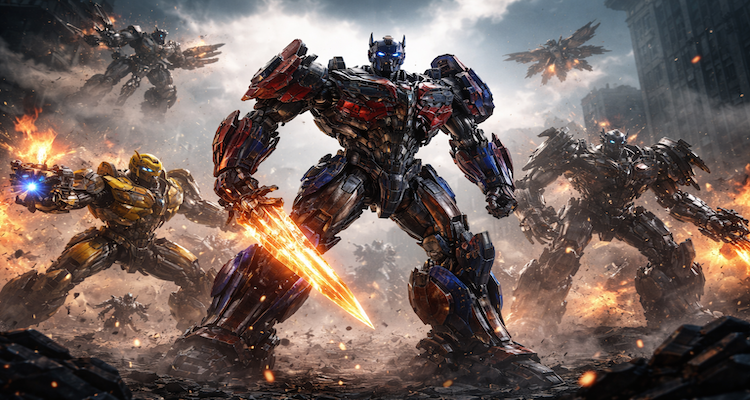
For more than 40 years, the Transformers brand has evolved from a toy line into a global entertainment powerhouse. But a new documentary suggests that behind its cinematic success lies a far more complicated, and at times troubled production history.
As the franchise struggles to regain momentum on the big screen, fresh revelations are casting doubt on its creative direction and long-term viability.
A Franchise Built on Reinvention
The Transformers franchise began as a reimagining of Takara’s Diaclone toy line before being adapted for Western audiences by Hasbro, Marvel Comics, and Sunbow Entertainment. Over time, it expanded into television, comics, and blockbuster films, becoming one of the most recognizable entertainment brands worldwide.
Despite its enduring popularity, the franchise has gone through multiple reinventions, some more successful than others. From the controversial “Beast Era” to the high-octane live-action films directed by Michael Bay, Transformers has repeatedly shifted tone and style in an effort to stay relevant.
Documentary Highlights Creative Tensions
The latest installment of Icons Unearthed, a documentary series exploring major pop culture franchises, takes a closer look at Transformers’ history. While celebrating its cultural impact, the episode also points to persistent challenges in the film division, particularly surrounding creative control and production decisions.
A central focus of the documentary is longtime franchise producer Lorenzo di Bonaventura and his influence over recent projects. According to the film, his involvement has played a significant role in shaping the direction of the live-action series, sometimes in ways that complicated production.
From Box Office Success to Creative Fatigue
Michael Bay’s Transformers films were initially major commercial hits, driven by large-scale action and visual spectacle. However, critical reception declined over time, culminating in Transformers: The Last Knight (2017), which underperformed at the box office.
That film marked a turning point. Its reception suggested that audiences had grown weary of the franchise’s formula, prompting a shift in strategy.
In response, Bumblebee (2018) was developed as a smaller-scale prequel but was later repositioned as a soft reboot. The film was widely praised compared to its predecessors, with many viewing it as a refreshing change in tone and storytelling.
A Missed Opportunity After Bumblebee
Despite Bumblebee’s success, its director Travis Knight did not return for a direct sequel. The documentary suggests that creative differences between Knight and producer di Bonaventura contributed to his departure.
This shift set the stage for Transformers: Rise of the Beasts (2023), directed by Steven Caple Jr. While the film was generally seen as an improvement over the later Bay-era entries, it received mixed reviews and performed modestly at the box office.
According to the documentary, production challenges played a key role in shaping the final product.
Production Challenges and Changing Vision
One of the recurring issues highlighted is the film’s constantly evolving script. The documentary claims that major changes were made throughout production, with scenes frequently added or removed.
This reportedly led to a lack of narrative cohesion, as the film struggled to balance its expanding scope with a clear storyline.
Additionally, the documentary suggests that there was a strong push to increase the number of action sequences and robot appearances, even when they did not directly serve the plot.
As a result, several characters, particularly those from the Beast Wars universe, had limited screen time, appearing more as brief cameos than fully developed roles.
The production also faced technical challenges. With frequent revisions and a demanding visual effects workload, the film’s action sequences reportedly lacked the level of polish expected from a major franchise release.
A Broader Pattern of Instability
The documentary’s portrayal of Rise of the Beasts reflects a broader pattern within the franchise: ambitious ideas constrained by inconsistent execution.
Even as filmmakers attempted to move away from the excesses of earlier installments, the series continued to grapple with issues related to creative direction and production management.
This inconsistency has made it difficult for Transformers to establish a stable identity on the big screen, something that Bumblebee briefly achieved but subsequent films struggled to maintain.
Mixed Results Continue with Animated Entry
The challenges are not limited to live-action films. The 2024 animated feature Transformers One—unconnected to the live-action continuity, received strong reviews but failed to perform at the box office.
This outcome underscores a key issue facing the franchise: even when critical reception improves, commercial success is not guaranteed.
It also raises questions about audience engagement and whether the brand’s cinematic appeal has diminished over time.
Background: A Legacy Beyond Film
While the film franchise faces uncertainty, Transformers remains a powerful brand across other media. Its legacy includes decades of television series, comic books, and merchandise that continue to resonate with fans.
The franchise’s 40th anniversary highlights its cultural significance and ability to adapt across generations. However, its cinematic journey has been far less consistent.
Why It Matters
The documentary’s insights arrive at a critical moment for Transformers. With no clear roadmap for future films, the franchise must address long-standing issues related to creative control and production strategy.
If the claims presented in Icons Unearthed reflect broader industry realities, they suggest that internal decision-making, rather than audience interest alone may be influencing the franchise’s performance.
For Paramount and Hasbro, the challenge will be finding a balance between spectacle and storytelling while maintaining a coherent creative vision.
Conclusion
The Transformers franchise has endured for decades by constantly reinventing itself. Yet its recent cinematic struggles reveal the difficulty of sustaining that momentum in an increasingly competitive entertainment landscape.
As the documentary suggests, the path forward may depend less on expanding scale and more on refining the creative process behind the scenes.
Whether the franchise can reclaim its position as a box office powerhouse remains uncertain, but its history shows that reinvention is always possible.
This content is published for informational or entertainment purposes. Facts, opinions, or references may evolve over time, and readers are encouraged to verify details from reliable sources.