










The Town Where Every Visitor Sees Something Different
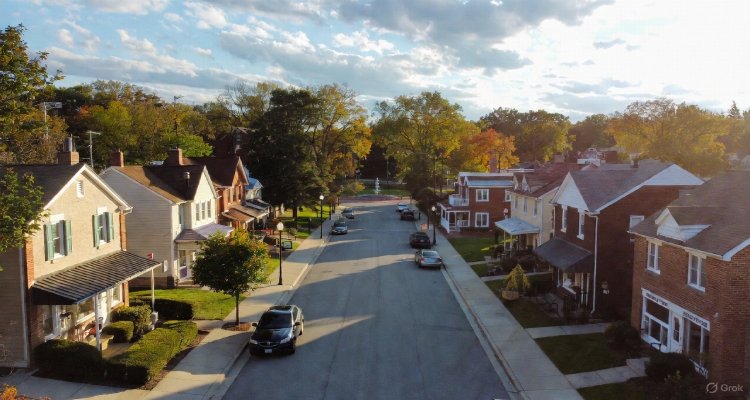
A mysterious town where every visitor sees something different is challenging how we understand perception, memory, and reality itself.
Introduction: A Place That Refuses to Be the Same Twice
No two people ever leave this town with the same story.
Some visitors swear they felt an overwhelming sense of calm, as if time itself slowed while they wandered its streets. Others describe a quiet unease, a feeling that the town was subtly responding to their presence. A few insist they noticed details—colors, sounds, even buildings—that their companions never saw.
Welcome to the town where every visitor sees something different.
It is not a place marked by dramatic landmarks or headline-grabbing monuments. Instead, its mystery lies in perception. Here, reality seems flexible, shaped as much by the observer as by the surroundings themselves. In an era obsessed with objective truth, this town has become a living question mark—challenging how we see, remember, and interpret the world around us.
Context & Background: How the Town Gained Its Reputation
The town’s reputation did not emerge overnight. For decades, it was little more than a quiet settlement—economically modest, architecturally unremarkable, and largely ignored by travelers.
The shift began subtly. Travel diaries, handwritten letters, and later online blogs started describing the town in conflicting ways. One traveler wrote about vibrant murals lining the streets. Another, visiting the same month, claimed the walls were bare and muted. Some described lively markets filled with music; others remembered near silence.
Local authorities initially dismissed these accounts as exaggeration. But as the volume of stories grew—and the contradictions became impossible to ignore—the town developed an unusual identity: a destination defined not by what it is, but by what it reveals to those who pass through.
Today, the town attracts curious tourists, artists, psychologists, and storytellers, all hoping to experience—or explain—its elusive nature.
Main Developments: What Makes This Town So Unusual
At the heart of the phenomenon is a striking consistency: the town itself rarely changes, yet visitors’ experiences do.
A Landscape of Interpretation
Buildings remain in the same locations. Streets follow the same routes. Shops open and close on predictable schedules. And yet, people report noticing entirely different elements—an alley that felt endless to one visitor, but ordinary to another; a town square that felt intimate to some, overwhelming to others.
Many travelers describe the town as emotionally “responsive,” mirroring their inner state rather than imposing a fixed atmosphere.
Memory Gaps and Contradictions
Perhaps more unsettling are the discrepancies that emerge when visitors compare notes. Two people walking side by side may recall different storefronts, sounds, or even conversations with locals. These are not vague impressions but specific, confidently remembered details.
What makes this particularly compelling is that these accounts are rarely dramatic or fantastical. Instead, they sit in a gray area—subtle enough to be believable, strange enough to provoke doubt.
Expert Insight & Public Reaction: Science, Psychology, and Speculation
The town has become an informal case study in human perception.
Psychological Perspectives
Cognitive psychologists suggest that the town highlights how perception is shaped by expectation, emotion, and prior experience. The brain, they argue, is not a passive receiver of information but an active editor—filling gaps, emphasizing certain details, and suppressing others.
In unfamiliar environments, this effect intensifies.
“People assume they see the world as it is,” one behavioral analyst notes, “but environments like this reveal how much we actually see ourselves reflected back.”
Local Voices
Residents, meanwhile, take a pragmatic view. Many insist the town is ordinary and that visitors simply project meaning onto it. Others embrace the mystery, seeing it as a quiet advantage that keeps tourism alive without turning the town into a spectacle.
Online, public reaction ranges from fascination to skepticism. Some dismiss the stories as coincidence or collective suggestion. Others argue the town exposes a deeper truth—that reality is less fixed than we like to believe.
Impact & Implications: Why This Town Matters
Beyond tourism and curiosity, the town raises larger questions with far-reaching implications.
Rethinking Objectivity
If people can experience the same place so differently, what does that say about shared reality? The town has become a reference point in discussions about memory reliability, eyewitness testimony, and even digital misinformation.
A Mirror for Modern Life
In an age of personalized algorithms—where news, ads, and social feeds differ from person to person—the town feels eerily familiar. It operates like a physical version of the internet experience: the same framework, endlessly customized by the viewer.
What Comes Next
Local officials have resisted attempts to commercialize the phenomenon too aggressively. There are no guided “mystery tours” or official explanations. The town’s appeal lies in its restraint—its refusal to define itself.
Conclusion: A Town That Asks More Than It Answers
The town where every visitor sees something different offers no grand reveal, no final explanation. Instead, it leaves people with questions—about perception, memory, and the quiet ways our minds shape the world.
Perhaps that is its greatest power. In a time when certainty is marketed as comfort, this town stands as a reminder that ambiguity can be just as meaningful.
You don’t visit this place to discover what it is.
You visit to discover what you bring with you.
Disclaimer :This article is a narrative feature based solely on the headline provided. It explores themes of perception and human experience without making scientific or factual claims about a specific real-world location.