





The Spiritual Science Behind Rudraksha Beads
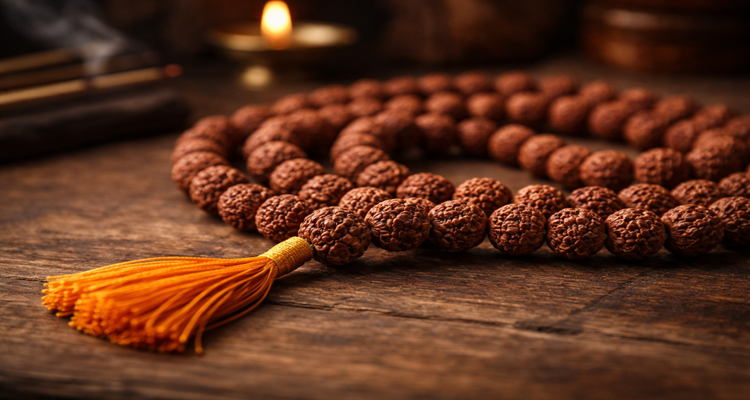
Among the many sacred symbols associated with Lord Shiva, few are as recognizable as the Rudraksha bead. Worn by yogis, spiritual practitioners, and devotees for centuries, these seeds are believed to carry powerful spiritual and meditative properties.
While they are commonly used in prayer and meditation, Rudraksha beads hold deeper mythological and symbolic meaning that links them directly to Shiva’s cosmic presence.
The Origin of Rudraksha in Mythology
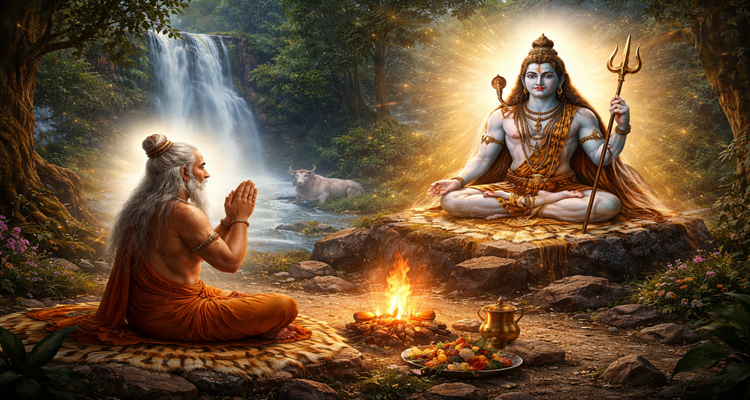
According to ancient traditions, the Rudraksha tree emerged from the tears of Lord Shiva.
The story describes a moment when Shiva entered deep meditation for the welfare of all living beings. After opening his eyes, tears fell from them and touched the earth.
From those tears grew the sacred Rudraksha tree.
The Sanskrit word itself reflects this origin. “Rudra” is a name for Shiva, while “Aksha” means tears or eyes. Together, Rudraksha translates roughly to “the tears of Shiva.”
A Symbol of Spiritual Protection
Rudraksha beads are believed to possess protective qualities.
Many spiritual practitioners wear them as necklaces or bracelets, believing the beads help maintain mental clarity and emotional balance.
In traditional belief systems, they are also associated with shielding the wearer from negative energies and distractions.
Types of Rudraksha Beads
Rudraksha beads are categorized based on the number of natural lines or “faces” found on their surface.
Each variation is believed to represent a different spiritual attribute.
For example:
- One-faced Rudraksha symbolizes pure consciousness.
- Five-faced Rudraksha, the most common type, represents spiritual discipline and balance.
- Eleven-faced Rudraksha is often associated with the energy of Shiva himself.
These classifications form an important part of spiritual traditions connected to the beads.
Use in Meditation and Prayer
Rudraksha beads are often used as prayer counters during mantra chanting.
Practitioners pass each bead between their fingers while reciting sacred sounds or prayers. This process helps maintain concentration during meditation.
Many devotees combine the use of Rudraksha beads with the chant “Om Namah Shivaya,” one of the most important mantras dedicated to Shiva.
Cultural and Historical Significance
Over centuries, Rudraksha beads have become an integral part of spiritual traditions across South Asia.
They are worn by ascetics, monks, yoga practitioners, and devotees seeking deeper spiritual awareness.
The beads are also frequently depicted in traditional artwork portraying Shiva, reinforcing their symbolic connection to the deity.
Real-World Impact
Today, Rudraksha beads have gained global popularity among meditation communities.
People around the world use them as tools for mindfulness and stress reduction.
Despite their modern adoption, the beads remain deeply rooted in ancient Hindu philosophy and spiritual symbolism.
Conclusion
Rudraksha beads represent far more than decorative ornaments.
They embody a tradition of meditation, devotion, and spiritual discipline that traces its origins to one of Hinduism’s most revered deities. For many practitioners, wearing Rudraksha becomes a daily reminder of the quest for inner peace and divine connection.
This content is published for informational or entertainment purposes. Facts, opinions, or references may evolve over time, and readers are encouraged to verify details from reliable sources.