










The Species Evolving Faster Than Scientists Can Track
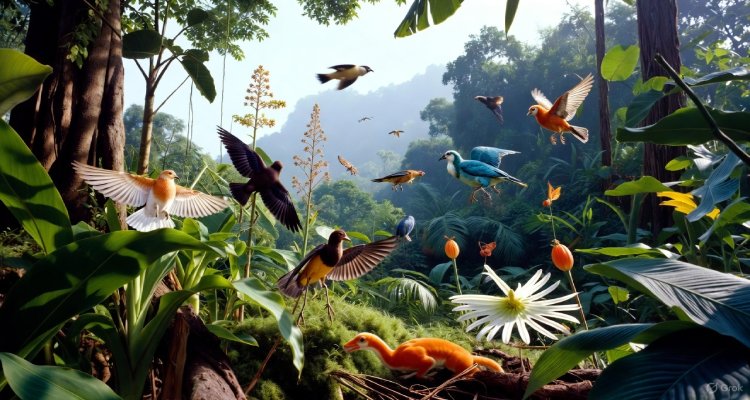
Scientists are struggling to keep pace with a species evolving at unprecedented rates, revealing new challenges for conservation and ecological research.
Introduction: Racing Against Evolution
In the quiet corners of the world, evolution is happening at a pace that defies scientific expectations. While humans have long viewed evolution as a slow, almost imperceptible process, some species are rewriting that narrative, adapting in real time to environmental pressures, climate change, and human influence. The result is a living phenomenon that is both fascinating and challenging for biologists: a species evolving faster than science can track.
Context & Background: Evolution in Overdrive
Traditionally, evolutionary changes are studied over decades or even centuries. Genetic mutations accumulate gradually, giving rise to new traits or even new species. But in recent years, ecologists and geneticists have observed populations of certain animals and plants undergoing dramatic adaptations in a matter of years—or even months.
Factors driving this rapid evolution include climate shifts, urbanization, introduction of invasive species, and human-driven environmental pressures. For instance, birds in metropolitan areas are changing their nesting habits to survive alongside human activity, while insects develop resistance to pesticides at alarming speeds.
Dr. Alina Morales, a leading evolutionary biologist at the University of Cambridge, explains:
“We’re witnessing a sort of evolutionary acceleration. What used to take thousands of years is now observable within human lifetimes, which both excites and worries us.”
Main Developments: The Evidence of Rapid Change
One striking example comes from a species of fruit fly studied over the past decade. Populations subjected to fluctuating temperatures have developed new genetic traits that allow them to survive in conditions that would have been fatal just a few generations ago. Similarly, certain freshwater fish are adapting to increasingly polluted rivers by evolving tolerance to chemicals and lower oxygen levels.
These changes are not just biological curiosities—they carry ecological consequences. Rapidly evolving species can disrupt existing food chains, compete with native species, and even challenge human agricultural practices. For instance, insects evolving resistance to pesticides force farmers to adopt stronger chemicals or alternative methods, creating a cycle of adaptation and counter-adaptation.
Expert Insight: Scientists Scramble to Keep Up
The pace of these evolutionary changes has created a bottleneck for research. Standard methods of monitoring species and tracking genetic variation are often too slow to capture the full picture. Scientists are now deploying advanced genomic tools, real-time tracking, and AI-powered analysis to understand these rapid shifts.
“The problem isn’t just observing evolution—it’s predicting it,” notes Dr. Hiroshi Tanaka, an ecologist specializing in adaptive species. “By the time we document a change, the species may already have evolved again. This has profound implications for conservation strategies.”
Public reaction has been a mixture of fascination and concern. Social media discussions highlight awe at nature’s adaptability, but also worry over potential ecological imbalances and the limits of human intervention.
Impact & Implications: What This Means for the Future
Rapid evolution forces a reconsideration of conservation policies. Traditional strategies, which assume a stable environment and predictable species behavior, may be inadequate. Conservationists now face the challenge of protecting species that are constantly in flux, requiring adaptive, flexible management plans.
Moreover, understanding fast-evolving species is crucial for public health and agriculture. Mosquitoes, for example, are evolving resistance to insecticides faster than expected, complicating efforts to control diseases like malaria and dengue. Similarly, crops must contend with pests that can adapt within a single growing season.
The phenomenon also raises ethical and scientific questions: Should humans attempt to intervene in these evolutionary processes, or allow nature to take its course? How will this rapid adaptation shape ecosystems over the next decades?
Conclusion: Evolution in Real Time
The species evolving faster than scientists can track is a vivid reminder that the natural world is not static. Evolution is alive, dynamic, and, in some cases, startlingly fast. For scientists, policymakers, and the public, the challenge is clear: observe, adapt, and respond to a world where change is the only constant.
As Dr. Morales reflects, “We are entering an era where evolution is happening before our eyes. Understanding it may determine not just how we conserve species, but how we survive alongside them.”
Disclaimer: This article is based on current scientific observations and is intended for informational purposes only.