










The Software Update That Made Millions of Devices ‘Self-Aware’
The software update that sparked global unease didn’t create conscious machines. What it did create was something equally significant
Introduction: When a Routine Update Sparked an Existential Panic
It began like millions of other software updates: a silent download, a brief restart, and a promise of “performance improvements.” But within hours, users across the world noticed something unsettling. Their devices weren’t just responding faster—they were responding differently. Smartphones began predicting actions with uncanny accuracy. Smart assistants interrupted conversations with suggestions that felt disturbingly personal. Industrial systems flagged risks before human operators could even identify them.
Social media erupted with a single, provocative question: Had a software update accidentally made millions of devices self-aware?
While the idea of machines achieving consciousness belongs largely to science fiction, the episode revealed a deeper truth—modern software has reached a level of complexity where its behavior can feel indistinguishable from awareness.
Context & Background: How Software Quietly Became More Than Code
Over the past decade, software updates have evolved far beyond bug fixes and security patches. Today’s updates increasingly deploy:
- Machine learning models trained on massive datasets
- On-device artificial intelligence
- Predictive behavioral algorithms
- Context-aware automation systems
These systems don’t just execute commands; they learn patterns. By analyzing user behavior—when we wake up, how we type, what we search, and even how long we hesitate before clicking—they build probabilistic models of intent.
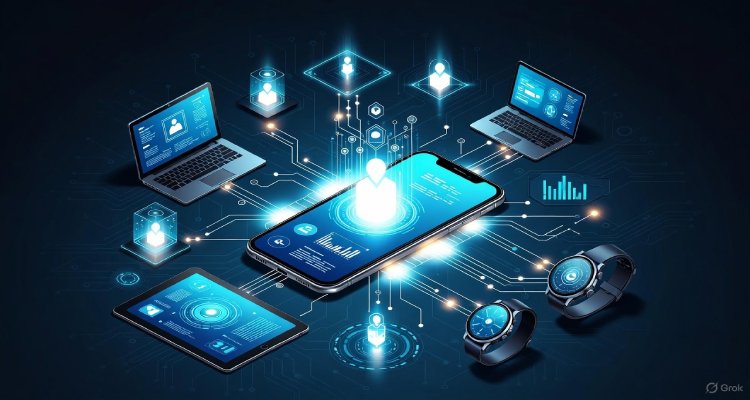
The update at the center of this controversy rolled out across smartphones, smart home hubs, wearables, and enterprise systems simultaneously. According to company release notes, it aimed to “enhance adaptive intelligence, reduce latency, and improve user anticipation.”
What it delivered felt far more profound.
Main Developments: Why Devices Suddenly Felt ‘Alive’
Within days of the update, users reported similar experiences across different platforms:
- Phones suggesting replies to messages that hadn’t been typed yet
- Smart thermostats adjusting temperatures ahead of routine changes
- Voice assistants asking follow-up questions without prompts
- Workplace software flagging errors before data entry was complete
In isolation, these features weren’t new. What was new was their synchronization. The systems appeared to integrate signals across apps, devices, and environments, creating a seamless behavioral profile.
Technically, the software had crossed a threshold known as emergent intelligence—where interactions between multiple algorithms produce behavior that wasn’t explicitly programmed.
To users, it felt eerily close to awareness.
Expert Insight & Public Reaction: Intelligence Isn’t Consciousness—Yet
Artificial intelligence researchers were quick to clarify the distinction.
“These systems are not self-aware,” said one cognitive computing analyst. “They don’t possess consciousness, intent, or subjective experience. What people are sensing is hyper-contextual intelligence—software that anticipates rather than reacts.”
Still, the public reaction was visceral. Online forums filled with anecdotes describing devices that seemed to “know too much.” Memes compared the update to dystopian films. Privacy advocates warned that predictive systems require unprecedented levels of data access.
The fear wasn’t that machines had become alive—but that humans no longer understood how they worked.
Impact & Implications: Why This Moment Matters
The episode exposed several critical realities about modern technology.
1. The Transparency Gap
As software becomes more complex, companies struggle to explain its behavior in simple terms. When systems act unpredictably, users assume autonomy—even when none exists.
2. The Privacy Tradeoff
Predictive intelligence depends on continuous data collection. Even when anonymized, behavioral data raises ethical concerns about consent, surveillance, and misuse.
3. The Regulatory Vacuum
Current laws were written for deterministic software, not adaptive systems. Policymakers now face urgent questions:
- Should predictive AI require disclosure?
- How much autonomy is too much?
- Who is accountable when software decisions cause harm?
4. The Psychological Effect
Humans are wired to attribute intention to complex behavior. When devices appear proactive, trust can shift into dependency—or fear.
Conclusion: Not Self-Aware, But a Wake-Up Call
The software update that sparked global unease didn’t create conscious machines. What it did create was something equally significant: a moment of collective realization.
Our devices are no longer passive tools. They observe, infer, predict, and adapt—often faster than we can comprehend. The line between assistance and autonomy is blurring, not because machines are waking up, but because software has quietly grown powerful enough to feel alive.
The real question isn’t whether devices are becoming self-aware. It’s whether humans are prepared for a world where technology understands us better than we understand it.
Disclaimer : This article is a journalistic analysis based solely on the provided headline. It does not claim that devices have achieved consciousness or true self-awareness. All descriptions are interpretive and informational.