










The New Global Accent: How the Internet Changed the Way Everyone Sounds
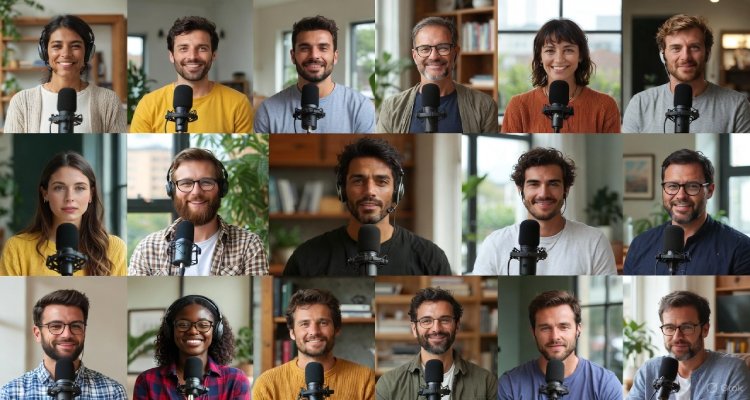
The internet is shaping a new global accent, blending languages, dialects, and speech patterns—transforming communication across generations.
Introduction: A Voice Without Borders
From TikTok videos in Brooklyn to gaming streams in Seoul, a subtle yet profound shift is happening in the way people speak. Across the globe, accents are melting into something new—a hybrid, digital-age sound shaped by the internet. Linguists are calling it “the new global accent,” a phenomenon where traditional regional inflections are giving way to speech patterns influenced by online culture, memes, and media.
Context & Background: How the Internet Became a Linguistic Playground
For centuries, accents were geographically bound. Someone from Liverpool sounded markedly different from someone in New Delhi, Tokyo, or Rio de Janeiro. But the internet has changed the rules. Social media, online gaming, streaming platforms, and international content consumption expose billions to diverse ways of speaking daily.
YouTube tutorials, podcasts, and TikTok trends allow people to adopt intonations, phrases, and slang from across the world. For younger generations, the line between local and global speech is increasingly blurred. Even pronunciation is being influenced by popular content: think of how certain American vowel sounds or British pronunciations have seeped into non-native speakers’ speech patterns.
Main Developments: The Rise of the Digital Accent
The phenomenon is not just anecdotal. Linguists studying online communication note several key trends:
- Neutralization of Regional Accents: Online interactions often favor clarity and neutrality, leading to the reduction of strong local accents. Gamers, streamers, and influencers consciously or unconsciously modify their speech to reach a global audience.
- Adoption of Popular Slang: Words and phrases popularized on social media—“vibe check,” “sus,” or “yeet”—are shaping rhythm and cadence, influencing pronunciation and sentence flow.
- Hybrid Pronunciations: Non-native speakers frequently adopt English pronunciations influenced by online media rather than local education standards, creating a globally intelligible, albeit nontraditional, accent.
Dr. Elena Martinez, a sociolinguist at the University of Barcelona, explains, “The internet acts as a linguistic mixer. People aren’t just learning words—they’re absorbing intonation, pacing, and speech habits from global peers. We’re seeing the birth of a digital lingua franca that exists in speech, not just text.”
Expert Insight and Public Reaction
The reaction to this new accent is mixed. Some celebrate it as a unifying cultural phenomenon. “It’s remarkable how the digital world fosters a shared identity,” says Dr. Akash Mehra, a linguistics researcher in Mumbai. “Your accent can now be understood across continents with fewer barriers.”
Others raise concerns about linguistic homogenization. “Regional dialects carry history, culture, and identity,” warns Dr. Martinez. “While global accents aid communication, there’s a risk of eroding linguistic diversity.”
Public sentiment reflects both awe and nostalgia. Social media users often mimic popular online accents for humor, entertainment, or relatability, signaling both adaptation and playful experimentation. Memes about “the TikTok accent” or “the YouTuber drawl” illustrate how deeply digital influence permeates everyday speech.
Impact & Implications: Who Wins, Who Loses
The rise of a global accent has implications beyond conversation:
- Education: Language learners can access pronunciation models from international speakers, accelerating English fluency and comprehension.
- Entertainment: Content creators gain broader audiences by using globally intelligible speech patterns.
- Cultural Identity: While communication becomes easier, local accents may diminish, potentially impacting cultural heritage and oral traditions.
Dr. Mehra notes, “In professional contexts, a neutral digital accent can open doors, but we must be mindful not to undervalue the richness of local voices. Accents are not just sounds—they carry stories.”
Conclusion: Speaking in the Language of the Internet
The new global accent is more than a trend—it’s a reflection of how interconnected we’ve become. It merges regional roots with global influences, enabling cross-cultural dialogue while challenging traditional notions of identity. Whether this evolution preserves or erodes linguistic diversity remains uncertain, but one thing is clear: the way we speak in 2025 is shaped not just by our hometowns, but by the screens and networks that connect us.
As Dr. Martinez aptly summarizes, “The internet has given birth to a shared voice—a digital accent that doesn’t belong to one nation, yet speaks to all.”
Disclaimer: This article is based on expert insights and observational research; individual experiences of accent and language may vary.