










The Mystery Chemical Atmosphere Scientists Can’t Identify
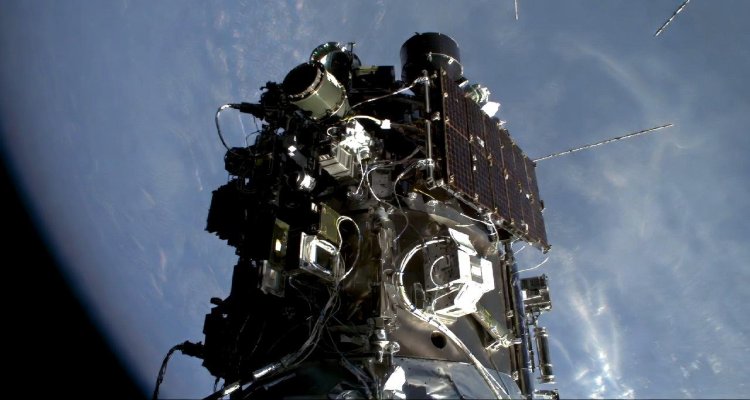
Scientists have detected a mysterious chemical atmosphere that defies identification, challenging climate models, chemistry, and our understanding of planetary science.
Introduction: A Sky That Defies Explanation
High above Earth’s familiar blue sky, scientists have encountered something deeply unsettling: a chemical atmosphere that refuses to be identified. Instruments designed to decode the molecular makeup of air are returning signals that don’t match anything currently known to science. No textbook compound. No familiar reaction pattern. Just data—persistent, repeatable, and unexplained.
For researchers who have spent decades cataloging the behavior of Earth’s atmosphere and those of distant planets, this mystery is not just puzzling—it’s disruptive. The atmosphere, long considered one of the most studied systems in science, may still be hiding secrets that challenge our understanding of chemistry, physics, and planetary evolution.
Context & Background: How We Normally Read an Atmosphere
Atmospheric science relies on precision. Using spectroscopy, satellites, weather balloons, and ground-based sensors, scientists can identify gases by how they absorb and emit light. Oxygen, nitrogen, methane, carbon dioxide—each leaves a distinct chemical fingerprint.
This approach has been so reliable that it’s now used far beyond Earth. Astronomers routinely analyze the atmospheres of distant exoplanets, searching for clues about habitability, climate, and even potential life.
That’s why the appearance of an atmosphere—or atmospheric layer—that does not align with known chemical signatures has raised serious questions. The data does not suggest faulty instruments or random noise. Instead, it points to something chemically real but scientifically unfamiliar.
Main Developments: What Scientists Are Seeing—and Why It Matters
The mystery began when atmospheric readings revealed absorption patterns that don’t correspond to any known gas combination. Even when accounting for extreme conditions—high radiation, pressure anomalies, or unusual temperatures—the chemical profile remains inconsistent with established models.
What makes this discovery more significant is its persistence. Independent instruments, operating at different times and locations, are detecting the same unexplained signals. This rules out temporary contamination or localized interference.
Scientists are now considering several possibilities:
- A previously unknown chemical compound formed under rare atmospheric conditions
- An exotic interaction between known gases creating an unexpected signature
- A new phase or state of matter behaving differently in atmospheric conditions
If confirmed, this would represent more than a new molecule—it would expose a gap in chemical science itself.
Expert Insight: Why the Scientific Community Is Taking This Seriously
Atmospheric chemists and physicists are approaching the mystery cautiously but with growing urgency. The consensus is clear: this is not a simple measurement error.
Many researchers compare the moment to earlier scientific surprises, when anomalies forced major breakthroughs. History offers strong parallels—from the discovery of ozone to the realization that chlorofluorocarbons could destroy it.
Public reaction within the scientific community has been a mix of excitement and restraint. While no one is rushing to dramatic conclusions, there is broad agreement that current atmospheric models may be incomplete.
The mystery has already sparked new collaborations between chemists, physicists, climate scientists, and astronomers—fields that rarely converge so tightly.
Impact & Implications: What Happens If the Atmosphere Is Rewritten
If this unidentified chemical atmosphere is verified, the implications could be profound.
For Climate Science
Atmospheric composition directly influences temperature, weather patterns, and climate stability. An unknown chemical component could affect how heat is trapped or released, potentially altering climate models used worldwide.
For Planetary Science
If Earth—or another observed environment—can host an unidentified atmospheric chemistry, then planets previously dismissed as inhospitable may deserve a second look. This could expand the criteria used to assess planetary habitability.
For Fundamental Chemistry
The discovery could challenge long-held assumptions about chemical bonding, reaction limits, or molecular stability under atmospheric conditions.
In short, this mystery doesn’t just add a footnote to science—it threatens to rewrite entire chapters.
Looking Ahead: How Scientists Plan to Solve the Puzzle
Researchers are now refining instruments, cross-checking data, and developing new simulations to recreate the conditions under which this chemical signature appears. Future satellite missions and high-altitude experiments are expected to focus specifically on isolating and identifying the unknown compound.
The process will be slow by design. Scientific credibility depends on verification, replication, and peer review. But momentum is building, and few doubt that the answer—when it arrives—will reshape how we think about the air around us.
Conclusion: A Reminder of How Much We Still Don’t Know
For centuries, humans have looked to the sky for answers, assuming that the air above us was a solved problem. This mystery chemical atmosphere proves otherwise.
It is a powerful reminder that even in an age of advanced technology and constant data, nature still holds surprises. The sky, it seems, is not just something we live beneath—but something we are still learning to understand.
Disclaimer :This article is based on emerging scientific discussions and theoretical interpretations. Ongoing research may refine or revise current understanding as new evidence becomes available.