









The Forest That Rearranges Itself Every Few Years
A deep look into forests that naturally rearrange themselves, revealing how climate change, ecology, and resilience reshape landscapes over time.
Introduction: When Nature Refuses to Stay Still
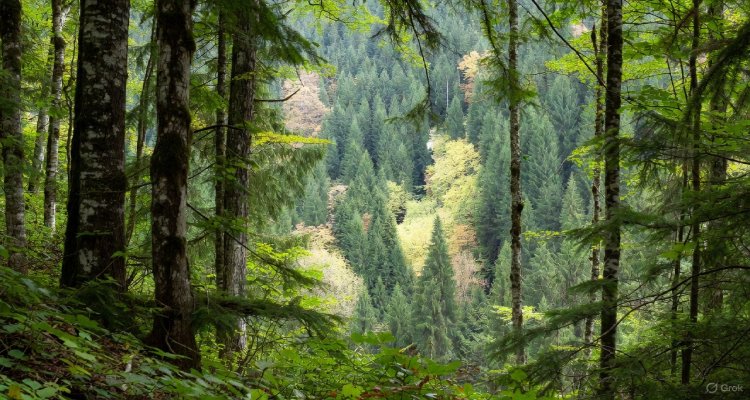
Deep within the world’s remaining wild landscapes, there are forests that defy one of humanity’s most basic assumptions about nature—that ecosystems are largely fixed in place. These forests appear familiar at first glance: towering trees, dense undergrowth, filtered sunlight. But return after a few years, and something unsettling becomes clear. The pathways have shifted. Tree clusters no longer stand where they once did. Clearings vanish, replaced by dense growth elsewhere. It is as if the forest has quietly rearranged itself.
This phenomenon—where a forest’s structure, composition, and spatial layout change dramatically over relatively short periods—has captured the attention of ecologists, climate scientists, and conservationists alike. Far from being random chaos, these transformations reveal how forests actively respond to environmental stress, climate shifts, and internal ecological processes. In an era of accelerating global change, the forest that rearranges itself may represent not instability, but resilience.
Context & Background: Forests as Living, Adaptive Systems
Forests have long been viewed as slow-moving systems, evolving over centuries rather than decades. Traditional forestry maps often treat tree distribution as static, with minor changes attributed to storms, fires, or human intervention. However, modern ecological research paints a different picture.
Forests are dynamic, self-regulating systems. Trees compete for light, water, and nutrients. Soil composition changes as organic matter accumulates or erodes. Animal activity—from burrowing mammals to seed-dispersing birds—reshapes the forest floor. Over time, these forces interact, creating patterns of growth and decline that can dramatically alter a forest’s physical layout.
In certain regions, especially those influenced by shifting rainfall patterns, periodic flooding, or temperature variability, these changes happen faster and more visibly. What appears to be a forest “rearranging itself” is often the result of multiple ecological feedback loops operating simultaneously.
Main Developments: Why Forests Change Their Own Layout
Natural Disturbance Cycles
One of the most significant drivers behind forest rearrangement is natural disturbance. Events such as wildfires, insect outbreaks, seasonal flooding, and strong winds selectively remove certain trees while creating opportunities for others.
Unlike total destruction, these disturbances act like a reset mechanism. When a dominant cluster of trees falls or burns, sunlight reaches the forest floor, allowing dormant seeds to germinate in new locations. Over time, the forest reorganizes itself around these openings, altering its spatial structure.
Climate-Driven Adaptation
As temperatures rise and rainfall patterns shift, forests adapt by favoring species better suited to new conditions. Trees that once thrived in a particular zone may gradually die off, while more resilient species take their place elsewhere.
This slow migration—sometimes spanning just a few hundred meters—can dramatically change how a forest looks and functions. Hillsides once dominated by moisture-loving trees may transition to drought-resistant varieties, effectively rearranging the forest’s internal geography.
Underground Networks and Soil Memory
Beneath the forest floor lies a hidden network of fungal connections known as mycorrhizal networks. These networks redistribute nutrients between trees and influence which plants thrive where. When soil chemistry changes—due to flooding, decay, or erosion—these underground systems adjust, guiding new growth patterns above ground.
The result is a forest that appears to “move,” even though individual trees remain rooted in place.
Expert Insight: What Scientists Say About Moving Forests
Ecologists describe these forests not as unstable, but as highly responsive. According to forest dynamics researchers, rearranging forests are often healthier than rigid, monoculture woodlands.
“Structural change is a sign of ecological intelligence,” one environmental analyst notes. “Forests that can reorganize themselves are better equipped to survive climate stress, disease, and human pressure.”
Public perception, however, often lags behind scientific understanding. To hikers and local communities, these changes can feel disorienting or even alarming. Familiar landmarks disappear, and traditional routes become impassable. Yet scientists emphasize that this fluidity is essential for long-term survival.
Impact & Implications: Why This Matters Beyond the Trees
Biodiversity and Wildlife
When forests rearrange themselves, wildlife adapts alongside them. New clearings attract different species. Predators adjust hunting patterns. Pollinators follow emerging plant life. While some species struggle during transition periods, others flourish, increasing overall biodiversity.
Climate Resilience
Adaptive forests play a crucial role in carbon storage. By continuously renewing themselves, they maintain their ability to absorb carbon dioxide, even under environmental stress. In contrast, forests that fail to adapt risk large-scale die-offs, releasing stored carbon back into the atmosphere.
Challenges for Conservation Planning
For conservationists, moving forests present a challenge. Protected boundaries drawn decades ago may no longer encompass the most ecologically valuable areas. This raises important questions about how conservation policies should evolve in a changing climate.
Static protection zones may need to give way to flexible, landscape-scale management strategies that allow forests the space to rearrange themselves naturally.
Conclusion: The Forest as a Living Map of Change
The forest that rearranges itself every few years is not broken, haunted, or unnatural. It is alive in the truest sense—responding, recalibrating, and reshaping itself in the face of constant change. What appears to humans as instability is, from an ecological perspective, adaptability at work.
As climate pressures intensify and environmental uncertainty grows, these forests offer a quiet lesson. Survival does not always come from standing firm. Sometimes, it comes from knowing when—and how—to change.
Disclaimer :This article is an original, interpretative exploration based solely on the provided headline. It does not reference or reproduce any existing publication and is intended for informational and educational purposes only.