







Rupee Slides to Historic Low as Energy Crisis Sparks Market Turmoil
A Currency Under Pressure in a Shifting Global Order
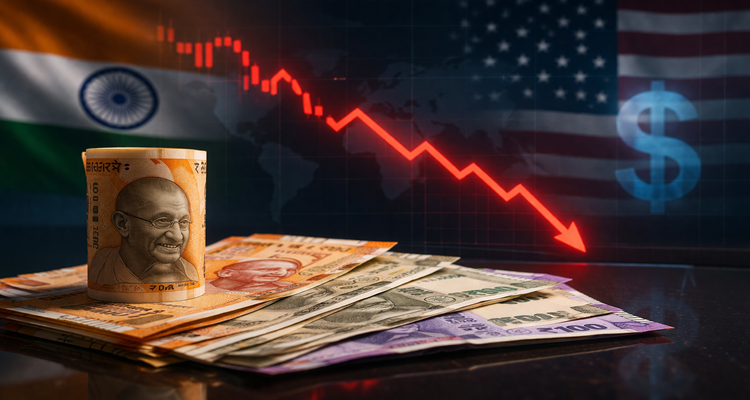
The Indian rupee has slipped into uncharted territory, breaching the 94-per-dollar mark for the first time. The sharp decline reflects mounting global anxieties tied to the escalating Middle East conflict, which has disrupted energy supplies and rattled financial markets worldwide.
For India, an economy heavily dependent on imported energy, the currency’s fall is more than a market fluctuation. It signals deeper vulnerabilities tied to inflation, trade balances, and investor confidence.
Rupee Hits Record Low Amid Global Shockwaves
On Friday, the rupee weakened to 94.2950 against the U.S. dollar, surpassing its previous record low of 93.98 set earlier in the week. The currency has now lost around 3.5% of its value since the outbreak of hostilities in the Middle East last month.
The longer-term trend is even more concerning. Since the beginning of the current fiscal year on April 1, 2025, the rupee has depreciated by more than 10%, marking its steepest annual decline in over a decade.
The last comparable downturn dates back to the 2013–14 financial year, during the so-called “taper tantrum,” when the U.S. Federal Reserve’s signal to scale back monetary stimulus triggered massive capital outflows from emerging markets, including India.
Energy Shock Fuels Currency Weakness
At the heart of the rupee’s slide lies a severe disruption in global energy markets. The ongoing conflict in the Middle East, one of the world’s most critical oil-producing regions, has constrained supply routes and pushed crude prices sharply higher.
For India, which imports the majority of its oil, rising energy costs translate directly into a wider current account deficit. This imbalance increases demand for dollars, putting further downward pressure on the rupee.
The ripple effects extend beyond fuel. Higher energy prices are driving up the cost of everyday goods—from cooking gas to plastic-based products, adding to inflationary concerns across the economy.
Markets React: Stocks Fall, Bond Yields Rise
The currency’s decline has been accompanied by broader financial market stress.
India’s benchmark Nifty 50 index dropped more than 1% on Friday, reflecting investor unease. At the same time, yields on the 10-year government bond climbed to 6.96%, the highest level since August 2024.
Rising bond yields typically indicate expectations of tighter monetary policy or increased government borrowing, both of which can weigh on economic growth.
Globally, the picture is similar. Equity markets have come under pressure, while bond yields have surged as investors reassess inflation risks and fiscal sustainability in a more uncertain geopolitical environment.
Escalating Tensions Keep Investors on Edge
While some market participants briefly found relief after U.S. President Donald Trump delayed potential military action against Iranian infrastructure, the broader outlook remains uncertain.
Reports suggesting that additional U.S. troops could be deployed to the region have heightened fears of a prolonged conflict. For investors, the lack of clarity has translated into heightened volatility and a preference for safer assets, particularly the U.S. dollar.
Analysts Turn Cautious on Growth and Currency Outlook
Economists and market analysts are increasingly revising their forecasts in response to the evolving crisis.
Several have lowered India’s growth projections, citing the dual impact of higher import costs and tighter financial conditions. At the same time, expectations for the rupee have weakened, with some forecasts suggesting further depreciation in the months ahead.
According to estimates from Bernstein, the rupee could potentially weaken toward the 98-per-dollar level this year if current pressures persist, particularly those linked to India’s external balance.
Meanwhile, analysts at Societe Generale have taken a more tactical stance, recommending a bearish position on the rupee against the dollar with a target of 96.
RBI Strategy Under Scrutiny
Market participants are also closely watching the Reserve Bank of India (RBI) and its response to the currency’s decline.
According to insights cited in a Reuters report, the central bank appears to be intervening more cautiously in foreign exchange markets. Instead of aggressively defending the rupee, the RBI may be prioritizing stability in domestic bond markets.
The focus, analysts suggest, has shifted toward keeping the 10-year government bond yield below the 7% threshold, even if that means allowing a gradual depreciation of the currency.
This approach reflects a delicate balancing act. While excessive currency weakness can fuel inflation, aggressive intervention could deplete foreign exchange reserves and disrupt financial stability.
Inflation Risks and Policy Implications
The weakening rupee is likely to complicate India’s inflation outlook.
A softer currency makes imports more expensive, particularly energy, which has a cascading effect on transportation, manufacturing, and consumer prices. This could force the RBI to consider tightening monetary policy, including potential interest rate hikes over the next year.
Such measures, while necessary to control inflation, could also dampen economic growth, a trade-off policymakers may find increasingly difficult to manage.
What Lies Ahead for the Rupee?
The rupee’s trajectory will depend heavily on how the geopolitical situation evolves.
If the Middle East conflict escalates further, sustained high oil prices could keep pressure on India’s external accounts and currency. Conversely, any signs of de-escalation could offer temporary relief.
However, structural challenges, such as India’s reliance on energy imports and sensitivity to global capital flows, mean that volatility is likely to persist.
A Currency at the Crossroads
The rupee’s fall past 94 per dollar marks a significant moment for India’s economy, underscoring the interconnected nature of global markets and domestic stability.
While policymakers have tools to manage short-term volatility, the broader challenge lies in strengthening economic resilience against external shocks. As global uncertainties deepen, the rupee’s performance will remain a key barometer of both investor confidence and India’s economic health.
( With inputs from Reuters.)
The information presented in this article is based on publicly available sources, reports, and factual material available at the time of publication. While efforts are made to ensure accuracy, details may change as new information emerges. The content is provided for general informational purposes only, and readers are advised to verify facts independently where necessary.