









Rupee Rally Faces Test as Oil, RBI Policy Loom
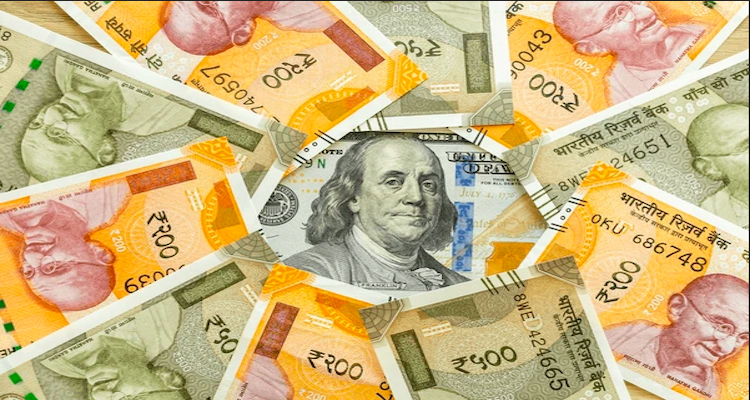
India’s currency and bond markets are entering a critical week, shaped by global tensions and domestic policy signals. With oil prices surging and geopolitical risks rising, investors are closely watching how the Reserve Bank of India (RBI) responds to mounting economic pressures.
Rupee Finds Support After RBI Tightens Rules
The Indian rupee staged a sharp rebound last week, posting its strongest weekly gain since late 2022. The currency climbed nearly 2% to close around 93.10 against the U.S. dollar, buoyed by regulatory steps taken by the central bank.
Market participants attribute this rally to the RBI’s recent crackdown on speculative foreign exchange positions. By tightening rules around arbitrage trading, the central bank effectively reduced short-term bets against the rupee, forcing traders to unwind positions.
Foreign exchange dealers say this unwinding created natural demand for the rupee, offering it a temporary cushion despite broader global uncertainties.
Middle East Conflict Drives Oil Price Surge
However, the currency’s resilience faces a serious test. The ongoing conflict involving Iran has triggered a surge in global oil prices, raising concerns for India, one of the world’s largest crude importers.
Brent crude has risen more than 50% since late February, hovering near $110 per barrel. Elevated energy costs pose a direct threat to India’s trade balance, inflation outlook, and currency stability.
The geopolitical situation remains fluid. U.S. President Donald Trump recently signaled the possibility of a diplomatic breakthrough while simultaneously warning of further military action if tensions escalate. The uncertainty surrounding the Strait of Hormuz, a key oil transit route has added to market anxiety.
Foreign Outflows Add Pressure
Adding to the strain, foreign investors have been pulling money out of Indian markets at an accelerated pace. Rising global risk aversion, coupled with narrowing yield differentials between Indian and U.S. assets, has made India less attractive in the short term.
These outflows have weighed on both the rupee and government bonds, amplifying volatility across financial markets.
RBI Policy Decision in Focus
Against this backdrop, attention now turns to the RBI’s upcoming monetary policy decision. According to a Reuters poll, most economists expect the central bank to keep interest rates unchanged this week.
However, analysts believe the tone of the RBI’s commentary will be just as important as the decision itself. Investors are looking for signals on liquidity support, currency management, and inflation risks tied to higher oil prices.
Some experts see a tighter policy path ahead. Analysts at MUFG noted that while the immediate decision is finely balanced, they expect a gradual increase in interest rates over the medium term. Their forecast includes a potential 25 basis point hike by early 2027, reflecting concerns over fiscal slippage and rising yields.
Bond Markets React to Rising Oil Prices
India’s government bond market has already begun to reflect these pressures. Yields on the benchmark 10-year bond rose sharply last week, climbing nearly 19 basis points to close at 7.13%.
This followed another significant rise the week before, marking the steepest two-week increase since mid-2022. The sell-off has been driven largely by fears that higher oil prices will push inflation upward and limit the RBI’s ability to maintain an accommodative stance.
Market participants expect the 10-year yield to trade within a 7.08% to 7.18% range in the near term, at least until the central bank provides clearer guidance.
Global Yield Dynamics Influence Investor Behavior
Another key factor shaping bond market sentiment is the narrowing gap between Indian and U.S. Treasury yields. As U.S. yields rise, the relative advantage of holding Indian debt diminishes.
Hemant Mishr, founder and chief investment officer of Singapore-based S CUBE Capital, pointed out that this dynamic has triggered profit-taking among global investors. Reduced foreign participation has added further downward pressure on bond prices.
Mishr expects the 10-year yield to remain within a broader 7.00% to 7.25% range over the next six months, assuming the RBI actively manages liquidity and prevents excessive steepening of the yield curve.
Liquidity Measures May Be Key
Market experts believe the RBI’s use of open market operations (OMOs) and liquidity injections will play a critical role in stabilizing bond yields. Without these interventions, there is a risk of disorderly movements in the debt market.
Maintaining adequate liquidity in the banking system could help absorb shocks from foreign outflows and rising global interest rates.
Key Data and Events to Watch
This week is packed with important economic indicators that could influence market direction:
- India’s services PMI data will offer insights into domestic economic activity.
- The RBI’s monetary policy announcement will set the tone for currency and bond markets.
- U.S. economic data, including inflation, GDP, and employment figures, will shape global risk sentiment.
These data points are likely to interact with geopolitical developments, creating a complex environment for investors.
What It Means for the Indian Economy
The interplay between rising oil prices, capital flows, and monetary policy presents a delicate balancing act for India.
Higher crude prices could widen the current account deficit and push inflation above target levels. At the same time, maintaining currency stability may require tighter financial conditions, which could slow economic growth.
For policymakers, the challenge lies in supporting growth while managing external vulnerabilities, a task made more difficult by unpredictable global events.
Looking Ahead
The coming weeks will be crucial in determining whether the rupee’s recent gains can be sustained. Much will depend on how the geopolitical situation evolves and how decisively the RBI responds to emerging risks.
While short-term volatility appears inevitable, India’s macroeconomic fundamentals and central bank interventions will likely shape the longer-term trajectory of both the currency and bond markets.
For now, investors remain cautious, navigating a landscape where global tensions and domestic policy are tightly intertwined.
(With inputs from Reuters.)
The information presented in this article is based on publicly available sources, reports, and factual material available at the time of publication. While efforts are made to ensure accuracy, details may change as new information emerges. The content is provided for general informational purposes only, and readers are advised to verify facts independently where necessary.