








Rupee Nears 91 as RBI’s Defense Tested Again
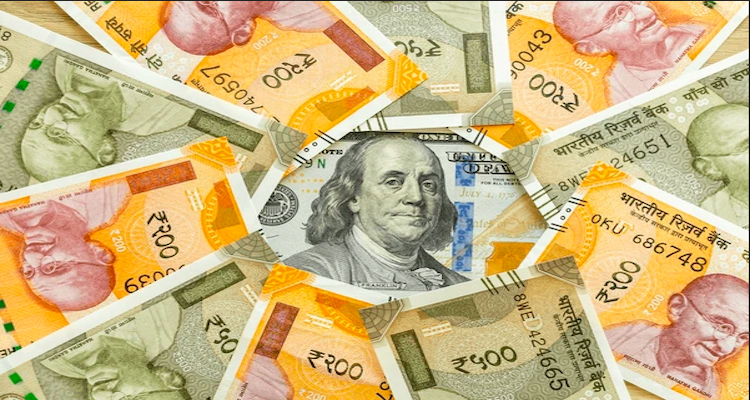
The Indian rupee is once again hovering near the psychologically significant 91-per-dollar mark, a level that has become a battleground between market forces and central bank intervention. As global risk sentiment deteriorates and the U.S. dollar regains modest strength, traders are watching closely to see how long the Reserve Bank of India (RBI) can hold the line.
(With inputs from Reuters.)
Rupee Opens on the Edge of 91
The Indian rupee is expected to open between 90.98 and 91.02 against the U.S. dollar on Friday, according to pricing in the one-month non-deliverable forward (NDF) market. The currency had settled at 90.9050 in the previous session.
The repeated approach toward the 91 level reflects persistent pressure on the domestic currency, driven by a combination of offshore dollar demand, corporate hedging flows, and cautious global sentiment.
The 91-per-dollar threshold has emerged as a critical psychological and technical barrier. Market participants view it as a line that the central bank appears determined to defend.
Dollar Demand and Corporate Hedging Weigh
This week, the rupee has struggled under sustained demand for dollars, particularly linked to NDF maturities. The offshore NDF market often sets the tone for early currency movements, and recent dollar buying there has spilled into onshore trade.
In addition, routine corporate flows have added to demand for the U.S. currency. Importers, wary of further depreciation, have stepped up hedging activity to lock in rates. This defensive positioning has compounded pressure on the rupee.
At the same time, weakness in domestic equities has reduced foreign portfolio inflows, limiting support for the local currency. When equity markets falter, foreign investors typically repatriate funds or reduce exposure, increasing dollar demand.
RBI’s Strategy: Containment, Not Reversal
Bankers familiar with the matter suggest that without RBI intervention, the rupee might already have broken decisively beyond 91.
According to market participants, the central bank has been supplying dollars at multiple levels to curb sharp upside moves in the dollar/rupee pair. However, traders say the RBI’s approach has focused more on containing volatility than aggressively pushing the currency stronger.
One currency trader at a bank noted that the dollar/rupee pair’s repeated moves toward 91 have kept long-dollar positions engaged. Importantly, he observed that there have been no sharp pullbacks following intervention, which would typically discourage bullish dollar bets.
Instead, the RBI appears to be smoothing movements by offering dollars to cap gains rather than driving a meaningful reversal. As a result, long-dollar positions remain largely intact, with limited downside risk.
This calibrated approach signals that the central bank may be prioritizing orderly market conditions over defending a specific exchange rate level at all costs.
Risk-Off Mood Spreads Across Asia
Broader global conditions are not helping the rupee’s cause.
Asian currencies were mostly weaker on Friday as investors adopted a risk-averse stance. U.S. equities fell overnight, and futures pointed to further declines, dragging Asian stock markets lower in early trade.
Concerns about elevated technology stock valuations in the United States have weighed on investor sentiment. At the same time, persistent geopolitical tensions in the Middle East have kept oil markets volatile, reinforcing caution.
Higher oil prices are particularly relevant for India, which imports the bulk of its crude oil requirements. Rising oil costs increase the country’s trade deficit and elevate dollar demand, putting further pressure on the rupee.
Safe Havens Attract Capital
The risk-off tone was also evident in U.S. Treasury markets, where yields edged lower as investors sought safety. This occurred despite better-than-expected U.S. jobless claims data, which might otherwise have supported higher yields.
The move into Treasuries highlights the prevailing caution in global markets. When uncertainty rises, capital typically flows into safe-haven assets such as U.S. government bonds and the dollar.
A firmer dollar index, even if modest, can amplify pressure on emerging market currencies like the rupee. In such an environment, local factors often take a back seat to global risk dynamics.
Why the 91 Level Matters
The 91-per-dollar mark has become more than just a number. It represents a psychological threshold that traders closely monitor.
Repeated tests of this level reinforce market perception that the rupee is structurally weak in the near term. The currency’s inability to capitalize on rallies in other Asian peers further underscores this point.
While several Asian currencies have managed to recover during brief bouts of dollar softness, the rupee has lagged. This relative underperformance suggests that domestic demand for dollars remains elevated.
For traders, the pattern is clear: unless there is a significant shift in global sentiment or a change in RBI’s stance, pressure is likely to persist.
Near-Term Outlook: Stability or Breakout?
Looking ahead, much will depend on three key factors: global risk appetite, oil prices, and the RBI’s tolerance for currency weakness.
If global markets stabilize and the dollar loses momentum, the rupee could find temporary relief. A sustained rally in domestic equities would also help attract foreign inflows.
However, if risk aversion deepens and oil prices climb further, the rupee may face renewed downside pressure. In that scenario, the RBI’s resolve will be tested more aggressively.
So far, the central bank’s strategy appears to be one of managed flexibility, allowing gradual adjustment while preventing disorderly swings. Whether that approach can hold if external pressures intensify remains to be seen.
Broader Implications for India
A weaker rupee has mixed consequences for India’s economy.
On the positive side, it can improve export competitiveness by making Indian goods and services cheaper in global markets. Sectors such as IT services and pharmaceuticals may benefit from currency depreciation.
On the downside, a weaker currency increases the cost of imports, particularly energy. Higher import bills can widen the current account deficit and add to inflationary pressures.
For policymakers, the challenge lies in balancing currency stability with broader macroeconomic priorities, including inflation control and growth support.
A Delicate Balancing Act
The Indian rupee’s renewed approach toward 91 per dollar highlights the delicate balance facing India’s central bank.
Persistent dollar demand, fragile global sentiment, and domestic market weakness have combined to test the RBI’s defense strategy. While intervention has prevented a decisive breakout so far, underlying pressures remain visible.
In the days ahead, traders and policymakers alike will watch whether the rupee stabilizes, or whether 91 becomes a new reality rather than a line in the sand.
Continue Exploring:
Aussie Dollar Surges as Rate Bets Shift Globally
Asian Currencies Climb as Dollar Stays Weak
Dollar Rallies on Fed Signals, Iran Tensions
The information presented in this article is based on publicly available sources, reports, and factual material available at the time of publication. While efforts are made to ensure accuracy, details may change as new information emerges. The content is provided for general informational purposes only, and readers are advised to verify facts independently where necessary.