










Rockets to Lift Off from Kulasekarapattinam by 2027: India’s Second Spaceport Marks a Strategic Leap
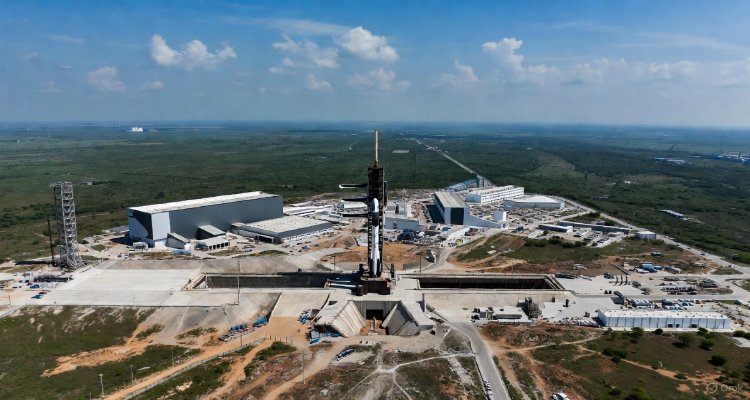
ISRO plans to launch rockets from Kulasekarapattinam by 2027, creating India’s second spaceport and boosting small satellite and commercial launches.
Introduction: A New Launchpad for India’s Space Ambitions
In a decisive step toward reshaping India’s role in the global space economy, the Indian Space Research Organisation (ISRO) has confirmed that rockets will begin launching from Kulasekarapattinam in Tamil Nadu by early 2027. Announced by ISRO Chairman V. Narayanan, the milestone signals the emergence of India’s second operational spaceport, expanding the country’s launch capabilities beyond the iconic Satish Dhawan Space Centre (SDSC-SHAR) in Sriharikota.
More than a new piece of infrastructure, Kulasekarapattinam represents a strategic recalibration—one aimed at faster launches, higher efficiency for small satellites, and a stronger push toward making India a global hub for commercial launch services.
Context & Background: Why India Needs a Second Spaceport
For more than five decades, SDSC-SHAR in Andhra Pradesh has been the backbone of India’s space programme. From the launch of the Rohini-125 sounding rocket in 1971 to complex interplanetary missions and commercial satellite deployments, Sriharikota has carried the weight of India’s growing ambitions.
However, the global space sector has changed dramatically. The rapid rise of small satellites, Earth observation constellations, and private space players has created demand for quick, flexible, and cost-effective launches—something a single spaceport can no longer optimally support.
Recognising this shift, the Indian government approved the Kulasekarapattinam spaceport project under a broader policy push aligned with the Indian Space Policy 2023, which seeks to open the space sector to private participation and position India as a competitive launch services provider worldwide.
Main Developments: Inside the Kulasekarapattinam Spaceport Project
Construction, Cost, and Scale
Located in Tuticorin district of Tamil Nadu, the Kulasekarapattinam spaceport is currently under construction across a vast 2,350 acres of land. Financially, the project has been allocated ₹985.96 crore, of which ₹389.58 crore had already been utilised as of July 31, 2025—highlighting steady progress toward its commissioning target.
Geographically, the site sits at approximately 8° north of the equator, a location that offers a crucial advantage for specific launch trajectories, particularly polar and sun-synchronous orbits.
Designed for the Small Satellite Era
Unlike Sriharikota, which supports a wide range of launch vehicles including PSLV, Gaganyaan-class systems, and heavy-lift rockets, Kulasekarapattinam is purpose-built for smaller launch vehicles, especially ISRO’s Small Satellite Launch Vehicle (SSLV).
Launching SSLVs from Sriharikota often requires complex “dog-leg” manoeuvres to avoid flying over landmasses—reducing payload efficiency. Kulasekarapattinam’s southern coastal location allows rockets to head directly south over the sea, significantly improving payload capacity and fuel efficiency for polar missions.
High-Frequency, On-Demand Launches
One of SSLV’s defining features is its quick turnaround and launch-on-demand capability, enabling faster vehicle integration and mission readiness. According to ISRO, the new spaceport will be capable of supporting 20 to 25 SSLV launches annually, a frequency that aligns closely with global commercial launch demands.
Once operational, the facility will also host launches by Non-Government Entities (NGEs), marking a major step in integrating private companies into India’s launch ecosystem.
Expert Insight & Industry Sentiment
ISRO Chairman V. Narayanan has described Kulasekarapattinam as a strategic enabler, rather than merely an expansion project. Space policy analysts echo this view, noting that the new site reduces operational bottlenecks while improving mission economics for small satellite customers.
Industry observers see the move as particularly significant for India’s growing private space sector. By offering a dedicated launch base for commercial missions, ISRO can free up Sriharikota for national priority and heavy-lift launches, while simultaneously accelerating India’s participation in the global small-satellite market.
Public sentiment in Tamil Nadu has also been largely positive, with expectations of regional development, job creation, and technological spillovers in surrounding districts.
Impact & Implications: What Happens Next?
Boost to India’s Global Launch Competitiveness
With dozens of countries and companies seeking affordable access to space, launch cadence and reliability have become as important as rocket capability. Kulasekarapattinam allows India to scale up launch frequency without overburdening existing infrastructure—an essential factor for attracting international clients.
Strengthening Space Sector Reforms
The spaceport fits squarely within the goals of the Indian Space Policy 2023, which envisions ISRO transitioning toward a facilitator role while private firms take on a larger share of launch and satellite operations. Dedicated infrastructure for NGEs sends a strong signal of policy intent.
Regional and Strategic Significance
Beyond economics, the site enhances India’s strategic autonomy in space access. Multiple launch locations reduce risk, improve resilience, and provide flexibility during high-demand periods—an increasingly important consideration as space becomes more central to national security, climate monitoring, and communications.
Conclusion: A Second Spaceport, A Bigger Vision
The planned 2027 rocket launches from Kulasekarapattinam mark more than the opening of a new facility—they reflect India’s transition into a mature, diversified spacefaring nation. By combining strategic geography, policy reform, and a focus on emerging launch markets, ISRO is laying the groundwork for a future where India is not just launching satellites, but shaping the global rules of access to space.
As construction advances and commissioning draws closer, Kulasekarapattinam stands poised to become a symbol of India’s next space chapter—one defined by speed, scale, and global relevance.
Disclaimer :This article is based solely on officially stated information and publicly available inputs provided in the headline brief. It does not speculate beyond confirmed facts or timelines.