








Ravana and the Origins of the Kanwar Pilgrimage
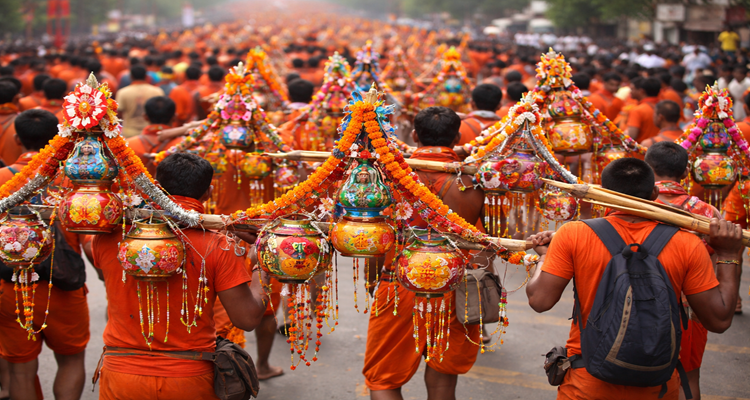
Every year during the sacred month of Shravan, millions of devotees across India undertake the Kanwar Yatra, an arduous pilgrimage in which participants carry holy water from sacred rivers to offer at Shiva temples.
While the journey is now associated with mass devotion and vibrant public celebrations, its mythological origins trace back to a surprising figure: Ravana, the powerful king of Lanka.
This lesser-known story highlights how ancient legends shaped one of Hinduism’s most visible modern pilgrimage traditions.
A Devotee Often Misunderstood
Ravana is frequently remembered in popular culture as the antagonist of the Ramayana. However, Hindu mythology presents him as a complex character, both a formidable warrior and an extraordinary devotee of Lord Shiva.
Texts and regional traditions describe Ravana as a scholar, musician, and master of spiritual disciplines.
His devotion to Shiva was so intense that it led to acts of penance that astonished even the gods.
Inspiration from Cosmic Events
According to mythological accounts, Ravana grew deeply fascinated by stories about the cosmic ocean churning, an event in which gods and demons collaborated to retrieve divine treasures.
The most dramatic moment of that event occurred when a deadly poison threatened to destroy the universe. Shiva consumed the toxin to protect creation, earning the name Neelkanth for his blue throat.
This act of sacrifice deeply moved Ravana and strengthened his determination to worship Shiva with unparalleled dedication.
The First Sacred Water Offering
Inspired by Shiva’s selfless act, Ravana is believed to have performed a remarkable ritual.
He traveled long distances to collect sacred water from the Ganges River and carried it to a distant shrine where he performed a ceremonial offering to Shiva.
The act symbolized both devotion and gratitude.
Over centuries, this ritual evolved into the Kanwar Yatra tradition, where pilgrims carry water in decorated containers suspended from a pole balanced across their shoulders.
The Meaning Behind the Journey
The pilgrimage is not simply a physical journey.
For many devotees, the act of walking long distances while carrying sacred water represents discipline, humility, and spiritual endurance.
Participants often observe fasting, chant mantras, and maintain strict devotional practices throughout the journey.
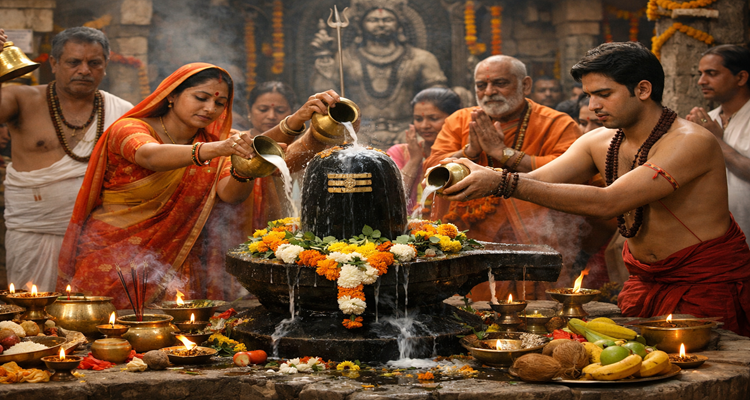
The water they carry is later offered during Jal Abhishek, a ritual bathing of the Shiva Lingam that symbolizes purification and reverence.
Shravan: The Sacred Timing
The Kanwar Yatra is closely tied to the month of Shravan, widely regarded as the most auspicious time for Shiva worship.
Ancient scriptures suggest that spiritual practices performed during this period carry enhanced significance.
Many believers consider Shravan a time when divine attention is especially focused on devotees’ prayers.
As a result, pilgrimage routes across northern India fill with participants during these weeks.
A Pilgrimage of Millions
Today, the Kanwar Yatra has become one of the world’s largest annual religious gatherings.
Participants, often called Kanwariyas, travel from sacred rivers such as the Ganges, Yamuna, or Godavari to nearby Shiva temples.
The journey can span hundreds of kilometers.
Highways, towns, and villages along the route transform into temporary spiritual corridors filled with prayer, music, and community service.
Modern Transformations
While the pilgrimage remains rooted in ancient tradition, modern infrastructure has reshaped the experience.
Local communities establish rest camps offering food, water, and medical assistance for travelers.
Government authorities also implement traffic management and safety measures to accommodate the massive influx of participants.
Digital platforms have further expanded access, allowing devotees unable to travel to participate in temple rituals remotely.
Real-World Impact
Beyond religious devotion, the Kanwar Yatra has significant social and economic impact.
The pilgrimage supports local businesses, hospitality services, and transportation networks along major routes.
It also reinforces cultural identity and shared tradition across diverse regions.
For many participants, the journey is a deeply personal spiritual milestone.
Conclusion
The Kanwar Yatra stands as a powerful example of how ancient mythology continues to shape modern religious practice.
What began as a symbolic act of devotion attributed to Ravana has evolved into a pilgrimage that unites millions of people each year.
Through endurance, prayer, and shared faith, devotees continue a tradition that bridges mythological history and contemporary spirituality.
This content is published for informational or entertainment purposes. Facts, opinions, or references may evolve over time, and readers are encouraged to verify details from reliable sources.