










Racing for Memory: A Global Chip Crunch Hits AI and Consumer Tech
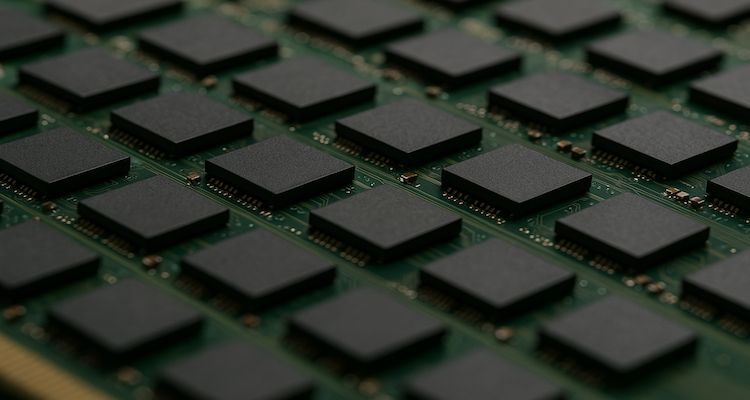
A worldwide shortage of memory chips is disrupting AI development, driving up prices, pressuring consumer tech companies, and raising new economic risks.
A Shortage With Global Consequences
A silent crisis is rippling through the tech world, reshaping everything from AI ambitions to everyday electronics. Memory chips the unglamorous workhorses that let devices store and process data are suddenly in such short supply that companies across Asia, the U.S., and Europe are scrambling to secure whatever they can find. With prices soaring and inventories evaporating, the race for memory has become one of the biggest pressure points in the digital economy.
A Supply Crunch Years in the Making
What started as a steady rise in demand after the 2022 launch of ChatGPT has escalated into a global scramble. As AI adoption accelerated, companies funneled vast resources into building data centers, training advanced models, and expanding cloud services. To support those systems, chipmakers diverted enormous capacity toward high-bandwidth memory (HBM), a premium class of chips essential to Nvidia’s powerful AI processors.
HBM is only one part of the story. From basic flash memory used in USB sticks to dynamic random-access memory (DRAM) inside smartphones and laptops, nearly every category of storage is feeling the squeeze. According to TrendForce, prices for some memory components have more than doubled since February a surge that has now drawn in traders hoping to profit from the volatility.
As production remains tight, the battle for supply has spread across continents. In Japan, electronics retailers are limiting how many hard drives customers can buy. In China, smartphone manufacturers are preparing consumers for steep price hikes. And in the U.S., global heavyweights like Microsoft, Google, and ByteDance are quietly negotiating with chipmakers to secure long-term access to memory stock.
How the Tech Industry Backed Itself Into a Corner
Interviews conducted across nearly 40 executives, distributors, and supply-chain specialists reveal a paradox: the industry’s rush to feed AI growth has left it short of everyday memory products that other tech sectors cannot function without.
Companies like Samsung Electronics and SK Hynix which together control about two-thirds of the global DRAM market shifted aggressively toward HBM to meet AI demand and compete with emerging Chinese rivals. This pivot reduced output of traditional memory chips used in PCs, servers, and smartphones.
The timing could not have been worse. A global refresh cycle for personal computers, a rebound in smartphone sales, and aging data-center infrastructure all collided with this shift, straining supplies even further.
Dan Hutcheson, senior research fellow at TechInsights, reflected on the miscalculation: the industry, he said, may have been “caught off-guard” by how demand surged across both AI and consumer devices simultaneously.
Shrinking Inventories and Rising Concerns
TrendForce data shows just how sharply inventory levels have dropped. DRAM suppliers that held 13 to 17 weeks of stock in late 2024 were down to just two to four weeks by October this year an unprecedented plunge for such a large and critical market.
This contraction is beginning to alarm economists. Memory chips might not grab the headlines the way AI accelerators do, but they remain essential for everything from cloud computing to basic smartphone functions. If shortages persist, experts warn it could stall AI productivity gains and inject new inflationary pressure at a moment when governments are struggling to stabilize prices amid trade tensions and U.S. tariff moves.
Sanchit Vir Gogia, CEO of Greyhound Research, put it bluntly: “The memory shortage has now graduated from a component-level concern to a macroeconomic risk.” The AI surge, he said, “is colliding with a supply chain that cannot meet its physical requirements.”
High Stakes for the World’s Biggest Tech Firms
Major technology companies are already making moves to protect themselves. According to internal discussions confirmed by multiple sources, giants including Microsoft, Google, and ByteDance are working urgently to lock in supply agreements with Micron, Samsung, and SK Hynix. These firms dominate global production, leaving buyers with few alternatives.
The shortage also threatens to slow future data-center construction. One memory-chip executive told Reuters the industry could see significant delays, noting that new facilities require at least two years to build and manufacturers fear overexpansion if demand unexpectedly cools.
Even so, Samsung and SK Hynix are pushing forward with new investments. What they haven’t disclosed is how these expansions will be divided between advanced memory like HBM and conventional DRAM a decision that could shape the market for years.
Citi analysts reported that SK Hynix expects shortages to extend through late 2027, a sign of just how prolonged the imbalance may be.
OpenAI’s Massive Appetite for Memory
OpenAI has added extraordinary pressure to the market. Last October, the company struck initial agreements with Samsung and SK Hynix to supply memory for its ambitious Stargate project a next-generation AI super-infrastructure plan.
Stargate alone is expected to require up to 900,000 wafers per month by 2029, roughly double the world’s current output of high-bandwidth memory, according to SK Group Chairman Chey Tae-won. At an industry event in Seoul, he described the scale of incoming demand:
“These days, we’re receiving requests for memory supplies from so many companies that we’re worried about how we’ll be able to handle all of them. If we fail to supply them, they could face a situation where they can’t do business at all.”
Samsung said it is monitoring the market closely, while SK Hynix confirmed ongoing efforts to expand capacity. Microsoft declined to comment, and ByteDance did not address questions about its supply strategy.
The DDR4 Exit That Fueled the Fire
The memory crunch escalated further when Samsung notified customers in mid-2024 that it would halt production of one class of DDR4 chips a widely used standard in PCs and servers. Although Samsung later reversed course, the announcement signaled a broader realignment away from older memory formats.
Micron followed with a similar plan, telling customers it would wind down shipments of DDR4 and its LPDDR4 smartphone counterpart within nine months. Chinese manufacturer ChangXin also reduced most of its DDR4 production shortly afterward.
These decisions were meant to streamline operations for the AI era but they inadvertently damaged supply at a moment when global demand for traditional memory was quietly accelerating.
A Market Running Out of Options
By autumn, desperation was spreading across the tech landscape. Samsung reportedly raised prices on server memory by up to 60%. Major cloud providers Google, Amazon, Microsoft, and Meta approached Micron with blanket purchase orders, signaling they would accept any volume at any price.
Chinese firms Alibaba, ByteDance, and Tencent dispatched top executives to South Korea to secure additional allocation. One source summarized the atmosphere succinctly: “Everyone is begging for supply.”
Samsung and SK Hynix said they are sold out of certain advanced chips well into 2026, with new DRAM factories unlikely to open before 2027 or 2028.
Consumer Electronics Brace for Cost Hikes
The price shock is beginning to reach consumers, particularly through smartphones. Xiaomi and Realme, two of China’s largest phone makers, have warned that device costs may rise sharply.
Realme India’s chief marketing officer Francis Wong called the current surge “unprecedented since the advent of smartphones,” adding that memory prices could force the company to raise handset costs by 20% to 30% by mid-year.
Camera modules, processors, and batteries can be swapped or downgraded to save costs, he noted, but storage capacity cannot leaving manufacturers with little flexibility.
Xiaomi said it plans to offset costs by adjusting prices and pushing further into premium segments, while ASUS confirmed it is monitoring inventory levels and may adjust laptop pricing depending on market conditions.
One smaller player, Taiwan’s Winbond, is expanding capacity after receiving extraordinary requests including a proposal for a six-year supply agreement.
Traders, Hoarders, and a Thriving Gray Market
As scarcity intensifies, opportunists are flooding in.
In Tokyo’s Akihabara electronics district, stores have posted rationing signs to curb hoarding. Workers at several shops described empty shelves and weekly price jumps. Popular 32-gigabyte DDR5 modules have jumped from 17,000 yen in mid-October to more than 47,000 yen. High-end 128-gigabyte kits now cost around 180,000 yen.
The shortages have pushed many buyers to secondhand marketplaces. Sellers like Roman Yamashita, who runs a used-PC parts store in Akihabara, say demand is booming like never before.
In Shenzhen, component traders have shifted to issuing daily sometimes hourly quotes because prices move too fast for monthly lists. A Beijing-based DDR4 seller said she stockpiled 20,000 units anticipating further gains.
Across the Pacific, California-based recycler Caramon is seeing similar trends. Owner Paul Coronado said monthly sales of low-end memory chips recovered from decommissioned servers have jumped from about $500,000 to nearly $900,000, driven by Hong Kong intermediaries reselling to Chinese clients.
A Crisis With No Quick Fix
The memory chip shortage is no longer just a supply-chain hiccup. It is becoming a strategic economic risk that threatens to influence AI development, consumer prices, and global trade patterns. With new factories years away, and demand still rising, experts warn the market may face instability well into the second half of the decade.
As the world races to build bigger and smarter AI systems, one reality is becoming unavoidable: the future of the digital economy may hinge on one of its least glamorous components memory.
The Road Ahead for a Strained Tech Ecosystem
The global tech sector is entering uncharted territory. The competition for memory chips is reshaping corporate strategy, elevating market risk, and testing how far companies are willing to stretch financially to remain competitive in the AI era. Without rapid intervention or a slowdown in demand, the imbalance between supply and necessity could become one of the defining challenges of the decade.
ALSO READ: Chipmaker Analog Devices Signals Strong Start to 2026 With Surging Demand