










PM Modi’s Strategic Three-Nation Tour to Jordan, Ethiopia & Oman Set to Redefine India’s Global Engagement
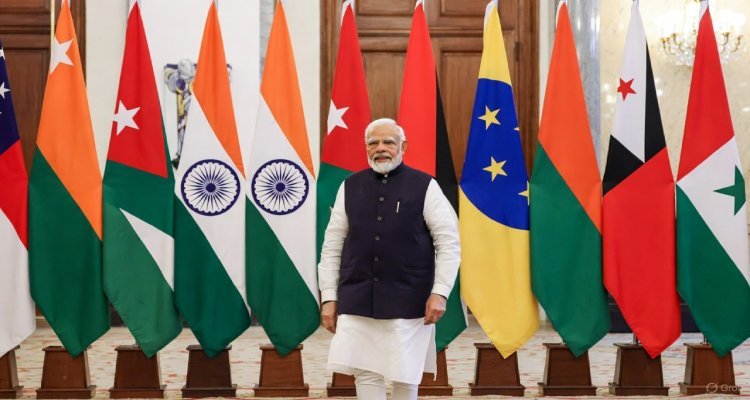
PM Modi’s December 15–18 visit to Jordan, Ethiopia and Oman aims to deepen strategic ties, expand Global South partnerships and strengthen regional cooperation.
Introduction: A Diplomatic Sprint Across Three Regions
When Prime Minister Narendra Modi steps onto the tarmac in Amman on December 15, he will begin one of his most geographically diverse and strategically significant foreign tours of the year. Over just four days, he will traverse West Asia, the Horn of Africa and the Gulf—regions tied closely to India’s security, trade and global standing. Modi’s visit to Jordan, Ethiopia and Oman comes at a moment when geopolitical alignments are shifting rapidly, and New Delhi is recalibrating its global relationships with renewed urgency.
This is not just another multi-country tour. It is a deliberate message: India is strengthening its footprints where history, strategy and the future intersect.
Context & Background: A Critical Moment in Global Diplomacy
India’s diplomatic activity has intensified as global turbulence—from Middle East tensions to disruptions in global supply chains—demands stronger partnerships. Modi’s December 15–18 tour hits three crucial pillars:
Jordan:
A key Middle Eastern nation with which India shares 75 years of diplomatic ties, Jordan plays an instrumental role in regional stability and humanitarian coordination.
Ethiopia:
One of Africa’s fastest-growing economies and home to the African Union headquarters, Ethiopia represents India’s deepening engagement with the African continent and the broader Global South.
Oman:
A longstanding friend and maritime partner, Oman anchors India’s outreach to the Gulf region and the Indian Ocean.
The trip underscores a strategic alignment: India is building bridges with nations that matter—not just economically, but geopolitically.
Main Developments: What PM Modi’s Three-Nation Visit Will Focus On
1. Jordan (December 15–16): Celebrating 75 Years of Diplomatic Ties
Invited by King Abdullah II bin Al Hussein, PM Modi’s visit to Jordan marks the 75th anniversary of diplomatic relations—a milestone underscoring trust built over decades.
Key Agendas in Jordan:
- Reviewing the entire spectrum of bilateral cooperation
- Expanding political and security dialogue
- Strengthening trade, education and technology partnerships
- Discussing West Asian regional issues, especially humanitarian concerns
Jordan’s role as a stabilizing force in a volatile region makes the visit particularly significant. Analysts expect discussions on counterterrorism, water security partnerships and enhanced military cooperation—areas where both nations have previously demonstrated mutual alignment.
2. Ethiopia (December 16–17): PM Modi’s First Visit to the East African Nation
Modi’s maiden visit to Ethiopia marks a major milestone in India–Africa engagement. As a founding member of the African Union and a rising East African power, Ethiopia is crucial for India’s vision of a stronger Global South.
Key Focus Areas in Ethiopia:
- Strengthening development partnerships
- Expanding trade, agriculture and technology collaboration
- Enhancing education and capacity-building initiatives
- Deepening political dialogue with Prime Minister Abiy Ahmed Ali
The two leaders are expected to discuss climate resilience, food security, digital governance and India’s long-standing development projects in Ethiopia. Modi’s visit also reinforces India’s role as a reliable partner in Africa’s growth story, especially at a time when global powers are competing for influence on the continent.
3. Oman (December 17–18): Marking 70 Years of Strong Diplomatic Relations
Oman remains one of India’s closest strategic partners in the Gulf, linked by centuries-old trade ties and a large Indian diaspora that contributes significantly to the country’s development.
Key Themes of the Oman Leg:
- Reviewing the “all-encompassing” Strategic Partnership
- Expanding defense and maritime cooperation
- Enhancing investment flows
- Celebrating 70 years of diplomatic relations
- Bolstering energy, healthcare and technology alliances
This visit follows the 2023 state visit of Sultan Haitham bin Tarik to India, reflecting growing warmth and cooperation between the two nations.
Expert Insight & Public Reaction: Why This Tour Matters
Diplomatic analysts view Modi’s trip as an example of India’s evolving foreign policy—one that prioritizes strategic diversification and balanced global engagement.
Dr. Sameer Patil, foreign policy expert, explains that the visit “reinforces India’s position as a stable, constructive actor on the global stage, especially at a time when multiple regions are facing geopolitical strain.”
Public sentiment among Indian business leaders is also positive. Sectors including pharmaceuticals, fintech, renewable energy, and agriculture see strong growth potential in both Ethiopia and Jordan, while Oman continues to be a gateway for Indian enterprises in the Gulf.
Social media reactions highlight national pride, with many users noting the symbolic impact of India refreshing decades-old partnerships while building new ones in Africa.
Impact & Implications: What Modi’s Trip Could Achieve
1. Strengthening India’s West Asia Strategy
Jordan and Oman are central to India’s approach to regional stability, energy resilience and maritime security—especially given ongoing tensions in the Middle East.
2. Reinforcing India–Africa Ties
Ethiopia’s strategic position, combined with India’s developmental commitments, could unlock cooperation in agriculture, digital transformation, and infrastructure.
3. Boost to the Indian Diaspora
Millions of Indians live and work in the Gulf, with Oman being a critical hub. Strengthened ties mean better mobility, protections, and economic opportunities.
4. Expanding India’s Global South Leadership
Modi’s Ethiopia visit enhances India’s credibility as a champion of Global South issues—from climate change to equitable global governance.
5. Long-term Strategic Influence
Together, Jordan, Ethiopia and Oman represent three crossroads:
- Middle East diplomacy
- African economic transformation
- Indian Ocean security
Engagement across these axes will shape India’s long-term foreign policy trajectory.
Conclusion: A Tour That Signals India’s Expanding Global Vision
PM Modi’s December 15–18 visit to Jordan, Ethiopia and Oman is far more than a diplomatic calendar item. It’s a strategic assertion of India’s growing global confidence—an effort to reinforce old friendships while building new ones in regions that will shape the coming decades.
At a time of global uncertainty, India is not retreating but reaching outward, redefining its role as a partner, stabilizer and bridge-builder. This tour will likely strengthen India’s global influence and deepen its partnerships with nations that matter for security, growth and the future of the Global South.
Disclaimer :This article is a journalistic interpretation created for informational and educational purposes. It is based solely on the provided headline and bullet points and does not claim to represent government statements or official positions.