









Netflix’s BioShock Movie: Production Update
Nearly two decades after BioShock reshaped the gaming landscape, the beloved sci-fi thriller is finally moving toward a live-action future. Netflix’s long-anticipated film adaptation is steadily taking shape, with new updates in early 2026 offering the clearest picture yet of its creative direction and production timeline.
For fans of the franchise-and for Hollywood watchers tracking the streaming giant’s push into video game adaptations-BioShock could mark a defining moment.
A Long Road to the Surface
Netflix officially announced its partnership with 2K and Vertigo Entertainment in February 2022, confirming years of speculation that the streaming platform was developing a BioShock adaptation. Prior to that, the property had cycled through development at major studios, including Sony Pictures and Universal.
While rumors once suggested both a series and a film were under consideration, Netflix ultimately committed to a feature-length movie. The decision aligned with the company’s growing investment in adapting high-profile gaming franchises for global audiences.
The announcement carried weight. BioShock isn’t just another video game-it’s widely regarded as one of the most influential titles of the 21st century.
Who’s Steering the Project?
Vertigo Entertainment is producing the film. The company has previously delivered major titles such as It, The Lego Movie, and The Grudge. For Netflix, Vertigo has been involved in projects including Death Note, Extinction, and The Mother starring Jennifer Lopez.
In August 2022, Netflix confirmed that Francis Lawrence would direct and produce the adaptation. Lawrence is known for helming The Hunger Games: Catching Fire and I Am Legend, two films that balance large-scale spectacle with psychological tension-qualities that align well with BioShock’s tone.
The screenplay is being written by Michael Green, whose credits include Logan and the animated series Blue Eye Samurai. Green’s experience with character-driven genre storytelling is seen as a strong fit for the morally complex world of Rapture.
As of early 2026, Lawrence remains attached to the project. However, production has been paced around his commitments to The Hunger Games prequel, Sunrise on the Reaping. Producer Roy Lee recently indicated that BioShock is expected to move forward more aggressively once Lawrence completes post-production later this year.
Strauss Zelnick, CEO and Chairman of 2K, is serving as executive producer. In earlier remarks, he emphasized Netflix’s storytelling capabilities and expressed confidence that the adaptation would honor the franchise’s legacy while reaching new audiences.
What Is BioShock-and What Will the Film Cover?
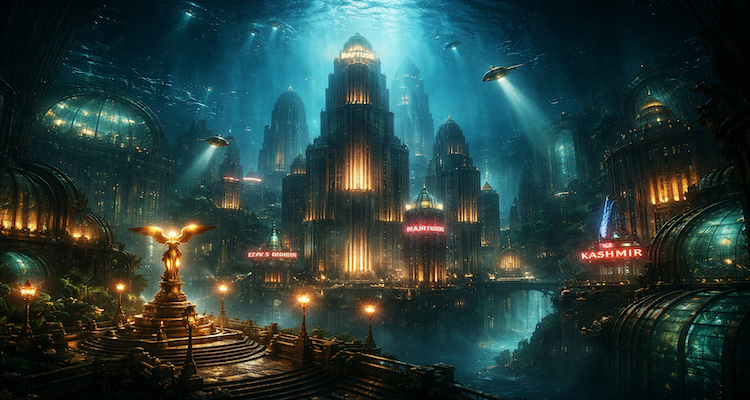
Released in 2007, the original BioShock introduced players to Rapture, a submerged city built as a libertarian utopia by industrialist Andrew Ryan. The experiment in radical individualism ultimately collapses into chaos, fueled by genetic experimentation and moral decay.
The game follows Jack, the sole survivor of a plane crash in the Atlantic Ocean. After discovering Rapture’s hidden entrance, he becomes entangled in the city’s violent power struggle.
While some early speculation suggested the film might draw from BioShock Infinite, later updates have confirmed that Netflix’s project will adapt the first game directly.
That decision appears deliberate. The original story’s contained setting, philosophical themes, and horror-driven atmosphere make it particularly suited to a focused cinematic adaptation.
Meanwhile, the franchise itself has been dormant since 2013. Cloud Chamber Studios is currently developing a fourth BioShock game. Although development experienced internal delays in 2025, the studio continues work on the next installment. Industry observers have noted that a coordinated release window between the game and the film-potentially in 2027 or 2028-would make strategic sense.
A Shift in Budget and Vision
Since its announcement, the BioShock movie has undergone what producers describe as a “reconfiguration.”
In July 2024, Roy Lee and Francis Lawrence revealed that the film’s budget had been scaled back. Instead of pursuing a $200 million effects-heavy blockbuster, the team opted for a more contained, atmospheric approach.
That recalibration appears designed to lean into BioShock’s horror roots rather than pure spectacle. The underwater setting, crumbling art deco architecture, and psychological tension are expected to play central roles.
In May 2025, Lawrence confirmed he had received a revised script draft and was meeting with Michael Green. By February 2026, updates suggested the screenplay was in a strong place creatively, though cameras are unlikely to roll before early 2027.
According to comments shared with Collider, the production is waiting for Lawrence to complete post-production work on his current project before fully shifting focus to BioShock. Producer Roy Lee has cautioned that while momentum is building, large-scale productions often face scheduling variables.
Casting discussions are expected to advance later this year, though no official announcements have been made.
Not the First Attempt at Rapture
Netflix’s adaptation isn’t Hollywood’s first attempt to bring BioShock to the screen.
In the late 2000s, Universal Pictures developed a BioShock film with Gore Verbinski, director of Pirates of the Caribbean, attached. That version reportedly carried a significant budget and an intended R-rating. In 2009, just weeks before filming was scheduled to begin, the project was canceled.
Budget concerns and studio hesitations over the film’s darker tone ultimately halted production.
Netflix’s revised strategy-emphasizing a smaller scale and character-driven storytelling-appears to address the very issues that derailed the earlier attempt.
Film journalist Scott Wampler previously noted that the original script captured the game’s tone but struggled under the weight of financial expectations at the time.
Netflix’s Expanding Gaming Universe
BioShock is part of a broader push by Netflix into the video game adaptation space. The company is also developing projects based on Gears of War and Pokémon, among others.
This strategy reflects a larger industry trend. As streaming platforms compete for globally recognizable intellectual property, established gaming franchises offer built-in audiences and expansive narrative worlds.
For Netflix, BioShock represents a particularly ambitious undertaking. The story’s philosophical depth—touching on free will, power, and moral compromise-offers material beyond conventional action fare.
Industry Reaction and Expectations
While no footage or casting announcements have been released, anticipation remains high among both gamers and film enthusiasts.
The combination of Francis Lawrence’s genre experience and Michael Green’s writing credentials has drawn cautious optimism. Both creators have previously handled complex source material with strong fan bases.
At the same time, producers have been careful not to overpromise. Roy Lee has acknowledged that large-scale projects face numerous moving parts, from scheduling logistics to creative refinements.
That measured tone reflects lessons learned from past adaptation misfires.
What Comes Next?
If production begins in early 2027, a theatrical or streaming debut could follow in 2027 or 2028. Such timing could align with the release of the next BioShock game, creating cross-media momentum.
For now, the focus remains on finalizing the script, locking in cast members, and ensuring the project’s scale matches its creative ambitions.
The underwater city of Rapture has waited years to reemerge. This time, the filmmakers appear determined to bring it to life on their own terms-leaner, darker, and more intimate than past attempts.
If successful, Netflix’s BioShock adaptation could do more than revive a beloved franchise. It could set a new standard for how prestige video games transition from console to screen.
Continue Exploring:
Netflix’s ‘DANG!’ Brings Comedy Titans to Animation
A Wedding Turns Deadly in Netflix’s New Horror Drama
Lost ‘Combiner Wars’ Art Resurfaces After Decade
This content is published for informational or entertainment purposes. Facts, opinions, or references may evolve over time, and readers are encouraged to verify details from reliable sources.