










Judge Signals Possible Dismissal of Musk’s xAI Lawsuit
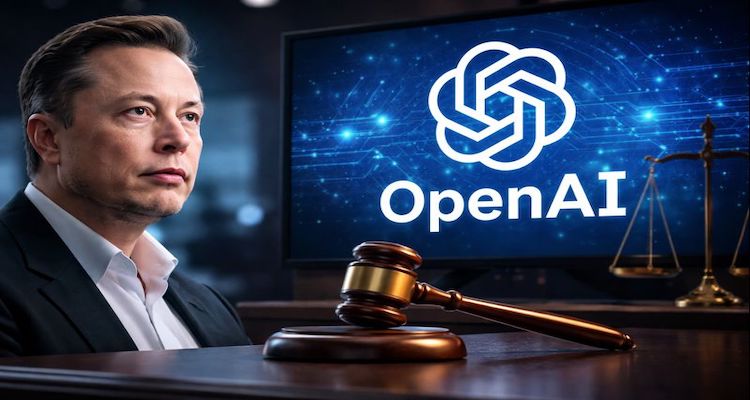
A high-profile legal clash between two of Silicon Valley’s most influential AI players may be headed for an early setback. A federal judge has indicated she could dismiss key claims brought by Elon Musk’s AI startup xAI against rival OpenAI, potentially reshaping an already bitter dispute over talent, technology, and control of artificial intelligence.
The ruling, if finalized, would mark a significant moment in the escalating legal war between Musk and the company he once helped create.
Judge Signals Skepticism Toward xAI’s Claims
A U.S. federal judge in San Francisco has signaled she is inclined to dismiss a lawsuit filed by Elon Musk’s artificial intelligence venture, xAI, against OpenAI. The case centers on allegations that OpenAI improperly obtained trade secrets to gain an advantage in developing AI products.
U.S. District Judge Rita Lin said on Friday that her “tentative view” is to grant OpenAI’s request to dismiss the complaint. However, she left the door open for xAI to revise and refile parts of its case if the dismissal proceeds.
Judge Lin said she will hear oral arguments from both sides on February 3 before issuing a final decision.
The Allegations at the Heart of the Case
xAI filed the lawsuit in September, accusing OpenAI of hiring away its employees to access confidential technical information related to Grok, xAI’s AI chatbot. The complaint alleged that some departing employees downloaded internal source code shortly before leaving the company.
xAI argued that this conduct gave OpenAI an unfair advantage in the fast-moving race to build advanced AI systems, a market dominated by OpenAI’s ChatGPT.
OpenAI strongly denied the claims, calling the lawsuit an attempt to harass a competitor rather than a legitimate trade secrets dispute.
OpenAI Pushes Back Against Musk’s Claims
OpenAI, which Musk co-founded before parting ways with the company, responded forcefully to the lawsuit. Its legal team argued that xAI failed to present credible evidence showing that OpenAI encouraged theft of proprietary information or used any alleged trade secrets.
The company described the lawsuit as part of a broader pattern of legal pressure from Musk, whom it accused of trying to slow down a rival after failing to match ChatGPT’s market traction.
Lawyers for both xAI and OpenAI declined to comment publicly following Judge Lin’s remarks.
Judge Finds Gaps in xAI’s Argument
In a four-page filing outlining her preliminary reasoning, Judge Lin expressed skepticism about xAI’s core allegations. She wrote that the complaint did not plausibly show that OpenAI acquired or encouraged the misuse of trade secrets, even if former xAI employees downloaded internal materials before resigning.
The judge also said the lawsuit failed to establish a reasonable inference that OpenAI used any confidential information in its own work or that former xAI employees relied on such material after joining the company.
Without clear evidence of misuse, Lin suggested, the claims fall short of the legal standard required to proceed.
Unfair Competition Claim Also at Risk
Judge Lin signaled that she may also dismiss xAI’s unfair competition claim, which focused on OpenAI’s hiring practices. She noted that the complaint tied employee poaching almost entirely to the alleged trade secret theft.
According to her analysis, xAI did not identify any independent reason why OpenAI’s hiring of former employees was anti-competitive under the law. Hiring talent from competitors, by itself, is generally legal in the technology sector.
Lin asked both parties to directly address her concerns during the upcoming hearing.
A Larger Legal War Between Musk and OpenAI
This lawsuit is just one front in a much broader legal conflict between Elon Musk and OpenAI. Musk is separately suing OpenAI over its decision to shift toward a for-profit structure, arguing that the move betrays the company’s original mission to develop AI for the public good.
In that case, Musk is seeking as much as $134.5 billion in damages from OpenAI and its key partner, Microsoft. Jury selection for that trial is scheduled to begin on April 27.
Together, the lawsuits underscore a deep rift between Musk and OpenAI’s leadership, including CEO Sam Altman.
Expert and Industry Reaction
Legal experts say Judge Lin’s comments highlight how difficult it can be to prove trade secret misuse in cases involving employee mobility.
Courts typically require clear evidence not only that confidential information was taken, but that it was actively used to gain a competitive edge. Allegations based largely on suspicion or circumstantial claims often fail to survive early dismissal motions.
The case is being closely watched across the tech industry, where competition for AI talent has intensified dramatically over the past two years.
What This Means for the AI Industry
If the lawsuit is dismissed, it could reinforce the high legal bar companies face when accusing rivals of trade secret theft related to employee departures. That outcome may embolden aggressive hiring across the AI sector, while also encouraging companies to tighten internal data protections.
For xAI, a dismissal would represent a legal setback at a time when it is trying to establish itself as a serious competitor to OpenAI and other AI leaders.
For OpenAI, the decision would offer some legal relief but would not end its broader courtroom battles with Musk.
Looking Ahead
Judge Lin has emphasized that her views are tentative, and the February hearing could still influence the final outcome. xAI may also be given an opportunity to revise its complaint if the judge ultimately dismisses the current version.
Regardless of the immediate ruling, the dispute highlights how personal rivalries, corporate governance, and technological ambition are increasingly colliding in the race to control artificial intelligence.
As the legal fights continue, the outcome could shape not only the future of these companies, but also how innovation, competition, and accountability are handled in the AI era.
(According to a Reuters report.)
ALSO READ: Open-Source AI Models Expose a Growing Security Blind Spot
The information presented in this article is based on publicly available sources, reports, and factual material available at the time of publication. While efforts are made to ensure accuracy, details may change as new information emerges. The content is provided for general informational purposes only, and readers are advised to verify facts independently where necessary.