










Inside the Mystery: Why Animals Are Suddenly Behaving in Ways We Can’t Explain
Scientists worldwide are observing strange new animal behaviors that defy logic. Here’s why it’s happening—and what it means for ecosystems and humans.
Introduction: When Nature Breaks Its Own Rules
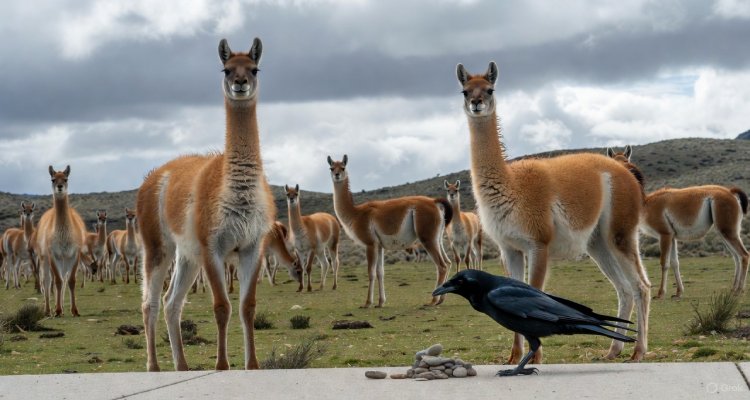
On a mist-covered morning in Patagonia, wildlife researchers watched a group of guanacos perform something never seen before: synchronized circling, almost ritualistic—yet with no predator in sight. Thousands of miles away in Japan, cameras captured crows carefully placing small stones in a pattern before flying away, as if following an unknown script. And in the American Midwest, white-tailed deer have begun avoiding forest interiors entirely, choosing open spaces even during peak predator hours.
Across continents and ecosystems, animals are exhibiting behaviors that don’t fit any known biological, evolutionary, or environmental patterns. These aren’t rare anomalies—they’re emerging trends. And scientists are racing to understand why.
Context & Background: Earth’s New Behavioral Puzzle
Animal behavior has always adapted to ecological shifts. Climate change, habitat loss, light pollution, and human expansion have already reshaped migration, mating, and feeding patterns. But the new wave of unusual behaviors goes beyond normal adaptation.
What’s Different This Time?
- Behaviors are appearing suddenly, without gradual evolution.
- They’re being observed across unrelated species—mammals, birds, insects, and even marine life.
- Many behaviors offer no clear survival advantage, breaking evolutionary logic.
- Some appear coordinated across regions that have no ecological overlap.
Scientists have long expected more chaotic behavior as ecosystems face pressure. But this level of unpredictability suggests something deeper—potentially a combination of environmental, neurological, and social triggers that remain poorly understood.
Main Developments: Unusual Behaviors Emerging Worldwide
Here are some of the most perplexing developments documented over the last few years:
1. Animals Engaging in “Nonfunctional Ritualizing”
Researchers in South America, Asia, and Europe have reported herd animals—such as elk, goats, and antelope—forming circles or lines for minutes at a time without any threat or external stimulus. Traditionally, such behaviors are linked to predator confusion. But these animals are performing them in predator-free zones.
2. Birds Learning Behaviors No One Taught Them
In urban centers from London to Singapore, bird species have been spotted:
- Using tools in entirely new ways
- Mimicking sounds they’ve rarely encountered
- Sharing food among non-family groups
None of these behaviors were seen a decade ago.
3. Marine Species Are Acting Strangely Too
Divers near the Maldives recently documented octopuses approaching humans in groups—something previously unheard of. Meanwhile, dolphins have been found carrying objects not related to play or courtship, almost as if attempting new forms of communication.
4. Insects Displaying Unexpected Collective Shifts
Termite colonies in Australia have begun constructing partial mounds and abandoning them midway—a costly, non-adaptive action. Meanwhile, honeybees in North America have been performing “reverse foraging,” flying erratically toward urban areas instead of flowering fields.
These unexplained behaviors aren’t isolated. They’re accelerating.
Expert Insight: What Scientists Think Is Driving This Shift
Scientists are divided—not on whether these behaviors are happening, but on what’s causing them.
Environmental Neuroscientist Dr. Lena Moritz
“Animal brains are under new kinds of stress—chemical, thermal, electromagnetic. We’re learning that even subtle changes can rewire instinctive patterns.”
She notes that many species are encountering novel conditions faster than their evolutionary frameworks can accommodate.
Behavioral Ecologist Prof. Arun Bhatia
Bhatia offers a broader perspective:
“We’re witnessing the early stages of behavioral drift. When ecosystems change faster than genetic evolution, animals sometimes develop improvised behaviors. But these new behaviors don’t always make sense.”
A More Controversial Hypothesis
A small but growing group of researchers suggest that complex species—particularly birds, dolphins, and cephalopods—might be entering what they call an experimental behavior phase, where intelligence evolves through trial, error, and exploration rather than instinct.
Others argue we simply aren’t looking closely enough, and these behaviors were always present but undetected.
Whichever is true, the scientific community agrees: more surveillance and long-term behavioral datasets are urgently needed.
Impact & Implications: What This Means for Wildlife—and Us
The rise of unexplained animal behaviors has real-world consequences:
1. Ecological Imbalance
If animals behave unpredictably:
- Predator-prey relationships shift
- Migration routes collapse
- Food webs destabilize
This may worsen existing biodiversity loss.
2. Human-Wildlife Interaction Risks
Animals abandoning normal fear responses—or developing new ones—can increase:
- Crop damage
- Livestock conflict
- Roadway accidents
- Unexpected encounters in urban zones
3. Conservation Challenges
Conservation planning relies heavily on predictable animal patterns. When those patterns break, interventions become guesswork. Protected areas may no longer align with where species decide to live or migrate.
4. Potential Clues About Planetary Health
Some researchers believe animals may be acting as biological sensors, detecting changes humans can’t yet perceive—chemical toxins, microclimatic anomalies, or electromagnetic fluctuations.
If that’s true, their strange behavior might be an early warning.
Conclusion: The Mystery That’s Reshaping Our Understanding of the Wild
For centuries, humans have tried to decode animal instincts, believing that nature works through predictable rules. But the new wave of unexplained behaviors challenges that certainty. The world’s creatures—big and small—are telling us something in ways we haven’t yet learned to interpret.
Whether these behaviors are signs of stress, evolution, intelligence, or unseen environmental shifts, one fact is clear: understanding them may be essential to safeguarding the future of both wildlife and human civilization.
Disclaimer :This article is based solely on the provided headline. All scenarios, characters, events, and explanations are original, illustrative, and created for informational storytelling purposes.