







India’s Inflation Edges Up as Food Prices Firm
India’s consumer inflation likely rose modestly in November as easing base effects and firmer food prices nudged CPI higher, Reuters economists say.
A Mild Inflation Uptick After Months of Lows
India may see a slight bump in consumer inflation for November, signaling a gentle reversal after months of historically low price growth. Fresh economic projections suggest that fading base effects and a renewed climb in food prices, particularly vegetables, likely pushed the country’s inflation rate upward, even as it remains near multi-year lows.
A Year Marked by Cooling Prices
Through most of 2024, Asia’s third-largest economy has experienced a steady retreat in inflation, driven by last year’s unusually high base and a rapid drop in food costs. By October, inflation had fallen to its lowest point in several years, underscoring how sharply vegetable prices have tumbled since April. Because food accounts for nearly half of India’s consumer price index (CPI), the sector’s cooling effect has played an outsized role in shaping the broader economic picture.
A Reuters poll conducted December 4–8 among 41 economists shows expectations that inflation will tick up to 0.70% in November, compared to 0.25% in October. Forecasts varied widely, from slightly negative readings to a modest 1.30% rise, demonstrating how uncertain food-price dynamics can be even in stable periods.
If the forecast holds, November would mark the 10th consecutive month that inflation stays below the Reserve Bank of India’s (RBI) medium-term target of 4%.
Food Prices Drive a Subtle Rebound
Economists largely attribute the expected November uptick to strengthening food prices and a waning statistical advantage from last year’s high base.
Kanika Pasricha, chief economic adviser at Union Bank of India, noted that November’s CPI likely remained “soft but higher than October,” a pattern shaped by “a broad-based rise in food costs and a diminishing base effect.”
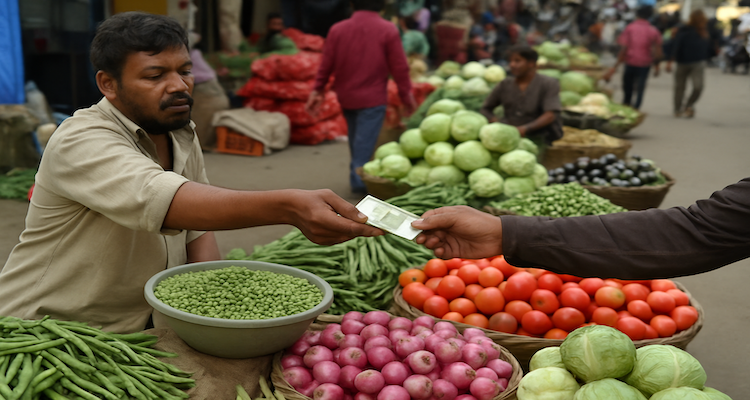
While cereals and sugar remained relatively steady, many other food categories followed their typical seasonal climb. Tomatoes, in particular, saw a double-digit month-on-month jump, pushing the food basket higher even as overall inflation remains subdued.
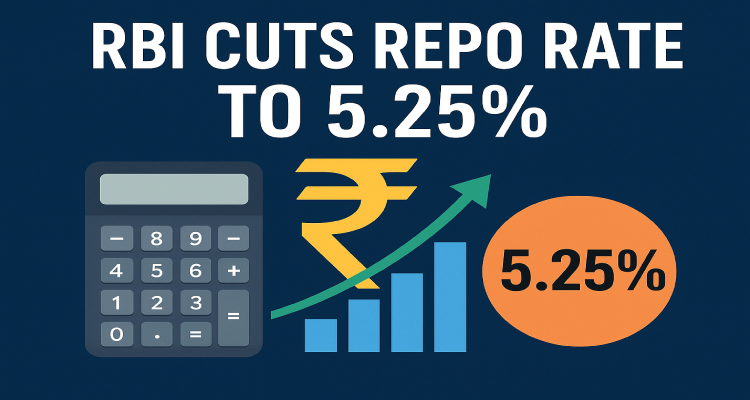
The trend comes just days after the RBI issued a widely anticipated 25-basis-point rate cut on December 5. Governor Sanjay Malhotra emphasized that the central bank still has “policy space” should economic conditions require further support.
Record Harvests and Stable Supply Keep Prices Tame
Economists say 2024’s unusually calm food inflation story reflects both stable weather conditions and strong harvest cycles. Sakshi Gupta, principal economist at HDFC Bank, explained that India has moved out of a period defined by repeated climate-related shocks to food supply.
“We’re now on the opposite end of that volatility,” she said, pointing to consecutive healthy cropping cycles that have helped keep food inflation in check. Gupta expects inflation to “remain broadly under 4% until the second quarter of next year,” continuing the RBI’s recent streak of price stability.
The central bank now projects inflation to average 2.0% for the current financial year, significantly lower than its earlier estimate of 2.6% and even below the 2.2% forecast in last month’s Reuters poll.
Underlying Demand Holds Steady
Beneath the headline numbers, India’s core inflation, which strips out volatile food and fuel categories, has remained relatively unchanged. The poll estimates core inflation at 4.39% in November, almost identical to October’s reading. While India’s statistics office does not publish official core inflation data, economists use this estimate to gauge underlying consumer demand and price pressures.
Meanwhile, the wholesale price index (WPI) is projected to show a 0.60% year-on-year decline in November, improving from the 1.21% drop recorded in October. The milder WPI contraction adds another signal that price pressures are beginning to stabilize across supply chains.
What the Numbers Mean for India’s Economy
Even with November’s likely increase, India remains in a rare period of exceptionally low inflation. For policymakers, this environment creates room to nurture growth without immediately risking runaway prices. Businesses may also benefit from predictable input costs, while consumers, often hit hardest by food spikes, have experienced meaningful relief this year.
However, economists caution that the unusually sharp drop in food prices seen earlier in 2024 may not last indefinitely. Seasonal patterns, global commodity trends, and climate-related risks could shape the inflation path heading into the next fiscal year.
Still, with inflation comfortably below the RBI’s 4% target and core inflation stable, the broader outlook remains optimistic.
A Controlled Rise Amid a Year of Stability
India may be heading into December with inflation inching upward, but the underlying story remains one of stability. The combination of strong harvests, steady supply chains, and responsive monetary policy has positioned the economy for a period of manageable price growth. As analysts await the official numbers on December 12, expectations remain anchored: inflation is rising gently, but still well within comfortable territory for the RBI and consumers alike.
Source: Reuters
ALSO READ: Yen Steadies as Japan Quake Heightens Market Caution