








India, Indonesia to Conduct ‘Garuda Shakti’ Exercise from December 3
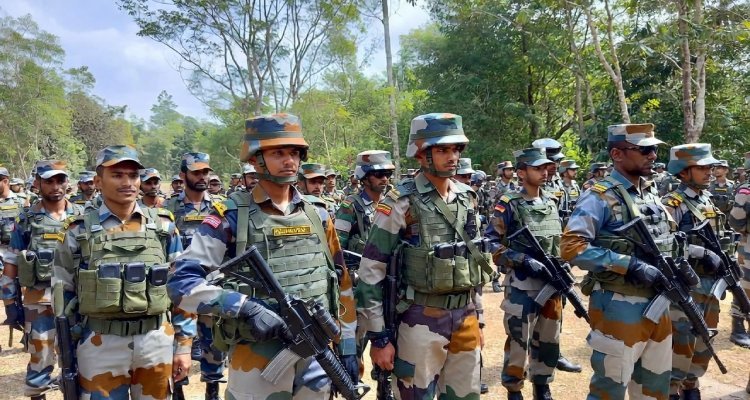
India and Indonesia will launch the 10th Garuda Shakti Special Forces exercise on December 3 in Bakloh, strengthening counter-terror and defence cooperation.
Introduction: A New Chapter in India–Indonesia Security Cooperation
As rising security challenges sweep across the Indo-Pacific, India and Indonesia are once again stepping onto the same training ground—this time for the 10th edition of Exercise Garuda Shakti. Beginning December 3 in Bakloh, Himachal Pradesh, the joint Special Forces exercise marks a renewed commitment by the two regional powers to strengthen operational synergy, counterterror capabilities, and strategic trust at a time when maritime and land-based threats continue to evolve.
Context & Background: A Partnership Rooted in Shared Security Goals
India and Indonesia, two of the world’s largest democracies and maritime nations, have steadily deepened defence ties over the past decade. Their cooperation spans naval patrols, maritime domain awareness, and Special Forces training—reflecting shared interests in countering terrorism, piracy, and instability across the broader Indo-Pacific.
The first edition of Garuda Shakti was held in India in 2012. Since then, the exercise has expanded in scale and sophistication, conducted alternately between the two countries. It has become a cornerstone of a growing defence relationship that also includes:
Samudra Shakti: A bilateral naval exercise aimed at enhancing maritime coordination
Coordinated Patrols (CORPAT): Joint maritime security operations in the Indian Ocean region
High-level dialogues and defence exchanges
With the 2024–25 geopolitical landscape shifting, this year’s iteration comes at a strategic moment.
Main Developments: What the 10th Garuda Shakti Exercise Will Focus On
The latest edition of Garuda Shakti will be held from December 3 to 12 at the Special Forces Training School in Bakloh. The location—known for its rugged, semi-mountainous terrain—offers the ideal setting for advanced Special Forces interoperability drills.
Key Components of the Exercise
The two nations’ Special Forces will jointly conduct a series of high-intensity, mission-specific operations, including:
1. Counter-Terrorism Operations
Simulated urban and rural insurgency environments will allow teams to practice coordinated assaults, perimeter clearing, and hostage rescue tactics.
2. Heliborne Missions
Rapid insertion and extraction techniques using helicopters will be tested to mimic real-world scenarios where air mobility is crucial.
3. Combat Shooting & Live-Fire Drills
Precision marksmanship, reflexive firing, and coordinated small-team engagement drills will form a major portion of the training.
4. Drone & Counter-UAS Operations
With drones increasingly shaping modern battlefield dynamics, this segment will focus on reconnaissance, surveillance, and neutralization techniques using Counter-Unmanned Aircraft Systems.
5. Surgical Strike Planning
Operators will simulate stealth-based missions in semi-mountainous regions, emphasizing secrecy, speed, and precision—skills essential for Special Forces operations.
Collectively, these drills aim to sharpen tactical responses and foster seamless coordination between the two nations’ elite units.
Expert Insight: Why Garuda Shakti Matters Now
Defence analysts note that the timing of this year’s exercise is significant, as both nations face rising demands for stronger counter-terror preparedness.
Defense researcher Col. Arvind Rathore (Retd.) explains:
“Joint exercises like Garuda Shakti aren’t just about tactical drills—they build mutual trust. In today’s threat environment, no country can respond to terrorism or grey-zone conflict alone. India and Indonesia are increasingly aligned on this reality.”
Indonesian security analyst Rahmat Prabowo adds:
“The Indo-Pacific is witnessing rapid militarization. Cooperation between India and Indonesia, two major regional powers, helps maintain a balance and ensures both nations are better prepared for asymmetric threats.”
Public sentiment across defence communities has been largely positive, viewing the exercise as a step toward a safer, more stable region.
Impact & Implications: Strengthening an Indo-Pacific Security Architecture
The implications of Garuda Shakti extend beyond bilateral training.
1. Enhanced Counter-Terror Readiness
Both nations gain hands-on experience in complex mission scenarios, improving real-world counterterror responses.
2. Improved Interoperability
Special Forces sharing tactics, communication protocols, and mission frameworks helps create a unified approach to regional threats.
3. Indo-Pacific Stability
As the Indo-Pacific sees increasing geopolitical competition, coordinated training enhances collective security, helping both nations maintain a stable maritime environment.
4. Strategic Trust Building
Exercises like Garuda Shakti signal long-term defence confidence between India and Indonesia—sending a message of cooperation amid wider regional uncertainties.
Conclusion: A Partnership Built for the Future
The 10th edition of Exercise Garuda Shakti is more than a military drill—it is a testament to a maturing, resilient partnership between India and Indonesia. As both countries navigate an increasingly complex security landscape, their continued collaboration through joint Special Forces operations strengthens not only bilateral ties but also the broader Indo-Pacific security architecture.
With advanced training modules, cutting-edge drone operations, and counterterror drills scheduled over ten days, Garuda Shakti once again underscores a shared commitment: defending stability through cooperation, preparedness, and trust.
Disclaimer:This article is for informational and educational purposes only. It does not reflect official government views and should not be considered military or strategic advice.