










IMDb Review War Erupts Before Westeros Finale
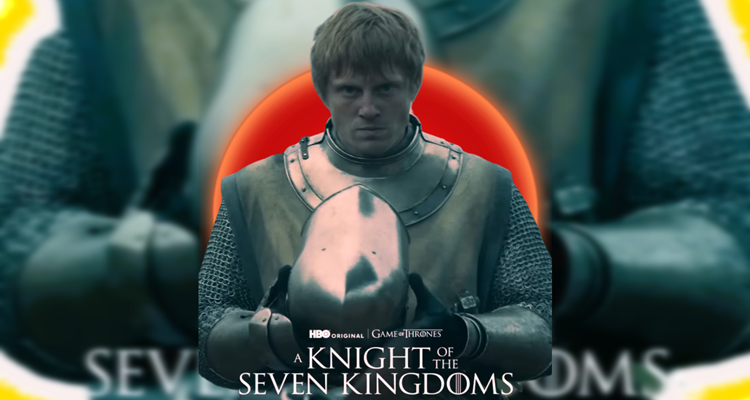
The season finale of A Knight of the Seven Kingdoms hadn’t even aired when it found itself at the center of an online ratings battle. Thousands of one-star reviews appeared on IMDb days before the episode’s release, igniting a fresh chapter in an unlikely feud between fans of the Game of Thrones prequel and AMC’s Breaking Bad.
What began as digital retaliation has now raised broader questions about the credibility of user-driven ratings on major entertainment platforms.
IMDb Ratings Surge Before Finale Airs
“The Morrow,” the sixth and final episode of Season 1, debuted on HBO Max (and JioHotstar in India) Monday morning local time. But by Sunday, the episode had already amassed more than 20,000 user ratings on IMDb, a striking figure considering it had not yet been publicly screened.
A significant share of those early votes were 1/10 ratings. Many reviewers openly identified themselves as Breaking Bad fans, claiming their actions were in response to what they described as prior review-bombing of the iconic Breaking Bad Season 5 episode “Ozymandias.”
Some posts referenced a tit-for-tat dynamic between the two fandoms, suggesting that supporters of the Westeros-based drama had downvoted “Ozymandias,” long regarded as one of television’s highest-rated episodes.
In response, fans of A Knight of the Seven Kingdoms mobilized, flooding the platform with 10/10 ratings to offset the damage. Others urged restraint, calling for fair scoring and an end to what many described as a pointless ratings war hurting both series.
At the time of writing, “The Morrow” holds a weighted IMDb rating of 8.0, including roughly 4,000 one-star reviews. Meanwhile, “Ozymandias,” which maintained a rare perfect 10 rating for over a decade, currently sits at 9.7.
How the Fan Feud Began
The tensions appear to have escalated after the release of “In the Name of the Mother,” the fifth episode of A Knight of the Seven Kingdoms. That episode initially achieved a perfect user score on IMDb before a sudden influx of low ratings pushed it down to 9.7.
Some viewers attributed the drop to Breaking Bad supporters attempting to protect “Ozymandias” from losing its status among IMDb’s top-rated television episodes. In retaliation, segments of the Westeros fandom reportedly targeted “Ozymandias” with lower ratings.
While IMDb employs weighted averages and anti-manipulation algorithms, coordinated voting campaigns can still temporarily skew public perception, especially in the first hours or days after posting.
The episode’s pre-release review activity underscores a broader issue facing digital platforms: how to preserve the integrity of crowd-sourced ratings in an era of highly mobilized fan communities.
A Different Kind of Westeros Story
Created by Ira Parker and based on George R.R. Martin’s Tales of Dunk and Egg novellas, A Knight of the Seven Kingdoms marks a tonal shift within the Game of Thrones universe.
Set roughly a century before the events of the original HBO series, the show follows Ser Duncan the Tall, known as Dunk, played by Peter Claffey. A wandering hedge knight of limited training but considerable heart, Dunk forms an unlikely partnership with Egg, portrayed by Dexter Sol Ansell. Egg is later revealed to be Prince Aegon Targaryen traveling incognito.
Unlike its predecessors, the series largely sidelines dragons, large-scale political intrigue, and apocalyptic threats. Instead, it centers on character-driven storytelling during a relatively peaceful period in Westeros history.
Season 1 adapts the novella The Hedge Knight, chronicling Dunk’s journey to compete in a tourney where a clash with a Targaryen prince sets off a chain of events that challenge his sense of honor and survival.
Critical Acclaim and Performances
Despite the IMDb turbulence, critical reception for the series has been overwhelmingly positive. Reviewers have praised the show’s faithful adaptation of Martin’s source material and its restrained, intimate storytelling style.
Peter Claffey’s portrayal of Dunk has been widely described as earnest and grounded, capturing both the character’s physical presence and moral vulnerability. Dexter Sol Ansell’s performance as Egg adds sharp wit and emotional depth, giving the central partnership a compelling dynamic.
Supporting cast members, including Bertie Carvel as Baelor Targaryen and Daniel Ings as Lyonel Baratheon, have also drawn attention for bringing nuance and charisma to roles that enrich the series’ world-building.
Many critics argue that the show’s success lies precisely in its scaled-back approach. Rather than relying on spectacle, it focuses on motivations, personal stakes, and the complexities of knighthood in a changing political landscape.
The Broader Impact of Review Bombing
The IMDb controversy highlights a growing phenomenon in online entertainment culture: organized review bombing. Whether motivated by fandom rivalries, political disagreements, or franchise loyalty, coordinated rating campaigns can distort early audience impressions.
While IMDb uses a weighted system to mitigate manipulation, mass voting still influences public perception, especially for casual viewers scanning ratings before deciding what to watch.
Industry analysts have noted that such campaigns rarely affect long-term critical consensus. However, they can temporarily shift rankings, affect algorithmic visibility, and spark unnecessary polarization among fan communities.
For streaming platforms and content creators, the episode serves as a reminder that audience engagement now extends far beyond the screen, into digital battlegrounds where reputation is shaped in real time.
What This Means for the Franchise
For HBO and the broader Game of Thrones franchise, the incident underscores both the enduring passion and volatility of modern fandom.
Game of Thrones redefined fantasy television with its world-building and character depth. Subsequent entries like House of the Dragon and now A Knight of the Seven Kingdoms have sought to expand that universe in different tonal directions.
If anything, the review war may signal just how invested viewers remain in these interconnected worlds. The intensity of the reaction suggests that the franchise continues to command attention, even when dragons are absent.
Ultimately, ratings may fluctuate, but strong storytelling tends to endure beyond short-term digital skirmishes.
Looking Ahead
As A Knight of the Seven Kingdoms concludes its first season, its long-term legacy will likely depend more on critical reception and sustained audience engagement than on temporary IMDb metrics.
Fan rivalries may generate headlines, but the durability of a series rests on character, craft, and narrative integrity. In that regard, Ira Parker’s adaptation appears to have laid solid groundwork.
Whether the online feud cools or reignites, one lesson is clear: in today’s streaming era, battles over fictional kingdoms can spill into very real digital arenas.
And sometimes, the fiercest fights happen not on the battlefield, but on the ratings page.
Continue Exploring:
Netflix’s BioShock Movie: Production Update
Netflix’s ‘DANG!’ Brings Comedy Titans to Animation
A Wedding Turns Deadly in Netflix’s New Horror Drama
This content is published for informational or entertainment purposes. Facts, opinions, or references may evolve over time, and readers are encouraged to verify details from reliable sources.