










Human Rights Day 2025: Reaffirming a Global Promise in an Age of Uncertainty
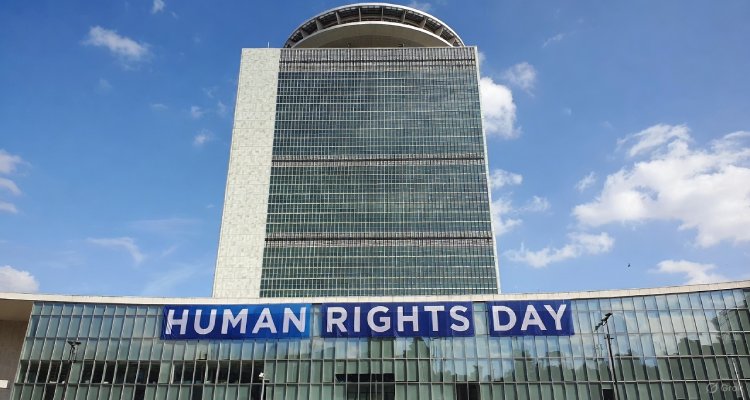
Human Rights Day 2025 reaffirms equality, justice, dignity, and freedom as the world revisits the enduring relevance of the Universal Declaration of Human Rights.
Introduction: A Day That Echoes Across Generations
Every year on December 10, the world pauses to remember a document that reshaped humanity’s moral compass. Human Rights Day is not simply another date on the global calendar—it is a reminder of a promise nations made in the shadow of war, a commitment that still guides billions today. As the world grapples with rising insecurity, alienation, and polarization, the 2025 theme, “Human Rights, Our Everyday Essentials,” calls on societies to reclaim values that once united nations emerging from catastrophe.
This year’s observance underscores an essential message: human rights are not abstract ideals, but the daily foundations upon which dignity, justice, and freedom stand.
Context & Background: The Legacy of a Pioneering Global Compact
Human Rights Day marks the adoption of the Universal Declaration of Human Rights (UDHR) on December 10, 1948—an unprecedented global agreement forged after the devastation of World War II. For the first time in history, nations collectively articulated a set of inalienable rights that belong to every person, regardless of identity, background, or belief.
The UDHR consists of 30 articles, setting out fundamental freedoms that have since influenced international treaties, national constitutions, and modern legal norms. Its extraordinary reach—translated into 577 languages, from Abkhaz to Zulu—makes it the most translated document in the world.
Framed as a “common standard of achievement for all peoples and all nations,” the UDHR became the moral backbone for the global human rights movement and laid the groundwork for the 2030 Agenda for Sustainable Development.
Main Developments: This Year’s Call to Reaffirm Shared Values
The 2025 theme, “Human Rights, Our Everyday Essentials,” reflects the mood of a world navigating turbulence—economic uncertainty, social disaffection, political fragmentation, and renewed conflict. Many people across continents describe feeling alienated or insecure in the face of rapid change.
Against this backdrop, the United Nations aims to remind societies that the values enshrined in the UDHR—equality, justice, freedom, and dignity—are not aspirational but vital. They shape everyday rights: the right to speak freely, to live without discrimination, to access education, to enjoy equal justice, and to participate in public life.
This year’s observance also highlights the role of the United Nations Human Rights Council, created on March 15, 2006, to safeguard and advance these principles. Based in Geneva, the Council monitors global human rights conditions, addresses violations, and recommends action throughout the year.
Its composition—47 member states elected through a direct and secret ballot—reflects equitable geographic representation:
- Africa: 13 seats
- Asia-Pacific: 13 seats
- Latin America & Caribbean: 8 seats
- Western Europe & Others: 7 seats
- Eastern Europe: 6 seats
Members serve three-year terms and cannot immediately return after two consecutive terms, ensuring rotation and diverse participation.
Expert Insight & Public Reaction: The World Responds
Human rights scholars and advocates stress that the 2025 theme is more than symbolic—it aligns with growing public demand for accountability and inclusive governance.
Dr. Miriam Hale, an international law professor, notes that “As societies confront rising polarization, the UDHR remains the most universal moral reference point we have. Its principles help us navigate uncertainty with a shared sense of humanity.”
Human rights activists echo this sentiment, especially in regions experiencing conflict or displacement. Many point to the universal nature of the UDHR as a bridge between communities with differing ideologies.
Public reaction across social platforms has also highlighted the relevance of this year’s theme. Messages tagged with #HumanRightsDay emphasize the need for empathy and collective action, while youth-led groups underline rights related to digital privacy, equality, and freedom of expression—emerging frontiers shaped by technology and social media.
Impact & Implications: What This Means for the Future
The ongoing global emphasis on human rights has several key implications:
1. Renewed Attention on Local and National Accountability
Countries are expected to strengthen human rights protections within their borders, aligning national policies more closely with the UDHR’s guiding principles.
2. Greater Global Scrutiny of Violations
The Human Rights Council’s role is likely to expand, with increased attention on conflict zones, refugee rights, and marginalized populations.
3. Rising Focus on Digital and Technological Rights
As everyday life becomes more interconnected and data-driven, calls for safeguarding digital privacy, online freedom, and protection from surveillance continue to grow.
4. Youth Leadership Becomes Central
Young people—more connected, informed, and vocal than any previous generation—are shaping the modern human rights agenda, particularly on issues like climate justice, gender equality, and digital transparency.
5. The UDHR as a Living Document
Although written in 1948, the UDHR continues to influence emerging global frameworks. Its adaptability may guide future laws dealing with AI ethics, climate displacement, and digital rights.
Conclusion: A Blueprint That Still Guides Humanity Forward
Human Rights Day 2025 is both a celebration and a call to action. As the world confronts new forms of inequality and insecurity, the UDHR remains a steady compass—its principles as relevant today as they were in the aftermath of global war.
“Human Rights, Our Everyday Essentials” reminds us that rights are not distant goals but daily necessities. They shape how societies function, how leaders govern, and how individuals live with dignity.
More than seven decades after its adoption, the UDHR continues to illuminate a path toward a fairer, more compassionate world—one where freedom, equality, and justice are not privileges, but universal guarantees.
Disclaimer :This article is for informational and educational purposes only. It does not constitute legal advice or reflect any official position of the United Nations or affiliated entities.