










Govt, ADB Sign $800 Million Loan Pacts to Boost Infrastructure, Skills, and Sustainability Across Three States
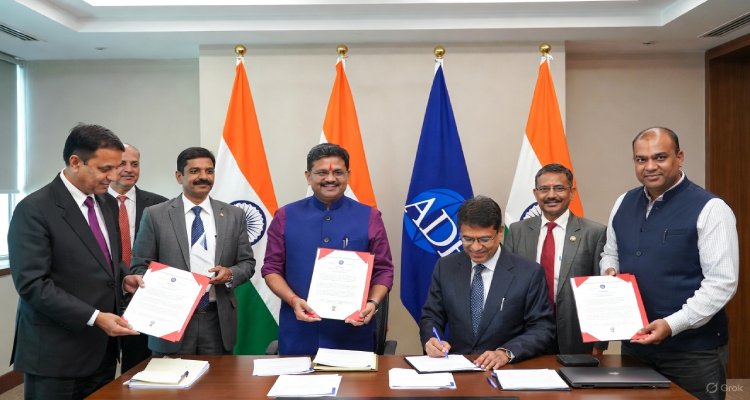
India and ADB sign $800M loan agreements to upgrade power, metro rail, and skills development projects in Maharashtra, Madhya Pradesh, and Gujarat.
Introduction: A Major Push for India’s Development Pipeline
India’s infrastructure and social development landscape received a significant boost this week as the Government of India and the Asian Development Bank (ADB) signed three major loan agreements worth over $800 million. The multi-sector financing package—spanning clean energy, urban mobility, and skill development—reflects India’s accelerating push toward sustainable growth, technology-led governance, and future-ready human capital.
Alongside the loans, ADB also signed a $1 million Technical Assistance grant to strengthen ecological and fisheries resilience in Assam, underscoring the bank’s evolving focus on climate-sensitive development.
Context & Background: ADB’s Expanding Role in India’s Growth Story
Since India joined ADB as a founding member in 1966, the partnership has matured into one of the regional bank’s most significant development engagements. With 655 public sector loans, grants, and technical assistance projects worth $59.5 billion already committed, ADB has been instrumental in advancing India’s infrastructure, connectivity, energy reform, and social sector priorities.
Over the decades, ADB has transitioned from supporting basic infrastructure to financing high-impact, transformative projects—particularly in clean energy, metro rail expansion, urban services, digital governance, and climate adaptation.
In 2024 alone, ADB committed $4.25 billion in financing to India, 60% of which was directed toward climate mitigation and adaptation projects.
The latest agreements reaffirm this long-standing cooperation and align closely with India’s national objectives: reducing carbon intensity, improving mobility, strengthening rural infrastructure, and making the workforce globally competitive.
Main Developments: Three States, Three Transformative Projects
1. Maharashtra Power Distribution Enhancement Programme – $500 Million
The largest of the three agreements centers on rural Maharashtra, where the state aims to modernize and stabilize its power distribution network while advancing agricultural solarization.
Key objectives include:
- Upgrading rural power infrastructure
- Scaling distributed renewable energy systems
- Providing farmers with reliable daytime solar power for irrigation
- Reducing dependence on subsidized grid electricity
- Boosting agricultural productivity through energy security
By aligning with the government’s broader KUSUM solarization goals, this initiative seeks to curb losses in the power sector while supporting farmers’ transition to clean energy.
2. Indore Metro Rail Project – $190.6 Million
Indore—one of India’s fastest-growing cities—will see major urban mobility improvements funded by the second loan.
What the project includes:
- Construction of an 8.62 km underground metro corridor
- Seven new stations connecting densely populated areas to the airport
- Implementation by the Madhya Pradesh Metro Rail Corporation Ltd.
- Targeted opening of operations by January 2030
As Indore continues its rapid urbanization, the metro line is expected to reduce congestion, cut travel times, and lower pollution. The funding also supports modern engineering systems for safety, accessibility, and energy efficiency.
3. Gujarat Skills Development Programme – $109.97 Million
Recognizing Gujarat’s position as a manufacturing and innovation hub, the third agreement aims to strengthen the state’s workforce pipeline.
Project goals include:
- Upgrading vocational training and polytechnic institutions
- Introducing industry-aligned curriculum in high-growth sectors
- Enhancing digital and advanced manufacturing skills
- Strengthening job readiness through modern facilities and training systems
The initiative is designed to help Gujarat’s youth transition into sectors such as renewable energy, semiconductors, logistics, and advanced manufacturing—industries critical to India’s future competitiveness.
4. Technical Assistance for Assam’s SWIFT Project – $1 Million
Beyond the three large loans, a climate-focused grant will support Assam’s upcoming Sustainable Wetland and Integrated Fisheries Transformation (SWIFT) Project.
Objectives include:
- Reviving wetland ecosystems
- Modernizing fisheries
- Ensuring sustainable livelihoods for local communities
- Enhancing climate resilience in ecologically fragile zones
This reflects ADB’s growing emphasis on nature-based solutions and integrated resource management.
Expert Insight & Public Reaction
Development economists and infrastructure analysts welcomed the agreements, calling them “timely and strategically aligned” with India’s medium-term growth goals.
According to independent infrastructure analyst Kavita Raghavan:
“These loans are not just financial agreements—they’re investments in resilience, sustainability, and human capability. ADB’s approach mirrors India’s priorities: greener power, smarter cities, and empowered workers.”
Urban mobility experts also noted that the Indore metro expansion signals ADB’s continued support for India’s mass transit modernization, which has become central to climate and congestion mitigation efforts.
For farmers in Maharashtra and youth in Gujarat, the initiatives promise tangible improvements in energy access, job opportunities, and overall quality of life.
Impact & Implications: What Comes Next?
For Maharashtra:
Solar-powered irrigation will reduce dependency on diesel and grid-based supply, lowering emissions and operational costs. Modern power infrastructure is also expected to decrease outages and improve rural economic productivity.
For Madhya Pradesh:
The Indore metro line is poised to become a backbone of the city’s urban mobility network, supporting its emergence as a Tier-I contender and improving logistics and tourism accessibility.
For Gujarat:
A stronger, upskilled workforce could boost the state’s industrial competitiveness and attract deeper global investments, particularly in high-tech manufacturing.
For Assam:
Improved wetland management and fishery systems will support conservation while securing livelihoods—critical for a state that faces recurrent flooding and ecological vulnerability.
For the National Landscape:
The agreements signal India’s commitment to climate-responsive development, multi-sector modernization, and global cooperation.
They also highlight ADB’s increasing role in shaping India’s clean energy transition, urban transformation, and human capital strategy.
Conclusion: A Strategic Partnership Strengthening India’s Future
The signing of over $800 million in ADB loan agreements marks another milestone in India’s pursuit of sustainable and inclusive growth. From solar power and metro rail tunnels to training centers and wetland ecosystems, the initiatives cut across critical sectors shaping India’s development trajectory.
By combining infrastructure, climate resilience, and workforce empowerment, the Government of India and ADB are laying the foundation for long-term economic progress—rooted in innovation, equity, and environmental stewardship.
Disclaimer :This article is based solely on the provided headline and supplied details. It is an original journalistic piece created for informational purposes and does not represent official government or ADB statements.