









Global Cooperation Slips, Making Business Tougher in 2025
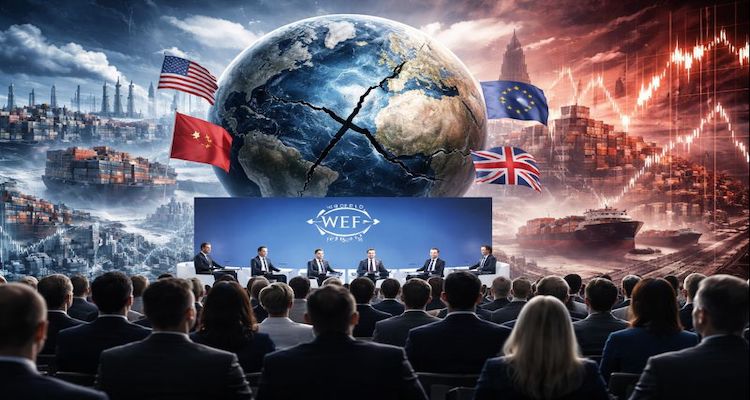
Doing business across borders has rarely felt this uncertain. A new World Economic Forum survey reveals that weakening global cooperation in 2025 has made operations harder for companies, reshaping trade, investment, and long-term strategy decisions.
As world leaders and executives prepare to gather in Davos, the findings offer a clear snapshot of how geopolitical friction is spilling into boardrooms and balance sheets.
Global Cooperation Under Strain in 2025
A growing share of business leaders say the global environment has become less predictable and more fragmented over the past year. According to a new survey released by the World Economic Forum (WEF), nearly half of executives report that operating conditions worsened in 2025.
The online poll, conducted among 799 senior executives across 81 economies, found that 43% believe doing business became more difficult compared to 2024. Only 7% said conditions improved, while the rest saw little change or declined to give a clear view.
The survey was conducted using a McKinsey global executive panel and published ahead of the WEF’s annual meeting in Davos later this month.
Trade Barriers and Capital Flows Raise Red Flags
One of the clearest challenges highlighted by respondents was the rise in barriers affecting trade, talent mobility, and cross-border capital movement.
Nearly four in ten executives said these obstacles made it harder to operate globally. In contrast, just 10% felt such barriers had eased.
The WEF said the results reflect a broader erosion of trust and coordination among major economies, particularly as governments increasingly turn inward to protect domestic interests.
U.S. Tariffs Reshape the Trade Landscape
Trade policy uncertainty played a central role in executive concerns, especially following a series of U.S. tariff announcements earlier in 2025.
“Undeniably, a series of U.S. tariff announcements in 2025 raised questions about the future of trade,” the WEF said in its Global Cooperation Barometer 2026 report.
In April, U.S. President Donald Trump announced a wide range of new tariffs targeting key trading partners. The measures put fresh pressure on global supply chains, forcing companies to reassess sourcing, pricing, and logistics.
Over time, many of the tariffs were scaled back as the U.S. reached trade agreements with several countries. Even so, the initial uncertainty left a lasting impact on corporate planning.
Businesses Adapt, Even as Risks Grow
Despite the turbulence, the WEF noted a degree of resilience among companies navigating the shifting trade environment.
Six out of ten executives did not identify trade as a major obstacle, suggesting many firms have adapted their strategies to cope with volatility. These adjustments include diversifying supply chains, localizing production, and rethinking market exposure.
The findings point to a growing acceptance among businesses that instability is no longer temporary but part of the operating reality.
Security and Peace Cooperation Declines Sharply
Concerns extended beyond economics. The survey showed a significant drop in confidence around global cooperation on peace and security.
About 42% of executives said collaboration in this area had deteriorated in 2025, compared with just 13% who saw improvement. The remainder reported no meaningful change.
The WEF said heightened geopolitical tensions, regional conflicts, and fractured diplomatic relationships continue to undermine trust between nations, indirectly affecting investment decisions and long-term growth planning.
Climate Collaboration Faces Headwinds
Climate and environmental cooperation also showed signs of strain, though the picture was more mixed.
Nearly 29% of executives said collaboration on climate action and natural resource management had become more difficult. Meanwhile, 17% believed cooperation in this area had improved.
The split reflects uneven progress, with some regions pushing forward aggressively on climate initiatives while others slow down due to political, economic, or energy security concerns.
Clean Energy Investment Tells a Different Story
Despite worries about cooperation, renewable energy investment continued to grow in 2025.
The WEF report noted that global new investment in renewable energy rose nearly 10% in the first half of 2025 compared with the same period in 2024.
Installed solar and wind capacity surged by 67% year-on-year, reaching 408 gigawatts in just six months. The data suggests that market forces, technological progress, and national policies are driving clean energy expansion even when international coordination falters.
Experts Are More Pessimistic Than Executives
While corporate leaders expressed concern, experts linked to the WEF were even more negative in their assessment.
A separate poll conducted in September among members of the WEF’s Global Future Councils showed that 85% believed global cooperation had declined in 2025 compared to the previous year.
The contrast highlights a gap between executive adaptation and expert anxiety, with specialists warning that prolonged fragmentation could eventually overwhelm corporate coping mechanisms.
What This Means for the Global Economy
The survey underscores a critical shift in how businesses view globalization. Rather than assuming steady integration, companies are now planning for disruption, political risk, and regulatory divergence as permanent features of the global economy.
For emerging markets, reduced cooperation could mean slower capital inflows and tougher access to technology and talent. For advanced economies, it raises the risk of higher costs, weaker growth, and supply chain inefficiencies.
At the same time, the resilience shown in renewable energy investment suggests that progress is still possible where economic incentives align.
Looking Ahead to Davos and Beyond
As world leaders and executives convene in Davos, the findings serve as a warning that cooperation cannot be taken for granted. Businesses may adapt, but long-term prosperity depends on rebuilding trust across borders.
The WEF report makes clear that without renewed efforts on trade, security, and climate collaboration, the cost of doing business globally is likely to keep rising.
Whether policymakers respond with coordination or further fragmentation will shape the economic landscape well beyond 2025.
(With inputs from Reuters.)
ALSO READ: AI and Chip IPOs Surge as Hong Kong Market Reawakens
Disclaimer:
The information presented in this article is based on publicly available sources, reports, and factual material available at the time of publication. While efforts are made to ensure accuracy, details may change as new information emerges. The content is provided for general informational purposes only, and readers are advised to verify facts independently where necessary.