







Fuel Prices Steady Despite Excise Duty Cut Move
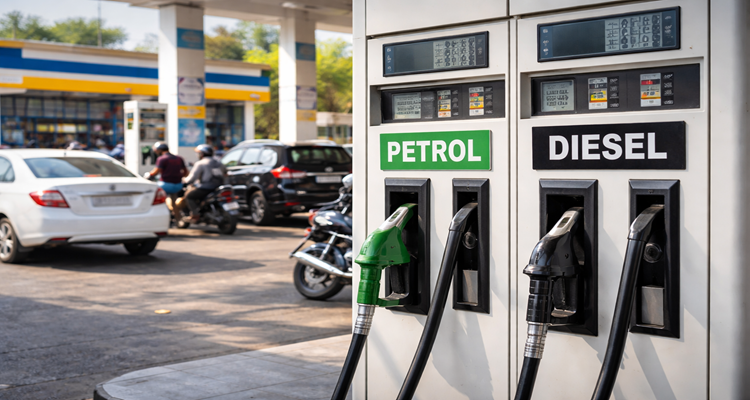
As global oil markets reel from geopolitical tensions in West Asia, India has stepped in with a major tax intervention. But while the government has cut excise duty on petrol and diesel, consumers may not see immediate relief at fuel stations.
The move raises a key question: will retail fuel prices actually fall, or is this just a buffer against further increases?
Government Steps In Amid Global Oil Shock
In response to rising global crude prices triggered by escalating tensions involving Iran and disruptions in the Strait of Hormuz, the Indian government has reduced excise duty on petrol and diesel by ₹10 per litre each.
Finance Minister Nirmala Sitharaman announced the decision, framing it as a protective measure aimed at shielding consumers from the volatility of international energy markets. The Strait of Hormuz, a critical maritime route through which roughly 20% of the world’s oil supply passes, has been at the center of supply concerns following military activity in the Gulf region.
At the same time, the government has imposed export duties on refined fuels. Diesel exports will now attract a duty of ₹21.5 per litre, while aviation turbine fuel (ATF) exports will be taxed at ₹29.5 per litre. The objective is to ensure adequate domestic supply during a period of global uncertainty.
Why Petrol and Diesel Prices Haven’t Dropped
Despite the headline-grabbing tax cut, retail fuel prices remained unchanged on the day of the announcement. This has left many consumers wondering whether the policy will translate into actual savings.
The answer lies in how oil marketing companies (OMCs) are currently operating.
Rather than passing on the tax benefit directly to consumers, the excise duty reduction is being used to offset the significant losses these companies are incurring. With global crude prices rising sharply, OMCs have been selling fuel at prices below cost.
Industry estimates suggest that companies are losing around ₹24 per litre on petrol and ₹30 per litre on diesel. In this context, the duty cut helps stabilize their financial position rather than lowering pump prices immediately.
Crude Oil Prices Surge Amid Conflict
The backdrop to this policy decision is a dramatic spike in crude oil prices. Benchmark crude has jumped by more than 48% since the start of the West Asia conflict, climbing from around $72 per barrel to over $108.
Energy analysts say the impact is already visible in India’s downstream sector. According to a research note by Emkay Global Financial Services, the marketing margins for petrol and diesel have turned sharply negative in recent weeks.
This means that even without further price hikes at the pump, oil companies are absorbing substantial losses, an unsustainable situation if global prices remain elevated.
Government’s Balancing Act
Petroleum and Natural Gas Minister Hardeep Singh Puri emphasized the difficult choices facing policymakers. In public remarks, he pointed out that fuel prices have surged globally, with increases ranging from 20% in Europe to as high as 50% in parts of Africa.
India, he suggested, had two options: pass on the full burden to consumers or absorb some of the shock through fiscal measures.
The government chose the latter, opting to reduce tax revenues to ease pressure on both consumers and oil companies. This approach, officials say, is consistent with earlier interventions during global disruptions, including the Russia-Ukraine conflict.
At the same time, the introduction of export duties ensures that domestic supply remains prioritized, especially when international markets are offering higher returns for refiners.
Expert View: Relief, But Not Immediate Savings
Energy market experts see the excise duty cut as a stabilizing move rather than a price-reduction measure.
By cushioning oil marketing companies from extreme losses, the government is effectively preventing a sharper increase in retail prices. In other words, while consumers may not see prices drop, they are likely avoiding steeper hikes.
Analysts also note that the timing of the decision is critical. With the Middle East conflict nearing a month and no clear resolution in sight, prolonged supply disruptions could keep crude prices elevated.
In such a scenario, the current policy may help maintain price stability in the short term, but cannot fully insulate India from global trends.
What It Means for Consumers
For everyday consumers, the immediate takeaway is straightforward: fuel prices are unlikely to fall in the near term.
Instead, the excise duty cut serves as a buffer against further increases. Without this intervention, petrol and diesel prices could have risen significantly in response to global market pressures.
The export duties, meanwhile, aim to ensure that domestic availability remains strong, reducing the risk of shortages or sudden supply disruptions.
However, if crude prices continue to rise or remain elevated for an extended period, further adjustments, either in taxes or retail prices, may become necessary.
Looking Ahead: A Volatile Road
India’s fuel pricing landscape remains closely tied to global developments. The ongoing tensions in West Asia, particularly around key shipping routes, will continue to influence crude oil markets.
For now, the government’s strategy appears focused on balancing three priorities: protecting consumers, supporting oil companies, and maintaining domestic supply.
Whether this approach can hold in the face of prolonged geopolitical instability remains to be seen.
Conclusion: Relief Without Reduction
The excise duty cut on petrol and diesel marks a significant policy move, but not one that translates into immediate savings at the pump.
Instead, it reflects a broader effort to manage the economic impact of a global energy crisis. For consumers, the benefit lies in price stability rather than price reduction.
As the situation in West Asia evolves, fuel prices in India will likely remain under pressure, making policy interventions like this an ongoing necessity.
The information presented in this article is based on publicly available sources, reports, and factual material available at the time of publication. While efforts are made to ensure accuracy, details may change as new information emerges. The content is provided for general informational purposes only, and readers are advised to verify facts independently where necessary.