







French Farmers Besiege Paris Over EU Mercosur Trade Deal
Why This Protest Matters Now
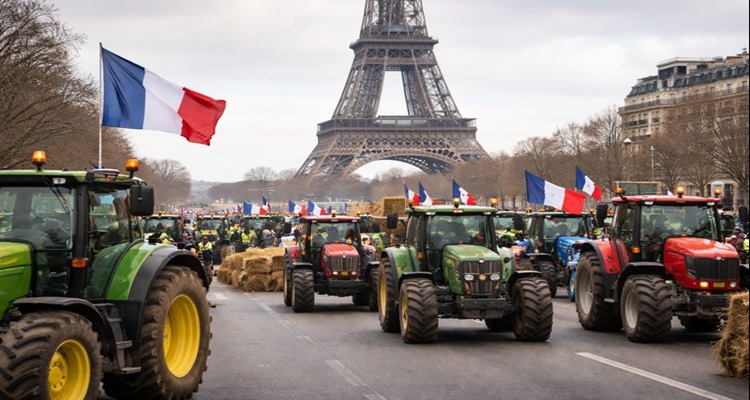
Before dawn, the rumble of tractors echoed through Paris as French farmers forced their way into the capital, blocking major roads and surrounding iconic landmarks. Their target was not just traffic flow but a European trade agreement they fear could permanently reshape French agriculture.
The protests come at a politically sensitive moment, with the European Union poised to vote on the long-delayed Mercosur trade pact and President Emmanuel Macron facing mounting domestic pressure from rural communities.
Farmers Take Their Anger to the Heart of Paris
Farmers affiliated with the Coordination Rurale union spearheaded the early-morning action, breaching police checkpoints and driving tractors along the Champs-Élysées. By sunrise, roads around the Arc de Triomphe and the Eiffel Tower were partially blocked, turning some of Paris’ most recognizable sites into stages for rural dissent.
Highways leading into the city were also choked. The A13, a key artery from Normandy and western suburbs, was brought to a standstill, creating traffic jams stretching nearly 150 kilometers, according to France’s transport ministry.
Despite the scale of disruption, authorities adopted a cautious approach. Police surrounded protesters but avoided direct confrontations, signaling the government’s desire to prevent escalation.
Mercosur Deal Sparks Deep Rural Anxiety
At the center of the protest lies the proposed EU–Mercosur free trade agreement, which would expand trade between the European Union and South American nations, including Brazil, Argentina, Uruguay, and Paraguay.
French farmers fear the deal will open EU markets to cheaper agricultural imports produced under standards they argue are less stringent than those imposed on European producers. The concern is not abstract. Many farmers believe the agreement threatens already-thin profit margins and could accelerate the decline of small and mid-sized farms.
Standing beneath the Eiffel Tower, Coordination Rurale leader Stéphane Pelletier captured the mood of the protest. According to a Reuters report, he described farmers as caught “between resentment and despair,” adding that many feel abandoned by policymakers in Paris and Brussels.
A Broader Agricultural Grievance
While Mercosur dominated the messaging, farmers arrived with a longer list of demands. A key flashpoint is the government’s response to lumpy skin disease, a highly contagious cattle illness.
French authorities have relied heavily on mass culling to prevent outbreaks, a strategy many farmers view as excessive and economically devastating. Protesters argue vaccination offers a more balanced and humane alternative, particularly for herds that represent years of breeding investment.
Rising production costs, complex regulations, and shrinking margins have further fueled anger. For many rural producers, the Paris protest was less about a single policy and more about years of accumulated strain.
Unions Unite as Protest Grows
As the day progressed, the protest widened. Farmers from France’s powerful FNSEA union and the Young Farmers organization joined demonstrations near the Eiffel Tower, adding weight to the movement while maintaining a largely calm presence.
The convergence of traditionally rival agricultural unions underscored the depth of concern within the farming sector. Even groups that often disagree on policy priorities appeared aligned in their opposition to the trade deal and their frustration with the government’s handling of agricultural challenges.
Macron Under Political Pressure
The timing could hardly be worse for President Emmanuel Macron. France lacks a clear parliamentary majority, making his government vulnerable to political backlash. Any miscalculation risks triggering a vote of no confidence in the National Assembly.
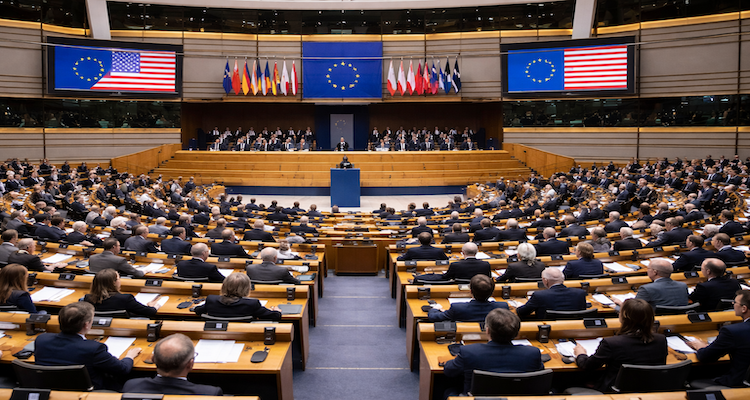
EU member states are expected to decide on the Mercosur agreement imminently. France has historically opposed the deal, and although Paris secured last-minute concessions, the issue remains politically toxic ahead of municipal elections in March and a presidential succession battle looming in 2027.
Government spokesperson Maud Brégeon told France Info radio that the treaty “remains unacceptable” in its current form, stopping short of confirming how France would vote. The ambiguity reflects the delicate balancing act facing Macron’s administration.
Even If Approved, France Plans to Fight On
French Farm Minister Annie Genevard made clear that Paris is not backing down easily. She stated that even if EU member states approve the deal, France intends to oppose it in the European Parliament, whose consent is still required for the agreement to take effect.
The European Commission, meanwhile, has moved aggressively to shore up support. This week, it proposed accelerating €45 billion in agricultural funding from the EU’s next seven-year budget and cutting import duties on certain fertilizers, steps aimed at easing farmer concerns across the bloc.
Germany and Spain remain strong backers of the deal, while Italy appears increasingly open to supporting it. Should Rome formally align with proponents, the EU could secure enough votes to pass the agreement regardless of France’s stance.
A Calculated Response From Authorities
French Transport Minister Philippe Tabarot emphasized restraint as protests unfolded, signaling a deliberate effort to avoid inflaming tensions.
“Farmers are not our enemies,” he said, according to Reuters, explaining why police were instructed to prioritize de-escalation over enforcement.
That approach reflects a broader recognition within government that rural discontent has become a volatile political force, capable of spilling rapidly into national crises if mishandled.
What Comes Next for Farmers and the EU
The vote expected Friday will mark a pivotal moment, but it is unlikely to end the controversy. Whether approved or blocked, the Mercosur deal has already exposed deep fractures between European trade ambitions and domestic agricultural realities.
For French farmers, the Paris blockade was both a warning and a demand to be heard. For Macron, it is another reminder that trade policy, however strategic on the global stage, carries profound local consequences.
As tractors roll back out of the capital, the underlying tensions remain firmly in place, poised to resurface as Europe weighs economic integration against the survival of its rural communities.
ALSO READ: Minneapolis Shooting Deepens Clash Over Federal ICE Raids
Disclaimer:
The information presented in this article is based on publicly available sources, reports, and factual material available at the time of publication. While efforts are made to ensure accuracy, details may change as new information emerges. The content is provided for general informational purposes only, and readers are advised to verify facts independently where necessary.