









China Marks Nanjing Massacre Quietly as Tensions With Japan Simmer
China held a subdued Nanjing Massacre memorial without President Xi Jinping, as relations with Japan remain strained over Taiwan and unresolved wartime history.
A Muted Ceremony Amid Loud Diplomatic Friction
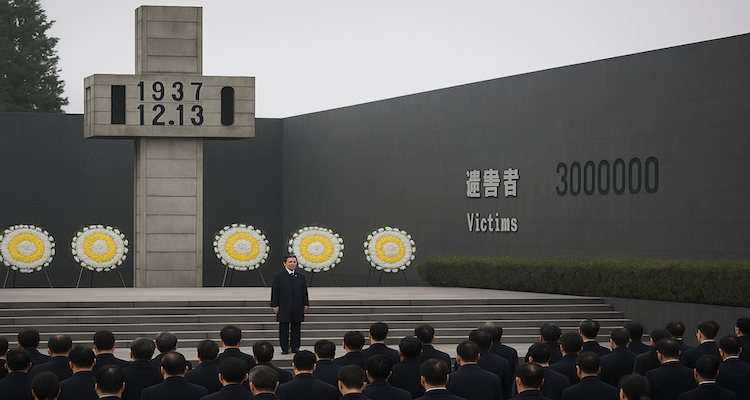
China marked one of the darkest chapters in its modern history with a noticeably restrained memorial ceremony on Saturday, honoring victims of the 1937 Nanjing Massacre. The low-profile observance stood out not for what was said, but for who was absent: President Xi Jinping. His decision to stay away came at a moment when relations between Beijing and Tokyo are once again under strain, underscoring the uneasy balance China is attempting to strike between remembrance, nationalism, and present-day diplomacy.
A Wound That Never Fully Healed
The Nanjing Massacre remains one of the most painful and politically charged episodes in East Asian history. When Japanese troops captured the then-capital of China in December 1937, mass killings and widespread atrocities followed. Chinese authorities maintain that around 300,000 civilians and prisoners of war were killed during the occupation.
International assessments have varied. A post–World War II Allied tribunal concluded that at least 142,000 people were killed in Nanjing. Despite this, a segment of conservative Japanese politicians and academics continues to question or outright deny that a massacre occurred-an enduring source of outrage in China and a recurring obstacle in bilateral relations.
To institutionalize remembrance, Beijing designated December 13 as a national memorial day in 2014, elevating the massacre from a historical event to a cornerstone of modern Chinese national identity and education.
Xi Absent as Officials Deliver a Firm Message
Saturday’s ceremony took place at the National Memorial Hall in Nanjing, drawing senior Communist Party officials but notably excluding President Xi. His last in-person appearance at the event was in 2017, when he attended without delivering public remarks.
This year, the keynote address was delivered by Shi Taifeng, head of the Communist Party’s powerful Organization Department. Rather than focusing solely on historical remembrance, Shi linked the tragedy of Nanjing to contemporary geopolitical themes, echoing rhetoric used by Xi during a major military parade in Beijing earlier this year commemorating the 80th anniversary of the end of World War II.
Shi emphasized national resilience, asserting that China’s historical experiences have forged a country that is unwilling to submit to external pressure. While Japan was not named directly, the speech carried unmistakable undertones aimed at Tokyo, particularly in light of recent political statements made by Japanese leaders.
Rising Tensions Over Taiwan Loom Large
The subdued tone of the memorial contrasted sharply with the diplomatic tension simmering in the background. Beijing has sharply criticized Japan following remarks by Prime Minister Sanae Takaichi, who suggested last month that a hypothetical Chinese military move against Taiwan could prompt a Japanese response.
For China, Taiwan remains a core sovereignty issue. Any suggestion of foreign military involvement, especially from Japan, whose wartime actions in China remain a sensitive subject-resonates far beyond contemporary security debates.
Chinese officials have accused Takaichi of reviving rhetoric reminiscent of Japan’s pre-war militarism, a charge that taps directly into historical memory and public sentiment shaped by events like the Nanjing Massacre.
History as a Warning
In his address, Shi Taifeng framed history not only as a record of suffering but as a cautionary lesson for the present. He warned that attempts to overturn the postwar international order or reintroduce militaristic thinking would face global resistance.
According to Shi, the international community-particularly nations that value peace and justice-would reject any effort to destabilize the fragile balance established after World War II. While the remarks avoided inflammatory language, the implication was clear: Beijing sees historical revisionism and modern security posturing as part of the same continuum.
This approach mirrors China’s broader strategy of using historical memory to reinforce its diplomatic narratives, particularly when addressing Japan and other U.S. allies in the Indo-Pacific.
History Meets Geopolitics
Xi Jinping’s absence from the ceremony may signal a tactical decision rather than a shift in policy. By allowing senior officials to speak while staying out of the spotlight, Beijing appears to be calibrating its message-assertive enough to satisfy domestic audiences, yet measured enough to avoid escalating tensions further.
For Japan, the episode underscores the difficulty of navigating contemporary security concerns without reopening historical wounds. Statements about Taiwan, while framed in strategic terms, inevitably intersect with unresolved issues from the past, especially when delivered by leaders associated with nationalist positions.
The broader implication is that historical memory remains an active force in East Asian diplomacy. Events like the Nanjing Massacre are not confined to textbooks or memorial halls; they continue to shape how governments interpret each other’s intentions and actions.
A Quiet Memorial With Lasting Echoes
The muted commemoration of the Nanjing Massacre this year reflects more than scheduling choices or ceremonial preferences. It highlights the complex interplay between history, nationalism, and modern geopolitics in China’s relationship with Japan.
As tensions over Taiwan intensify and regional security dynamics evolve, historical grievances are likely to resurface-sometimes subtly, sometimes forcefully. For now, Beijing’s message is clear: remembrance is non-negotiable, and any perceived return to militarism will be met not just with diplomatic resistance, but with the weight of history itself.
(Disclaimer: This article is based on verified reporting and historical records. All statements reflect publicly available information and official remarks at the time of writing, without speculation or unverified claims.)
ALSO READ: California Challenges Trump Over $33M Truck Safety Freeze