








Cabinet Approves ₹11,718 Crore Budget for Census 2027, Paving the Way for India’s Most Ambitious Population Count Yet
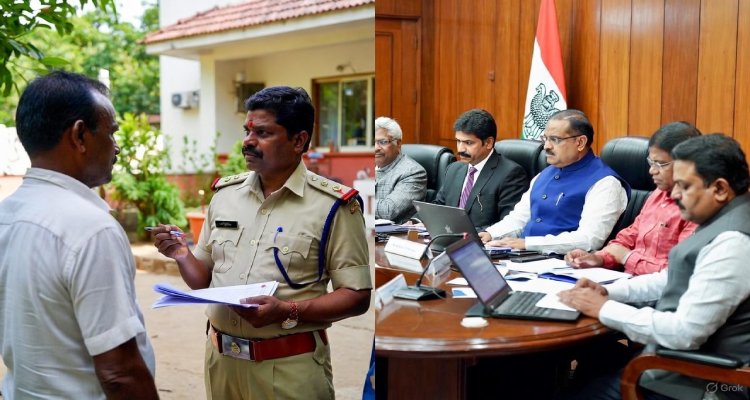
Cabinet approves ₹11,718 crore for Census 2027, including digital self-enumeration and historic caste census after a 16-year gap.
Introduction: A Long-Awaited National Exercise Returns
After a gap of more than a decade, India is set to undertake its most comprehensive demographic exercise as the Union Cabinet approves a ₹11,718 crore budget for the Census of India 2027. More than a routine data collection effort, the upcoming census marks a pivotal moment for governance, social policy, and political discourse—especially with the historic decision to include caste enumeration for the first time since Independence.
Chaired by Prime Minister Narendra Modi, the Cabinet’s approval signals the government’s intent to modernise the census process, integrate digital tools like self-enumeration, and generate updated, reliable data that will shape India’s development priorities for the next decade.
Context & Background: Why Census 2027 Matters
The Census of India is the world’s largest administrative and statistical exercise, governed by the Census Act, 1948 and Census Rules, 1990. Conducted every ten years, it provides the foundational data for policymaking, fiscal planning, welfare schemes, and political representation.
India’s last census was held in 2011, when the population stood at 121.19 crore, with 51.54% males and 48.46% females. The 2021 census was postponed due to the COVID-19 pandemic, creating an unprecedented data gap at a time of rapid urbanisation, migration, and economic transformation.
The 2027 census will be the 16th census since Independence, offering the first official population update in 16 years—a period marked by major shifts in fertility rates, urban growth, digital penetration, and social mobility.
Main Developments: What the Cabinet Approved
₹11,718 Crore Allocation and Massive Deployment
The Cabinet has cleared a total expenditure of ₹11,718.24 crore for Census 2027. Around 30 lakh field functionaries—including enumerators, supervisors, master trainers, and census officers—will be deployed nationwide for data collection, monitoring, and supervision.
Two-Phase Census Structure
The census will be conducted in two clearly defined phases:
Phase 1: Houselisting and Housing Census (April–September 2026)
This phase will capture data on housing conditions, household assets, amenities, sources of water and energy, and infrastructure.
Phase 2: Population Enumeration (February 2027)
This phase will record detailed demographic, socio-economic, cultural, and educational information for every individual.
For snow-bound and non-synchronous regions—such as Ladakh, parts of Jammu & Kashmir, Himachal Pradesh, and Uttarakhand—population enumeration will be conducted earlier, in September 2026.
Digital Leap: Self-Enumeration Option
For the first time, citizens will have the option of self-enumeration, reflecting the government’s push toward digital governance. This move is expected to improve accuracy, reduce manual errors, and speed up data processing.
The Big Shift: Inclusion of Caste Enumeration
One of the most consequential decisions linked to Census 2027 is the inclusion of caste enumeration, approved earlier by the Cabinet Committee on Political Affairs in April 2025.
What Is a Caste Census?
A caste census involves systematically collecting data on individuals’ caste identities during the population census. In a country where caste continues to shape access to education, employment, healthcare, and political power, such data can offer critical insights into social and economic disparities.
Under Article 246 of the Constitution, the census is a Union subject, making this a nationally coordinated exercise—unlike state-level caste surveys conducted in Bihar, Telangana, and Karnataka.
Historical Context: From Colonial India to Today
Caste enumeration was a standard feature of census exercises during British rule between 1881 and 1931. However, after Independence, the 1951 census—under Prime Minister Jawaharlal Nehru—discontinued caste data collection except for Scheduled Castes (SCs) and Scheduled Tribes (STs), fearing that caste-based categorisation could undermine national unity.
In 2011, the UPA government attempted to revive caste data collection through the Socio-Economic and Caste Census (SECC), but the caste data was never fully released or operationalised, sparking political controversy.
Census 2027 thus becomes the first official, comprehensive caste enumeration in independent India.
Expert Insight & Public Reaction: Hope and Caution
Policy analysts and social justice advocates have welcomed the decision, arguing that accurate caste data is essential for evidence-based governance.
“Much of access to education, healthcare, nutrition, and social protection in India is shaped by intersecting inequalities of caste and income,” social activists have noted. “Without reliable data, policy interventions risk being blunt and ineffective.”
At the same time, critics warn that caste enumeration could reinforce identity politics and deepen social divisions. Some political observers argue that how the data is interpreted and used will be as important as its collection.
Impact & Implications: What Happens Next?
Governance and Welfare Planning
Census 2027 will directly influence:
- Allocation of government funds
- Design of welfare schemes
- Urban planning and housing policy
- Education and healthcare infrastructure
Reservations and Social Justice
Accurate caste data could reshape debates on:
- Reservation ceilings
- Representation of OBCs and marginalised groups
- Targeted affirmative action in jobs and education
Electoral and Political Impact
Caste data is likely to have far-reaching implications for electoral strategies, potentially influencing constituency boundaries, campaign narratives, and coalition-building.
Data for the Next Decade
Beyond politics, the census will provide critical insights into:
- Literacy and gender gaps
- Migration and urbanisation trends
- Slum populations and housing shortages
- Agricultural labour patterns and occupational shifts
Conclusion: A Defining Exercise for India’s Future
The approval of ₹11,718 crore for Census 2027 marks more than the return of a decadal tradition—it signals a renewed commitment to data-driven governance in a rapidly changing India. With digital self-enumeration, comprehensive socio-economic coverage, and the historic inclusion of caste data, the upcoming census is poised to become one of the most consequential in the country’s history.
As India prepares to count itself once again, the challenge will lie not just in collecting data, but in using it responsibly—to build policies that are equitable, inclusive, and aligned with the realities of a diverse nation of over a billion people.
Disclaimer :This article is based solely on officially provided information and contextual analysis. Interpretations are intended for informational purposes and do not reflect any political endorsement.