







Bondi Beach Hanukkah Shooting: Terror Attack in Sydney Kills 15, Sparks Global Condemnation
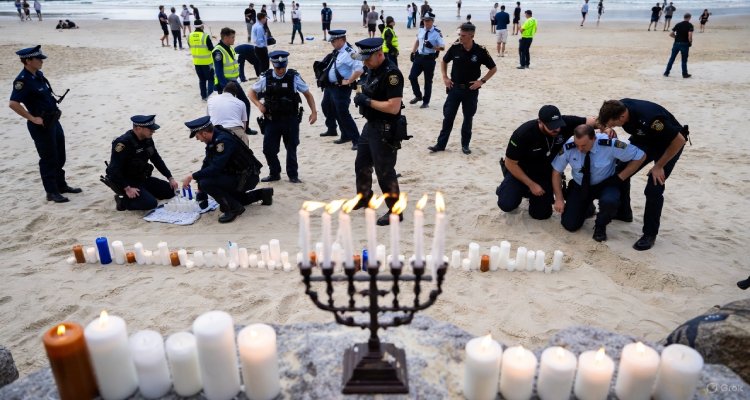
Deadly shooting at a Hanukkah event on Sydney’s Bondi Beach kills 15, prompting global condemnation and renewed debate on security and extremism.
Introduction: A Celebration Turned Tragedy
What began as a peaceful Hanukkah celebration on one of Australia’s most iconic beaches ended in horror on December 14, when gunfire erupted among families gathered at Bondi Beach in Sydney. According to authorities, at least 15 people were killed after two gunmen opened fire during the Jewish Festival of Lights—an act officials have since described as a terrorist attack. The violence shattered a moment meant for remembrance, resilience, and faith, plunging Australia and the global Jewish community into mourning.
As emergency responders rushed to the beachfront scene and security forces moved to contain the threat, the scale of the tragedy quickly became clear. One attacker was killed during the response, while the second was taken into custody. The attack has drawn swift international condemnation and reignited urgent debates about extremism, public safety, and the protection of religious gatherings.
Context & Background: Hanukkah and Public Safety in a Global Climate of Tension
Hanukkah—also spelled Chanukah—is one of Judaism’s most widely observed festivals. Known as the Festival of Lights, it commemorates the Jewish people’s victory more than 2,000 years ago to regain the freedom to practice their religion following the Maccabean Revolt against Seleucid rule. The holiday marks the rededication of the Holy Temple in Jerusalem and is observed over eight days, beginning on the 25th of Kislev in the Hebrew calendar.
Central to Hanukkah observance is the lighting of candles on a nine-branched menorah, with candles traditionally placed in windows or doorways as a symbol of faith and resilience. In many countries, public Hanukkah events have grown more visible in recent years, often held in open, communal spaces to encourage interfaith understanding.
However, such visibility has also raised security concerns worldwide, particularly amid heightened geopolitical tensions and a rise in attacks targeting religious and ethnic communities. Authorities in Australia had not indicated any specific threat ahead of the Bondi Beach gathering, making the attack all the more shocking.
Main Developments: What Happened at Bondi Beach—and Why It Matters
According to official accounts, two gunmen opened fire on the Hanukkah celebration as families, including children and elderly attendees, gathered along Bondi Beach. The beachfront setting—normally associated with leisure and tourism—quickly became the site of chaos as people fled for safety.
Emergency services confirmed that at least 15 people were killed in the attack. One of the gunmen was fatally shot during the response, while the second suspect was apprehended and taken into custody. Authorities have characterized the incident as a terrorist attack, though investigations into motive and possible affiliations remain ongoing.
The scale of casualties has sent shockwaves across Australia, where mass-casualty attacks of this nature are rare. Beyond the immediate loss of life, the attack has struck at a core national value: the expectation that public spaces, especially those used for peaceful cultural or religious expression, remain safe.
Global Reaction: Condemnation and Solidarity
International leaders were quick to condemn the violence. United Nations Secretary-General António Guterres issued a strong statement denouncing what he called a “heinous deadly attack” against Jewish families gathered in Sydney. His remarks emphasized the UN’s longstanding position that violence targeting civilians—particularly on the basis of religion—constitutes a grave violation of human rights.
Indian Prime Minister Narendra Modi also condemned the attack, expressing solidarity with Australia and offering condolences to the families of the victims. His statement underscored the global nature of the response, reflecting how acts of terror reverberate far beyond national borders.
Across social media and community forums, messages of grief and support poured in from Jewish organizations, interfaith groups, and ordinary citizens. Many highlighted the symbolism of the attack occurring during Hanukkah, a holiday rooted in survival against oppression.
Impact & Implications: Security, Community Trauma, and What Comes Next
The immediate impact of the Bondi Beach shooting is profound. Families are grieving, survivors are processing trauma, and communities are grappling with fear during what should have been a season of light and hope. Jewish organizations in Australia are expected to reassess security measures for public events, while authorities may face renewed scrutiny over how to balance openness with protection.
At a national level, the attack is likely to prompt discussions about counterterrorism preparedness, intelligence sharing, and safeguarding religious minorities. Australia’s reputation for strict gun control laws has long been cited as a model internationally, making the incident particularly jarring.
Globally, the attack adds to a troubling pattern of violence at religious gatherings, reinforcing concerns raised by international bodies about rising intolerance and extremist ideologies. For many observers, the question is not only how such attacks occur, but how societies can prevent them without retreating from public expressions of faith and culture.
What Is Hanukkah? Understanding the Festival Targeted in the Attack
Hanukkah commemorates a pivotal moment in Jewish history, celebrating the reclaiming of religious freedom during the 2nd century BC. Observed over eight nights, the festival centers on lighting candles on a menorah, with each night symbolizing perseverance and hope.
The holiday’s public observance—especially candle lighting in visible spaces—represents a declaration of faith rather than an act of defiance. That symbolism has now been tragically underscored, as communities reflect on the contrast between Hanukkah’s message of light and the darkness of violence.
Conclusion: A Call for Reflection and Resolve
The Bondi Beach Hanukkah shooting stands as one of the deadliest attacks on a religious gathering in Australia’s recent history. Beyond the numbers, it represents a profound rupture in a moment meant for unity, remembrance, and peace.
As investigations continue and communities mourn, the tragedy raises urgent questions about how nations protect diversity in an increasingly polarized world. Hanukkah teaches that light endures even in the darkest times. For many, honoring the victims now means ensuring that fear does not silence faith, and that public spaces remain places of shared humanity rather than division.
Disclaimer :This article is based solely on officially reported initial information provided at the time of writing. Details may evolve as investigations continue and authorities release further updates.