









At ₹90.43 Per Dollar, the Rupee Faces Its Sharpest Decline Yet—Here’s What’s Driving It
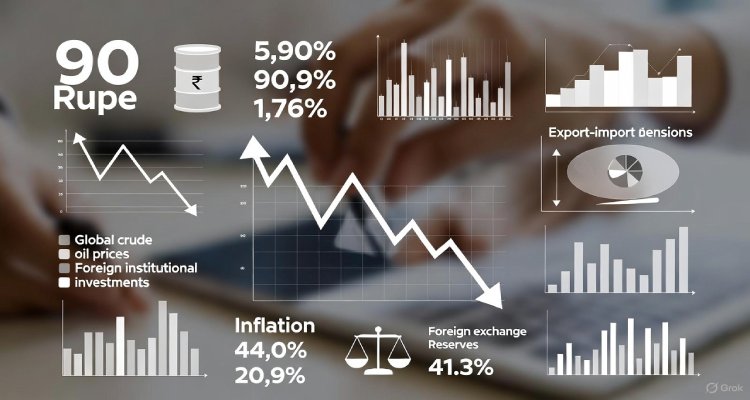
India’s rupee plunges past 90 per dollar for the first time, triggering inflation concerns, import cost spikes, and debates over the country’s economic direction.
Introduction: A Historic Slide Shakes Markets
India woke up to a watershed moment on December 4 as the rupee tumbled to an unprecedented ₹90.43 against the U.S. dollar, marking the first time the currency has breached the 90-mark. The symbolic threshold instantly sent ripples through financial markets, triggered political reactions, and raised new questions about the resilience of Asia’s third-largest economy amid ongoing global uncertainty.
For many Indians—importers, students abroad, families repaying dollar loans—the slide wasn’t just a headline. It was a direct hit to their pockets.
Context & Background: A Currency Under Pressure
The rupee has faced sustained pressure over the past several months, steadily weakening even as the U.S. dollar index fell below 100, signaling softness in the greenback. Traditionally, a weakening dollar supports emerging market currencies. But India has been an exception.
Multiple forces have converged:
- Steep U.S. tariffs on Indian goods have strained exports to India’s largest market.
- Foreign institutional investors (FIIs) have steadily withdrawn from Indian equities, reducing dollar inflows.
- Geopolitical tensions and a global crypto crash have revived safe-haven flows into the dollar.
As a result, the rupee has emerged as one of Asia’s weakest performers, prompting renewed scrutiny of India’s external vulnerabilities.
Main Developments: Why the Rupee Breached the 90-Mark
1. FII Outflows Intensify Currency Stress
Foreign investors dumped Indian stocks through the year, driven by tariff uncertainty, volatile global risk appetite, and concerns over stretched valuations in Indian markets. Each withdrawal demanded more U.S. dollars, deepening pressure on the rupee.
2. U.S. Tariff Uncertainty Looms Large
Washington’s steep import duties on Indian goods—a consequence of ongoing trade disagreements—have weakened India’s export momentum. With diminished prospects in the U.S. market, exporters earn fewer dollars, reducing forex inflows.
3. Safe-Haven Rush Strengthens the Dollar
Even as the dollar index softened, geopolitical instability and collapsing crypto markets pushed global investors toward safer assets. The dollar, as always, was first in line—tightening global liquidity and amplifying rupee volatility.
4. Structural Dependence on Imports
India’s sizable import bill—especially crude oil, edible oils, electronics, and machinery—keeps the rupee highly sensitive to external shocks. With dollar demand consistently high, any external headwind accelerates depreciation.
Expert Insight & Political Reactions
Economists warn that the breach of the 90-mark is more than a symbolic event—it’s a sign of deeper macroeconomic strain.
“The rupee’s fall is a reflection of structural stress in India’s external sector and sustained capital outflows. The 90-mark was always a psychological barrier, but fundamentally, the pressures were building,” says a Mumbai-based currency strategist.
Opposition leaders echoed public concerns, arguing that the depreciation will worsen cost-of-living challenges for millions.
“A weak rupee means a weak wallet for ordinary Indians,” one opposition figure said, highlighting rising household expenses tied to imported goods.
Wider Impact: How a Weak Rupee Hits Households and Businesses
The record-low rupee is more than a financial statistic—it has tangible, far-reaching consequences across sectors and socioeconomic groups.
1. Fuel and Essentials Get Costlier
India imports 90% of its crude oil and a major portion of its edible oils. As the rupee weakens, these imports become more expensive, feeding directly into fuel inflation and household food budgets.
2. Electronics and Gadgets See Sharp Price Hikes
From smartphones to laptops, most electronic components—or finished products—are imported. This means higher retail prices in the coming months.
3. Overseas Education Costs Surge
Students studying abroad are among those hardest hit.
Five years ago, studying in the U.S. at a cost of $75,000 translated to ₹56.25 lakh (with ₹75 per dollar). Today, the same amount costs ₹67.50 lakh—a staggering jump of over ₹11 lakh.
4. Dollar Loans Become More Expensive
Individuals and corporations with dollar-denominated loans must now cough up substantially more rupees to service their debt.
5. Foreign Travel Gets Pricier
A vacation priced at $5,000 cost ₹3.75 lakh in 2020. Today, at ₹90 per dollar, it costs ₹4.50 lakh—a significant rise for middle-class families.
6. Exporters and IT Firms Find a Silver Lining
Not all sectors lose. Export-oriented industries, especially software services and BPOs, gain competitiveness abroad when the rupee falls.
But this advantage is partially blunted by:
- Sluggish demand
- Heavy U.S. tariffs
- Reductions in American imports
In short, while the IT sector stands to benefit, manufacturing exporters may not enjoy the same tailwind.
Implications: What Happens Next?
Economists say the next few months will be critical for policymakers. Key concerns include:
1. Inflationary Pressures Will Rise
Higher import costs mean the government and RBI may face renewed challenges in keeping inflation within target bands.
2. The RBI May Intervene
Although the Reserve Bank of India generally avoids aggressive currency defense, it may step in through dollar sales or policy adjustments to manage volatility.
3. Trade and Tariff Negotiations Will Gain Urgency
With exports already under pressure, India may have to fast-track negotiations with the U.S. to stabilize trade flows.
4. Market Volatility Could Persist
If FII outflows continue and global uncertainty deepens, the rupee may see more downward pressure before stabilizing.
Conclusion: A Turning Point for India’s Economic Outlook
The rupee breaching the 90-mark is more than a historic low—it’s a reflection of the complex forces that shape India’s economic trajectory. While certain sectors like IT stand to gain, households, students, importers, and travelers face rising financial strain.
As policymakers navigate the turbulence, the currency’s performance in the coming months will be crucial in determining inflation trends, market stability, and the confidence of global investors.
For millions of Indians, the rupee’s slide is a reminder that global economic shifts are felt most sharply at home.
Disclaimer :This article is for informational and educational purposes only. It does not constitute financial advice. Readers should consult qualified professionals before making economic or investment decisions.