










Asia Markets Steady as Wall Street Rebound Calms Early-Week Turmoil
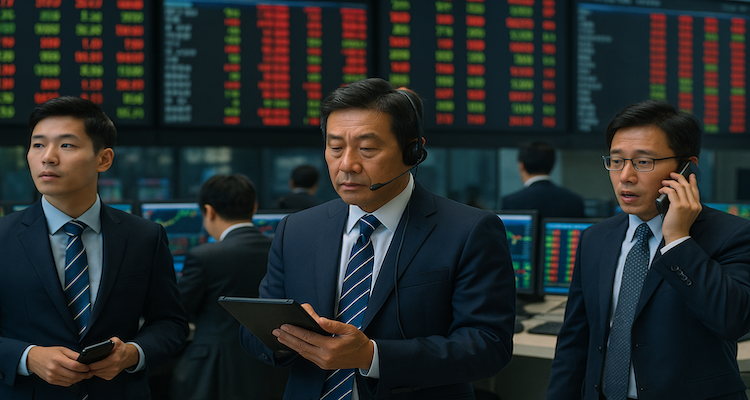
Asian stocks recovered on Wednesday as a rebound on Wall Street and easing bond-market turmoil steadied global sentiment amid rate concerns in Japan and the U.S.
A Calmer Dawn After Market Whiplash
Asian equities found firmer ground on Wednesday, breaking from the turbulence that defined the start of the week. A late-night comeback on Wall Street, combined with a pause in the sharp selloff that rattled global bonds and cryptocurrencies, helped restore a sense of stability. Bitcoin surged back above the $90,000 mark, while futures tied to the Nasdaq and S&P 500 each gained 0.1% small steps that nevertheless hinted at improving risk appetite.
Days of Volatility Set the Stage
The rebound comes after a bruising two-day stretch marked by rising anxiety over a possible interest rate hike in Japan. That prospect ignited a worldwide retreat from government bonds and accelerated a steep slide in crypto markets, leaving global stocks exposed to rapid risk-off flows.
By mid-morning in Asia, the MSCI Asia-Pacific index excluding Japan edged up 0.3%, while Japan’s Nikkei advanced 0.8%, reflecting a broad if cautious recovery.
For many investors, the current backdrop remains shaped by two competing forces: tightening signals from the Bank of Japan (BOJ) and growing conviction that a Federal Reserve rate cut is just days away. The push and pull between these monetary paths is likely to steer market behavior throughout December.
Japan Jitters and Fed Expectations in Focus
BOJ Rate Concerns Keep Japanese Bonds Under Pressure
Government bonds in Japan stabilized but continued to feel the weight of speculation that the BOJ may raise rates later this month. Yields remained elevated, with the five-year JGB touching 1.38%, its highest point since June 2008. The 40-year JGB yield also inched higher to 3.695%.
As yields rise, bond prices fall a relationship that underscored investor expectations for a shift in Japan’s decades-long ultra-loose policy.
Fed Cut Anticipation Fuels a Brighter Mood
Beyond Asia, markets are increasingly turning their attention to the Federal Reserve’s upcoming policy decision. With no major data releases to stir volatility this week, sentiment has improved around the belief that the Fed will begin easing rates next week, potentially setting the tone for a year-end equity rally.
Tony Sycamore, market analyst at IG, noted that stocks could maintain strong support heading into the Federal Open Market Committee (FOMC) meeting, suggesting that mid-December historically serves as a “sweet spot” for equities.
Potential Leadership Shift at the Fed Adds Another Layer
Investors are also weighing the implications of potential changes at the top of the Federal Reserve. White House economic adviser Kevin Hassett, reportedly the leading contender to replace Chair Jerome Powell, is viewed as more dovish on monetary policy.
President Donald Trump signaled he will reveal his Fed nominee early next year and has already narrowed the field to one candidate.
Currency markets reacted subtly:
-
The euro inched higher to $1.1632
-
Sterling rose to $1.32235
-
The U.S. dollar slipped 0.07% against the yen to 155.77
Kristina Clifton of Commonwealth Bank of Australia noted that Hassett’s close policy alignment with President Trump raises questions about central bank independence, which could pressure the dollar further.
Market Strategists Weigh the Shifting Landscape
Kerry Craig, global market strategist at J.P. Morgan Asset Management, offered context on the rapid swings that kicked off the week. He highlighted that narrowing yield differentials between the U.S. and Japan may have revived fears tied to the unwinding of popular carry trades strategies that use low-yielding yen to finance investments elsewhere.
Craig also observed how cryptocurrency performances briefly became a barometer for broader risk sentiment, although he emphasized that liquidity conditions remain a more sensitive driver for markets overall.
What the Latest Moves Signal for December
Rising Global Yields Could Test Market Confidence
Should the BOJ follow through with a rate hike, it could ripple far beyond Japan. Investors who rely on yen-funded leverage may be forced to unwind positions, potentially sparking renewed volatility across global stocks, bonds, and crypto.
A Dovish Fed Could Ease Some of the Strain
At the same time, expectations of a rate cut next week give equity investors a reason for optimism. December is historically a strong month for markets, and with policy relief in sight, analysts expect risk assets to remain supported provided no new shocks emerge.
Commodities Mixed Amid Geopolitical Uncertainty
In the commodities sector:
-
Brent crude edged up 0.06% to $62.49
-
U.S. crude ticked higher 0.07% to $58.69
-
Spot gold rose 0.2% to $4,216.13 per ounce
Oil markets remain cautious as traders juggle fading optimism over Russia–Ukraine peace prospects and growing unease over potential oversupply.
The Australian dollar, meanwhile, weakened after domestic data revealed slower-than-expected economic growth in the September quarter before stabilizing at $0.6566.
A Fragile Calm Ahead of Pivotal Policy Decisions
Wednesday’s steadier trading session offered markets a needed reprieve, but the underlying tensions remain unresolved. The BOJ’s expected policy shift and the Fed’s looming rate cut create an unusual crosscurrent that could shape global financial conditions for months.
For now, optimism is creeping back into the market narrative but December’s path depends heavily on central bankers and the delicate balance between tightening in Japan and easing in the United States.
ALSO READ: Ireland’s Service Sector Surges to 3½-Year High in November