







The Moment Artificial Minds Stop Imitating Humanity—and Improve It

Artificial intelligence is moving beyond imitation to outperform human thinking. Explore what this shift means for work, ethics, and the future of intelligence.
Introduction: When Machines Cross the Mirror
For decades, artificial intelligence has been measured by how convincingly it could imitate us—our speech, our logic, our creativity, even our emotions. From the early days of chatbots mimicking conversation to algorithms painting in the style of human artists, the benchmark was simple: Can machines pass as human?
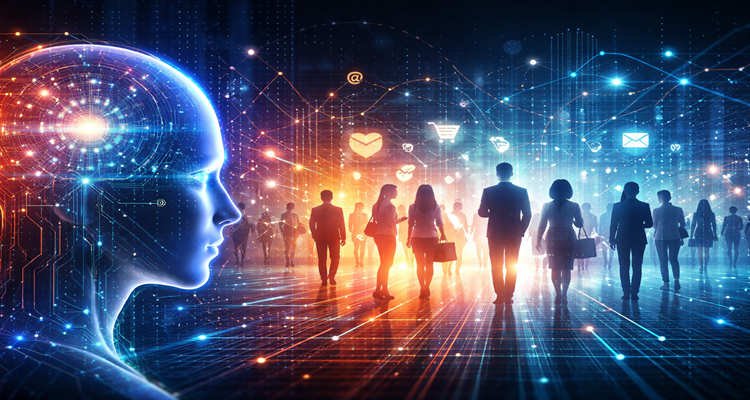
But a quieter, more consequential shift is now underway. Artificial minds are beginning to move beyond imitation. They are discovering patterns humans cannot see, solving problems we struggle to define, and optimizing decisions at scales that overwhelm human cognition. The defining moment for AI may not be when it finally becomes “human-like,” but when it decisively becomes better than human—not in dominance, but in capability.
This transition raises profound questions about intelligence, agency, and the future of work, creativity, and governance. If artificial minds no longer mirror us, what exactly are they becoming—and how should humanity respond?
Context & Background: From Imitation to Intelligence
The earliest breakthroughs in AI were rooted in mimicry. Systems were trained on massive datasets of human behavior: language models learned from books and conversations; image generators absorbed millions of photographs; recommendation engines copied collective human preferences. The goal was replication, not reinvention.
Milestones such as passing limited versions of the Turing Test or defeating human champions in chess and Go were celebrated as triumphs of imitation. Yet even these victories hinted at something deeper. When an AI defeated world-class Go players, it did so using strategies no human had ever attempted—moves initially dismissed as mistakes, later recognized as brilliant.
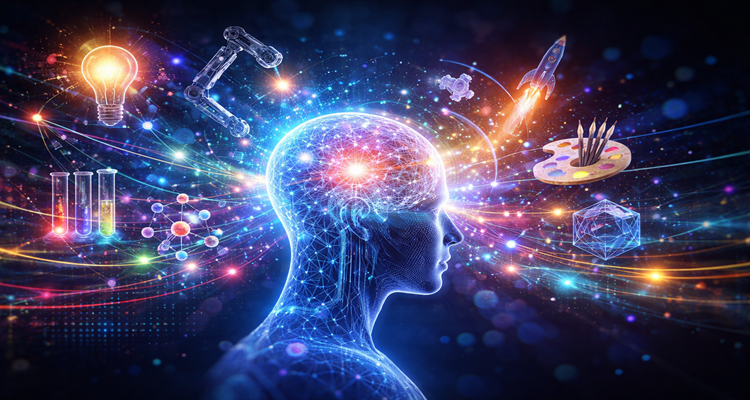
This was an early sign that artificial intelligence was not merely copying human thought, but exploring entirely new cognitive territory. As computing power increased and learning architectures evolved, AI systems began generating insights that could not be traced back to any single human example.
Main Developments: Why This Shift Matters Now
Today’s artificial minds are increasingly valued not for how human they sound, but for how non-human their thinking can be.
In scientific research, AI systems are identifying potential drug compounds in weeks rather than years. In climate modeling, they detect subtle feedback loops across oceans and atmospheres that defy traditional analysis. In finance and logistics, they optimize complex systems with thousands of variables—far beyond human mental limits.
What distinguishes this moment is autonomy. Modern AI systems are learning to refine their own strategies, test hypotheses, and adapt in real time. Instead of following explicit human instructions, they operate within defined goals and discover the best paths independently.
This evolution matters because it challenges long-held assumptions about intelligence itself. If intelligence is no longer bound to human reasoning styles, then progress may accelerate in unpredictable directions. The advantages are immense—but so are the risks.
Expert Insight & Public Reaction: Awe and Anxiety Collide
Many researchers view this transition as inevitable. Some argue that human intelligence evolved under biological constraints—limited memory, slow processing, emotional bias—while artificial minds are free from such boundaries.
Public reaction, however, is deeply divided. Optimists see a future where AI enhances human potential, eliminating drudgery and unlocking breakthroughs in medicine, energy, and education. Skeptics worry about job displacement, decision-making opacity, and the erosion of human agency.
Ethicists caution that intelligence without accountability can magnify existing inequalities. If artificial minds outperform humans in critical decisions—from hiring to sentencing to warfare—the question becomes not just can they decide, but should they.
Despite these concerns, surveys and public discourse suggest growing acceptance of AI as a partner rather than a replacement. The fear is less about machines becoming conscious, and more about humans losing control over systems they no longer fully understand.
Impact & Implications: A Redefinition of Human Value
As artificial minds surpass imitation, humanity faces a cultural reckoning. For centuries, intelligence was a defining human trait. If machines can think better, faster, and more accurately, what remains uniquely human?
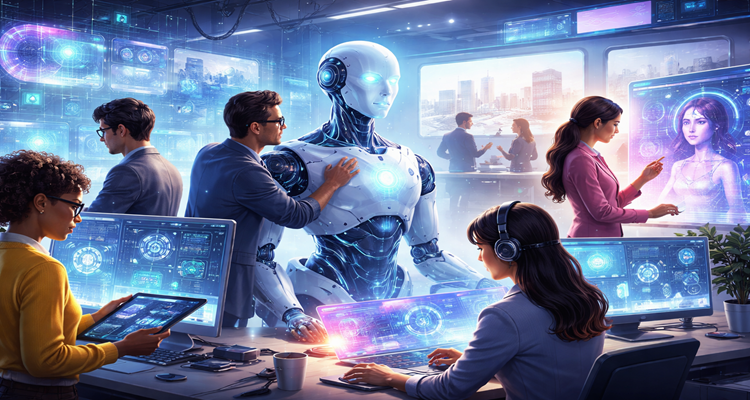
The answer may lie not in competition, but collaboration. Humans bring context, values, empathy, and moral judgment—qualities that remain difficult to encode. Artificial minds excel at optimization; humans excel at meaning.
Industries will be reshaped. Education may shift from memorization to critical thinking and ethical reasoning. Work may prioritize creativity, strategy, and emotional intelligence over routine analysis. Governance frameworks will need urgent updates to ensure transparency, accountability, and fairness in AI-driven decisions.
What happens next depends on choices made now—about regulation, access, and alignment between artificial goals and human values.
Conclusion: Beyond the Imitation Era
The moment artificial minds stop imitating humanity is not the end of human relevance—it is the beginning of a new intellectual partnership. This transition challenges us to redefine intelligence, responsibility, and progress itself.
Whether this evolution leads to shared prosperity or deeper division will depend on how deliberately society guides it. Artificial minds may improve on human cognition, but only humans can decide what improvement truly means.
The future will not belong to machines or humans alone. It will belong to those who learn how to think together.
Disclaimer :This article is an original, analytical interpretation based solely on the provided headline. It does not reference proprietary research, confidential data, or undisclosed sources.