










Main Developments: Inside DRDO’s High-Speed Rocket-Sled Test
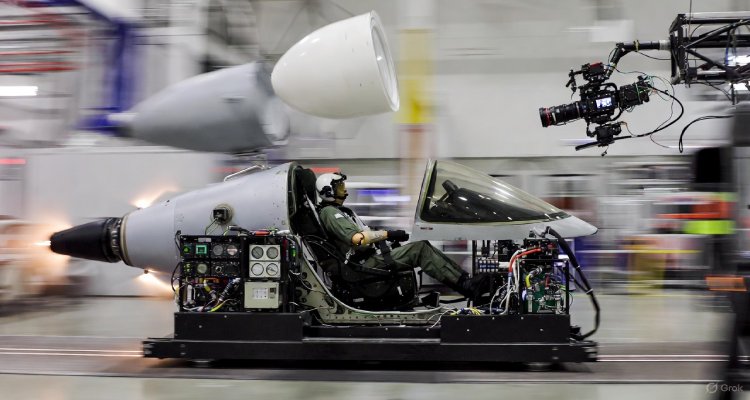
India’s DRDO successfully tests a high-speed fighter aircraft escape system, placing the nation among an elite group with advanced ejection-seat testing capability.
Introduction: A Breakthrough That Could Save Lives
When a fighter jet hurtles through the sky at supersonic speeds, a split-second failure can mean the difference between survival and catastrophe. This week, India crossed a major milestone in ensuring its pilots have a fighting chance. The Defence Research and Development Organisation (DRDO) announced the successful completion of a high-speed rocket-sled test of an indigenous fighter aircraft escape system, marking a defining moment in India’s aviation safety capabilities. The test did more than validate a life-saving mechanism—it placed India in an elite global club of nations able to test such systems at highly controlled, dynamic conditions.
Context & Background: The High-Stakes World of Pilot Safety
Modern fighter aircraft push the limits of aerodynamics, engineering, and human endurance. But even the most advanced aircraft occasionally face emergencies—engine failure, mid-air collisions, or structural malfunctions. In these rare but life-threatening situations, an ejection seat becomes a pilot’s last resort.
Until now, India relied heavily on foreign testing facilities and imported technologies to validate escape systems for its combat aircraft, including the Light Combat Aircraft (LCA) Tejas. High-speed dynamic ejection tests—far more complex than static checks—are critical to ensuring a seat can propel a pilot clear of an aircraft, safely break the canopy, and deploy recovery systems, even under extreme conditions.
DRDO’s recent achievement changes the equation. It demonstrates that India now possesses fully in-house capability to simulate real-world, high-velocity ejections—an achievement only a few advanced defence nations can claim.
Main Developments: Inside DRDO’s High-Speed Rocket-Sled Test
The test, conducted at the Rail Track Rocket Sled (RTRS) facility of the Terminal Ballistics Research Laboratory (TBRL) in Chandigarh, replicated the conditions of a fighter jet flying at high speed.
How the Test Worked
To simulate a real aircraft:
- A dual-sled system carrying the LCA aircraft forebody was mounted on rails.
- Multiple solid-propellant rocket motors were fired in sequence, building up to a precisely calibrated velocity.
- The system mimicked the intense aerodynamic forces of a fast-moving aircraft mid-ejection.
The objective: to validate the canopy severance, ejection sequencing, and complete aircrew recovery process under dynamic conditions.
Simulating the Pilot’s Experience
A highly sophisticated instrumented anthropomorphic test dummy—designed to mimic the weight, movement, and physiological responses of a pilot—was placed in the cockpit. It recorded:
- G-forces
- Load distribution
- Acceleration patterns
- Moments experienced during ejection
These recordings help engineers understand exactly what a pilot would endure in a real emergency.
A Fully Captured, Fully Measured Test
Onboard and ground-based imaging systems captured the entire sequence with high-speed precision, from canopy fragmentation to ejection trajectory to descent dynamics. The test validated:
- Controlled canopy break
- Timed activation of the ejection seat
- Parachute deployment sequences
- Safe recovery parameters
The mission was conducted in close collaboration with the Aeronautical Development Agency (ADA) and Hindustan Aeronautics Limited (HAL)—the organizations behind the LCA Tejas program.
Expert Insight: A Leap Forward in Defence Self-Reliance
A senior defence analyst, speaking on the significance of the test, noted:
“Dynamic ejection testing is one of the toughest benchmarks in aviation safety. The fact that India can now conduct such tests in-house is a major step toward technological sovereignty in military aviation.”
Experts emphasize that dynamic high-speed tests, unlike static “zero-zero” tests conducted on stationary platforms, provide the most accurate evaluation of real-world pilot survivability.
A retired fighter pilot added:
“Ejection seats save lives only when every component performs flawlessly under extreme stress. This test enhances confidence in our indigenous systems and strengthens pilot trust.”
Impact & Implications: What This Means for India
DRDO’s accomplishment carries significant long-term implications:
1. Enhanced Pilot Safety
Indian pilots flying aircraft like the LCA Tejas or future platforms such as AMCA will have escape systems tested under real flight conditions—boosting survivability.
2. Strategic Independence
India reduces dependency on foreign testing ranges, cutting costs and increasing self-reliance in critical defence technologies.
3. Faster Development Cycles
In-house testing means systems for new aircraft can be validated sooner, accelerating development timelines for upcoming indigenous fighter jets.
4. Global Credibility
By joining the small group of nations with advanced dynamic testing capabilities, India strengthens its position as a credible producer of next-generation defence technologies.
5. Better Export Potential
Countries exploring the LCA Tejas or future Indian aircraft may view indigenous safety validation as a major trust factor.
Conclusion: A Milestone in India’s Defensive and Engineering Evolution
The successful high-speed escape-system test is more than a technical accomplishment—it is a signal of India’s growing maturity in advanced aerospace engineering. It demonstrates that India can design, validate, and test its own life-saving systems with scientific precision and operational accuracy.
As India strengthens its footprint in indigenous defence capabilities, achievements like this form the backbone of a more secure future for both the nation and its pilots. In a high-risk field where every second matters, innovations like DRDO’s rocket-sled test reaffirm the country’s commitment to creating aircraft systems that protect those who protect the nation.
Disclaimer :This article is based solely on the provided headline and information. It is an original piece of journalism-style writing created for educational and informational purposes.